WATER DAMAGE RESTORATION NYC
Water-Damaged Drywall Removal and Repair in Brooklyn
Water Damage Restoration NYC provides water damaged drywall repair in Brooklyn for wet, swollen, stained or deteriorated wallboard. We map moisture beyond the visible damage, determine what can dry in place, remove only what is necessary and verify the cavity before repair.
Drywall Damage Response
1–2 Hour Estimated Arrival
Drywall and Cavity Moisture Inspection
Selective Removal Decisions
Drying Verified Before Repair
Warning Signs in Drywall
Water-damaged drywall does not always need immediate replacement, but changes in the board can show that moisture has moved beyond the painted surface.
Request an inspection when you find:
- Soft or spongy drywall
- Brown or yellow staining
- Bubbling paint
- Peeling wall covering
- Swollen wallboard
- Crumbling gypsum
- Damaged seams or joint compound
- Sagging sections
- Wet baseboards
- Dampness returning after the surface appears dry
- Water marks rising from the floor
- Moisture around plumbing penetrations
- A persistent damp odor
- Staining that continues into an adjoining wall or ceiling
- Bubbling or peeling paint
- Brown or yellow staining
- Soft drywall
- Swollen baseboards
- Damp plaster
- Cracking around a previously wet area
- Warped trim
- A wall that feels unusually cool or damp
- Water appearing at the floor-wall joint
- A musty odor near one section of wall
- Staining that returns after repainting
- Moisture around pipe penetrations
- Water entering from the ceiling and continuing down the wall
Pay particular attention to drywall near outlets or electrical fixtures. Avoid touching wet electrical components until the area can be evaluated safely.
A surface stain tells us where moisture became visible. It does not tell us how high the water traveled inside the gypsum core, whether insulation is wet or whether the framing behind it has dried.
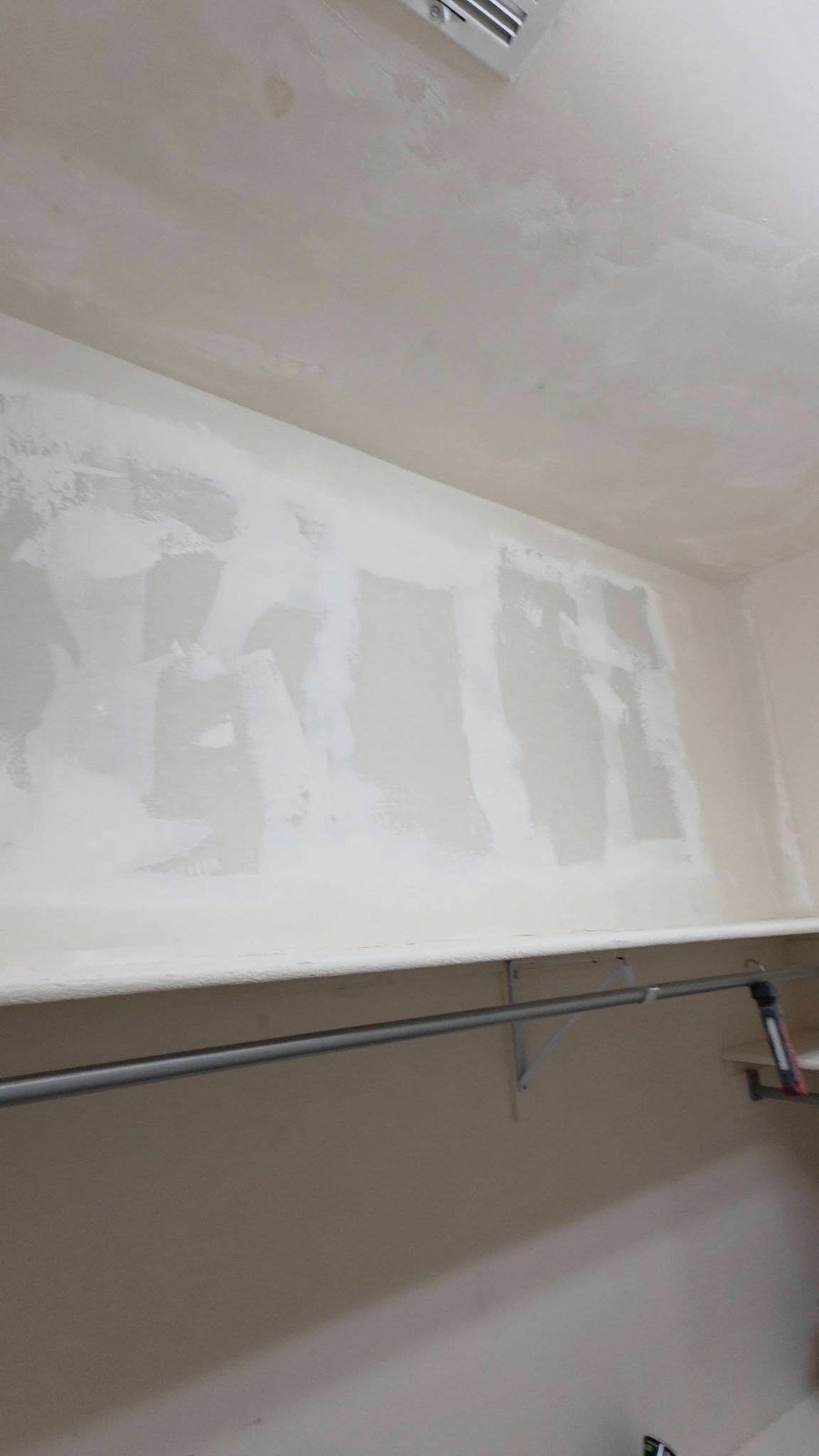
How We Inspect the Full Moisture Footprint
Our drywall inspection begins with the water source, material condition and likely migration path.
We may check:
- The visible stain
- Drywall above and beside it
- Lower wall sections
- Baseboards
- Joint seams
- Wall-floor intersections
- Inside corners
- Plumbing penetrations
- The opposite side of the wall
- Accessible wall cavities
- Insulation
- Wood studs and bottom plates
- Connected ceiling areas
- Drywall or gypsum board
- Plaster
- Lath
- Stud framing
- Insulation
- Base plates
- Baseboards and trim
- Pipe penetrations
- Wall-floor joints
- Adjoining walls
- Flooring beside the wall
- The room or unit on the opposite side
Moisture readings help establish where normal material conditions change into the wet zone.
This matters because gypsum board is porous. Water can move upward from a flooded floor through the lower edge, enter from a plumbing leak inside the cavity or travel downward from a ceiling or upstairs apartment.
The damaged boundary is therefore based on measured moisture and material condition, not simply where the paint changed color.
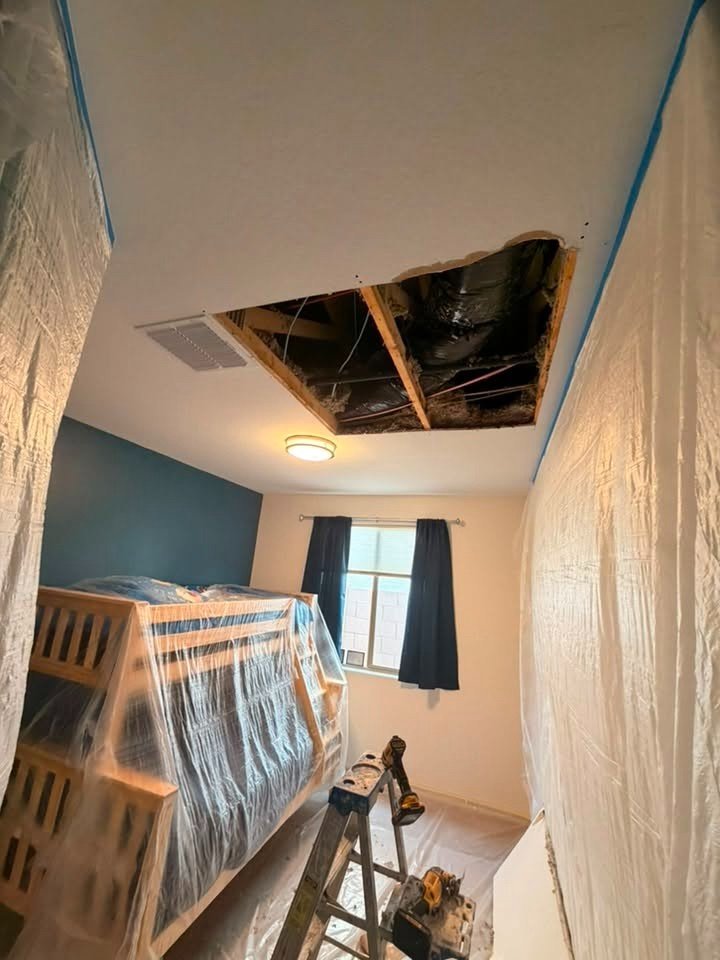
Can the Drywall Be Saved?
Sometimes. Wet drywall is not automatically disposable.
The decision depends on the water source, swelling, seam condition, gypsum integrity, insulation, cavity access and whether the board shows measurable drying progress.
Dry-in-Place Conditions
Drywall may be considered for retention when:
- The source has been stopped
- The water condition permits salvage
- The board remains firm
- There is no obvious swelling
- Seams remain intact
- The paper facing remains bonded
- The cavity can release moisture
- Insulation is not trapping significant water
- Moisture readings continue moving toward the drying target
EPA guidance allows wallboard to be considered for drying in place when there is no obvious swelling and seams remain intact. Ventilating the wall cavity can also be important where the construction permits it.
Keeping suitable material in place can reduce unnecessary demolition, but only when the wallboard and materials behind it can actually be dried.
Removal Conditions
Wet drywall removal becomes more likely when:
- Gypsum has softened significantly
- The board is swollen
- Paper facing has separated
- Seams have failed
- The drywall is sagging
- Material is crumbling
- Wet insulation prevents cavity drying
- Moisture is trapped behind the board
- Source repair requires cavity access
- Repeated wetting has weakened the same area
- The drywall cannot reach an acceptable drying condition
Removal should follow the confirmed moisture boundary rather than an arbitrary height.
A flood cut may be appropriate where lower drywall must be removed to access damaged material or expose a wet cavity. The actual cut height should follow the moisture condition, contamination and construction—not a fixed measurement applied to every property.
Contamination Conditions
The source of the water can make the salvage threshold much stricter.
A recent clean supply-line leak is different from sewage, groundwater, standing surface floodwater or significantly contaminated discharge. Water-damage categories distinguish these conditions because the biological and physical contamination changes as the source changes.
Drywall and insulation are porous. When those materials absorb contaminated water, simple drying may not provide an appropriate restoration outcome.
Drying and Restoration Method for Drywall
1. Control the Water Source
The plumber, roofer, HVAC technician, appliance technician or other appropriate trade handles the source repair.
Water Damage Restoration NYC handles the resulting wet drywall and building assembly.
2. Establish Moisture Height and Width
We check beyond the visible stain to determine how high and how far sideways moisture moved.
The inspection can include the opposite side of the wall and connected rooms when construction provides a realistic water path.
3. Check the Cavity Behind the Drywall
The wallboard is only one layer.
We also consider:
- Insulation
- Wood studs
- Bottom plates
- Masonry behind framed walls
- Pipe chases
- Connected flooring
Drying drywall while leaving saturated insulation hidden behind it does not complete the assembly.
4. Decide Whether Selective Opening Is Required
Stable wallboard may remain when drying access is adequate.
Where damaged drywall or insulation blocks drying, we create enough access to expose the affected cavity without automatically stripping an entire wall.
5. Remove Unsalvageable Material
Soft, swollen, contaminated or physically failed drywall is removed from the confirmed affected area.
Wet insulation is evaluated separately because its condition may differ from the wallboard surrounding it.
6. Dry Retained Structural Materials
Once access is established, retained framing and other suitable materials are dried under controlled conditions.
Gypsum board is a porous material with a meaningful evaporation load when wet, while built-up assemblies containing wood, masonry or multiple material layers can retain deeper moisture and require additional drying effort.
7. Verify Before Closing the Wall
New drywall should not conceal wet framing or unresolved cavity moisture.
We use drying progress to determine when the retained assembly is ready for the repair stage.
When Repair or Replacement Is Required
The repair stage may include new gypsum board, insulation, joint treatment, surface preparation and painting.
Firm board, intact seams, suitable clean-water exposure
Dry and monitor
Surface staining without deterioration
Dry first, then refinish if appropriate
Obvious swelling
Removal becomes more likely
Soft or crumbling gypsum
Remove damaged material
Failed seams
Repair or replace affected section
Wet insulation behind stable drywall
Access may be needed to address insulation
Saturated bottom edge after flooding
Evaluate measured removal/flood-cut requirement
Contaminated porous wallboard
Removal threshold becomes more restrictive
Wet framing behind removed drywall
Dry before closing cavity
Dry substrate with cosmetic finish damage
Patch, finish and repaint
That work should follow moisture verification—not be used to hide material that is still wet.
A Brooklyn Drywall Project
A Brooklyn drywall project starts by determining where the water entered the wall and how the moisture moved through it.
Consider a supply-pipe leak inside a wall. The first visible evidence may be a stain close to the baseboard, while moisture extends higher inside the cavity around the pipe.
We map the affected drywall and compare it with surrounding material. If the board remains firm and the cavity can be dried effectively, some drywall may remain.
If the lower wallboard is swollen and insulation behind it is saturated, the affected section is opened. Wet insulation is addressed, framing is exposed where necessary and the retained structure is dried before replacement drywall is installed.
In another property, water may enter from an upstairs unit and travel downward through a wall cavity. That requires inspection above the obvious lower-wall stain rather than assuming the moisture began at floor level.
Kings County has more than 1.14 million housing units, with less than one-third owner occupied. In Brooklyn apartments and multifamily buildings, this can make access coordination with tenants, landlords, superintendents or property managers part of establishing the complete moisture path.
Water Damage Restoration NYC moves the drywall project to repair only when the removal boundary is established and retained cavity materials have reached the drying condition required for closure.
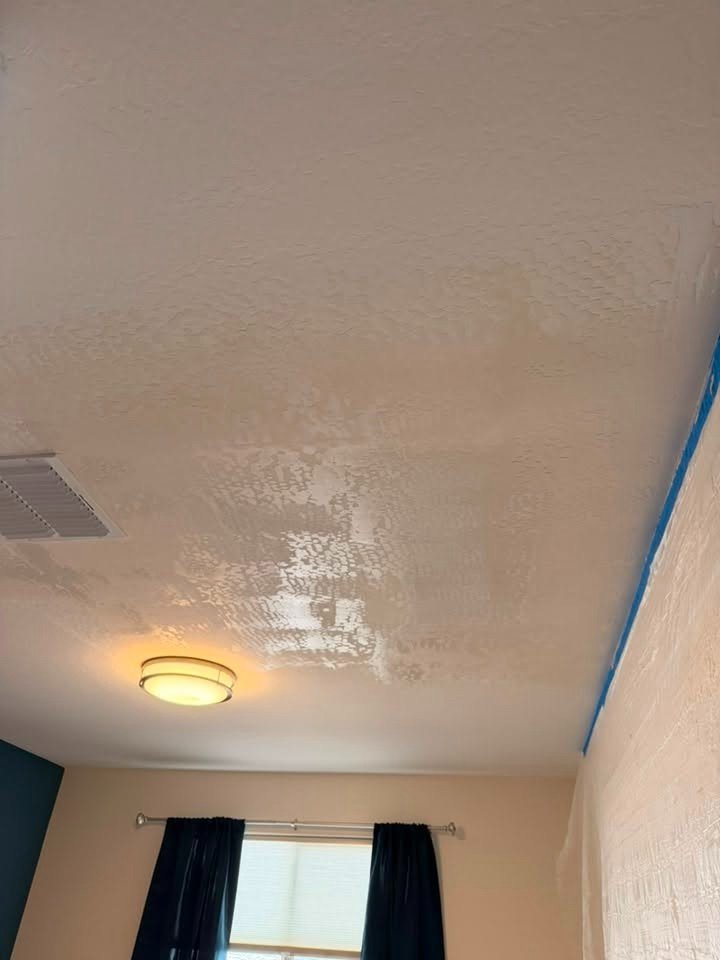
Causes That Commonly Damage This Area
Several water sources can damage drywall and wall cavities. The original source affects the salvage, cleaning and removal decision.
Plumbing leaks
Plumbing leaks can wet drywall from inside a wall before visible staining develops.
Upstairs apartment leaks
Upstairs apartment leaks can move through ceilings and continue down vertical wall cavities.
Sink and bathtub overflows
Sink and bathtub overflows may saturate drywall from the floor upward.
Toilet overflows
Toilet overflows can affect lower wallboard and may change the contamination decision.
Appliance leaks
Appliance leaks can spread behind cabinets and into nearby drywall.
Roof leaks
Roof leaks can enter upper walls after moving through ceiling or roof assemblies.
HVAC condensate leaks
HVAC condensate leaks can wet drywall around mechanical closets and concealed drainage routes.
This service focuses specifically on drywall salvage, selective removal, cavity drying and replacement decisions. The original water source is handled through the appropriate cause service or repair trade.
What the Service Includes and Does Not Include
Drywall Water Damage Service Can Include
- ✓ Drywall moisture inspection
- ✓ Moisture-height mapping
- ✓ Wall-cavity inspection where required
- ✓ Drywall salvage assessment
- ✓ Insulation condition assessment
- ✓ Selective wet drywall removal
- ✓ Measured flood cuts where appropriate
- ✓ Cavity and framing drying
- ✓ Moisture monitoring and documentation
- ✓ Drywall repair-scope handoff
Not Automatically Included
- × Plumbing repair
- × Roof repair
- × HVAC or appliance repair
- × Electrical repair or clearance
- × Lead or asbestos testing
- × Unrelated mold remediation
- × Whole-property demolition
- × Major reconstruction
- × Insurance coverage decisions
- × Work outside the confirmed affected area
Final scope depends on the water source, contamination, moisture height, gypsum condition, insulation, wall construction and cavity accessibility.
Why Choose Water Damage Restoration NYC?
We Measure Before We Cut
The visible stain does not determine the removal line. We inspect moisture height and material condition first.
We Separate Drywall From the Cavity Behind It
Drywall, insulation and framing can each require a different decision. A dry-looking wall face does not establish that the complete assembly is dry.
We Use Selective Removal Instead of Automatic Demolition
Material that remains stable and suitable for drying can stay. Failed or contaminated drywall is opened only to the extent required by the actual affected area.
Repair Begins After Drying Verification
Water Damage Restoration NYC provides restoration services across NYC, while this service is specifically focused on water-damaged drywall in Brooklyn apartments, houses, multifamily properties and commercial spaces.
Our estimated Brooklyn arrival is 1–2 hours, subject to traffic, weather, parking, building access and current service demand.
Frequently Asked Questions
Yes, some wet drywall can be retained when it remains firm, has no obvious swelling, the seams are intact and the water condition permits salvage.
Drywall that has deteriorated, become contaminated or prevents the cavity from drying is more likely to require removal.
We check beyond visible staining using moisture readings and the likely water path through the wall.
The inspection can include baseboards, adjoining wall sections, insulation, framing and the opposite side of the cavity when accessible.
Removal becomes more likely when drywall is swollen, soft, sagging, contaminated, structurally deteriorated or blocking access to trapped cavity moisture.
The cut boundary should follow the affected material rather than an automatic fixed height.
There is no single drying time for every drywall loss.
Water volume, gypsum saturation, insulation, framing, wall construction, contamination, humidity and continued leakage all influence the drying period. Moisture progress is more useful than assigning every wall the same number of days.
Repair may include replacing removed drywall and insulation, treating joints, restoring trim and preparing the wall for painting once retained cavity materials are dry.
Source repairs and separate electrical or other trade work remain outside the drywall-restoration scope.
Call for Water-Damaged Drywall Repair in Brooklyn
Wet drywall should not automatically be demolished, but it should not be patched over while hidden moisture remains behind it either.
Call Water Damage Restoration NYC at +1 (917) 203-4372, email info@waterdamagerestorationservicesnyc.com or request an inspection for water-damaged drywall removal and repair in Brooklyn.
Our estimated arrival is 1–2 hours. We will map the wet drywall, check the cavity, determine what can remain, remove only what is necessary and establish the drying and repair requirements.