Upstairs Apartment Leak Water Damage Restoration in Brooklyn
1–2 Hour Estimated Arrival
Source-to-Lower-Unit Moisture Tracing
Ceiling and Wall-Cavity Inspection
Documented Drying and Repair Handoff
Immediate Actions After Upstairs Unit Leaks
- Move away from bulging or sagging ceilings. Saturated drywall or plaster can lose strength and fall without warning.
- Avoid wet electrical fixtures. Do not touch ceiling lights, switches, outlets or powered equipment exposed to dripping water.
- Move dry belongings away from the leak path. Protect furniture, electronics, documents, rugs and other contents before the water reaches them.
- Contact the upstairs occupant and building management. The source may be a sink, bathtub, toilet, appliance, radiator, supply pipe or another system inside the unit above.
- Do not cut open the ceiling yourself. Water can be trapped near wiring, pipes, framing or unstable ceiling material.
- Photograph the leak before conditions change. Record active dripping, staining, affected contents and the room location.
- Call Water Damage Restoration NYC when ceilings, walls or floors are wet. Stopping the source does not remove moisture already inside the building assembly.
How Water From the Unit Above Causes Water Damage
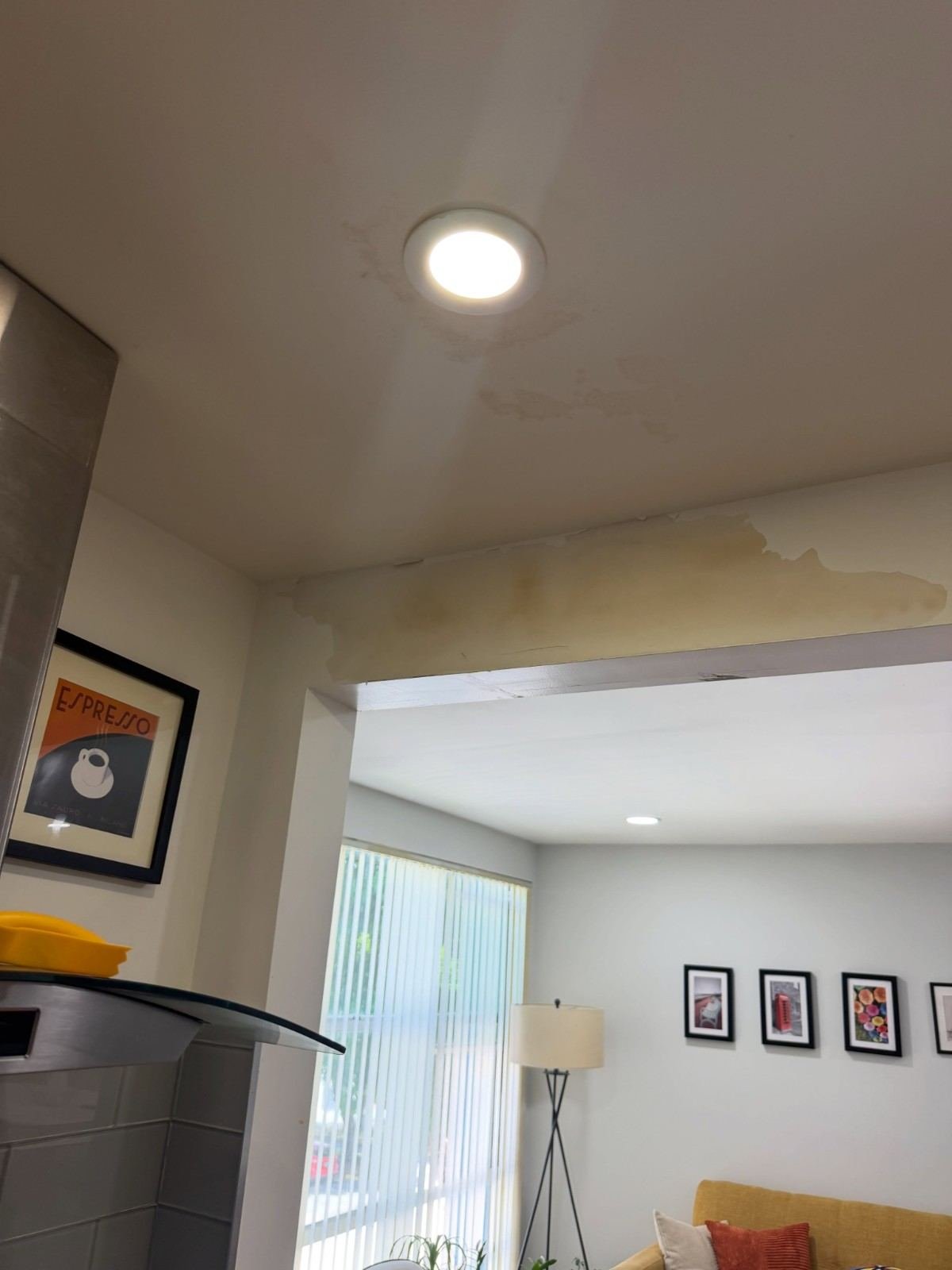
The stain location can also be misleading. Water may enter the upstairs floor several feet from the place where it finally reaches the ceiling below. It can follow subfloor joints, joists, pipes, electrical penetrations and low points within the ceiling cavity.
Common Upstairs Sources
- A broken or leaking supply pipe
- Sink or bathtub overflow
- Toilet overflow
- Dishwasher or washing-machine leak
- Refrigerator supply line
- Radiator or heating pipe
- AC condensate system
- Bathroom drain or waste connection
- Plumbing inside a shared wall or chase
Where the Water Usually Travels
First Affected Area
In the lower apartment, the first visible sign may be:
- A ceiling stain
- Active dripping
- Bubbling paint
- Soft drywall
- Damp plaster
- Water around a light fixture
- A wet upper wall
- Flooring beneath the drip area
We document the visible condition and then inspect beyond it.
The first stain is the point where water became visible—not necessarily the beginning or end of the moisture path.
Hidden Cavities
Water from above can remain inside:
- Ceiling cavities
- Insulation
- Plaster and lath
- Drywall
- Wood framing
- Wall cavities
- Pipe chases
- Electrical penetrations
- Multilayer floor assemblies
Plaster, wood and multilayer assemblies can hold moisture after surface staining or active dripping has stopped.
A ceiling that feels dry on the finished face may still require moisture inspection above or behind the surface.
Floor Below
The apartment where the leak becomes visible may not be the final affected level.
A larger release can continue downward through:
- Plumbing openings
- Wall cavities
- Floor penetrations
- Framing gaps
- Mechanical chases
- Ceiling penetrations
In stacked Brooklyn apartments, this may mean inspecting the source unit, the apartment directly below and another level beneath it when the water volume and building layout support further migration.
Adjacent Rooms
Water can also move horizontally.
A bathroom leak upstairs may appear in the hallway ceiling below. Water from a kitchen appliance can follow the floor assembly before entering a neighboring bedroom or living room ceiling.
Our inspection expands according to the confirmed moisture pattern rather than room names alone.
Who Repairs the Source and Who Restores the Damage?
What the Responsible Trade Handles
- Closing or repairing a supply line
- Clearing or repairing a drain
- Repairing a toilet or fixture
- Correcting an appliance leak
- Repairing a radiator or heating pipe
- Correcting an AC condensate problem
What Water Damage Restoration NYC Handles
- Water-damage assessment
- Source-to-damage moisture tracing
- Accessible water removal
- Ceiling and wall inspection
- Lower-unit moisture mapping
- Adjacent-room inspection
- Selective wet-material removal
- Structural drying
- Drying monitoring
- Damage documentation
- Interior repair planning
Repairing the leak upstairs does not automatically dry the ceiling below.
Restoration Plan: Coordinate Occupants and Management, Document Multiple Units and Inspect Ceiling and Wall Cavities
1. Confirm the Upstairs Source Is Controlled
We establish what caused the leak and whether water is still entering.
If access to the source unit is required, the upstairs occupant, superintendent or management team may need to coordinate entry.
2. Connect the Source Unit to the Lower-Unit Damage
We identify the source location upstairs and compare it with the affected ceiling, wall or flooring below.
This helps establish the likely vertical and horizontal migration route.
3. Document Each Affected Unit Separately
When more than one apartment is involved, conditions are recorded by unit and room.
The source unit may have wet flooring while the lower unit has ceiling and wall damage. Those are connected conditions but different restoration areas.
4. Remove Accessible Water
Standing or dripping water is removed from accessible lower surfaces.
Contents in the water path are protected or relocated when practical.
5. Inspect the Ceiling Assembly
We evaluate:
- Drywall or plaster
- Insulation
- Framing
- Ceiling penetrations
- Upper wall sections
- Electrical-fixture areas
Selective access may be required where moisture is trapped or damaged material cannot remain.
6. Follow Moisture Into Walls and Floors
Water reaching the edge of a ceiling can move down wall cavities and reach baseboards or flooring.
Moisture mapping therefore continues according to the confirmed path rather than ending when the ceiling stops dripping.
7. Dry Retained Materials
Suitable framing, plaster, drywall and other materials are dried according to their measured moisture condition.
Water removal is complete when the puddle is gone. Structural drying is complete when the retained building materials reach the established drying condition.
8. Define the Interior Repair Scope
After drying, remaining repairs may include ceiling board, plaster, insulation, paint, trim or flooring.
The source repair remains separate from the lower-unit restoration work.
Drying Complete, Repairs Clearly Defined
Water removal is complete when the puddle is gone. Structural drying is complete when the retained building materials reach the established drying condition.
After drying, remaining repairs may include ceiling board, plaster, insulation, paint, trim or flooring. The source repair remains separate from the lower-unit restoration work.
Materials Commonly Affected
Ceiling drywall
Plaster ceiling
Insulation
Wood framing
Wallboard
Hardwood flooring
Laminate
Baseboards
Cabinetry
Electrical fixtures
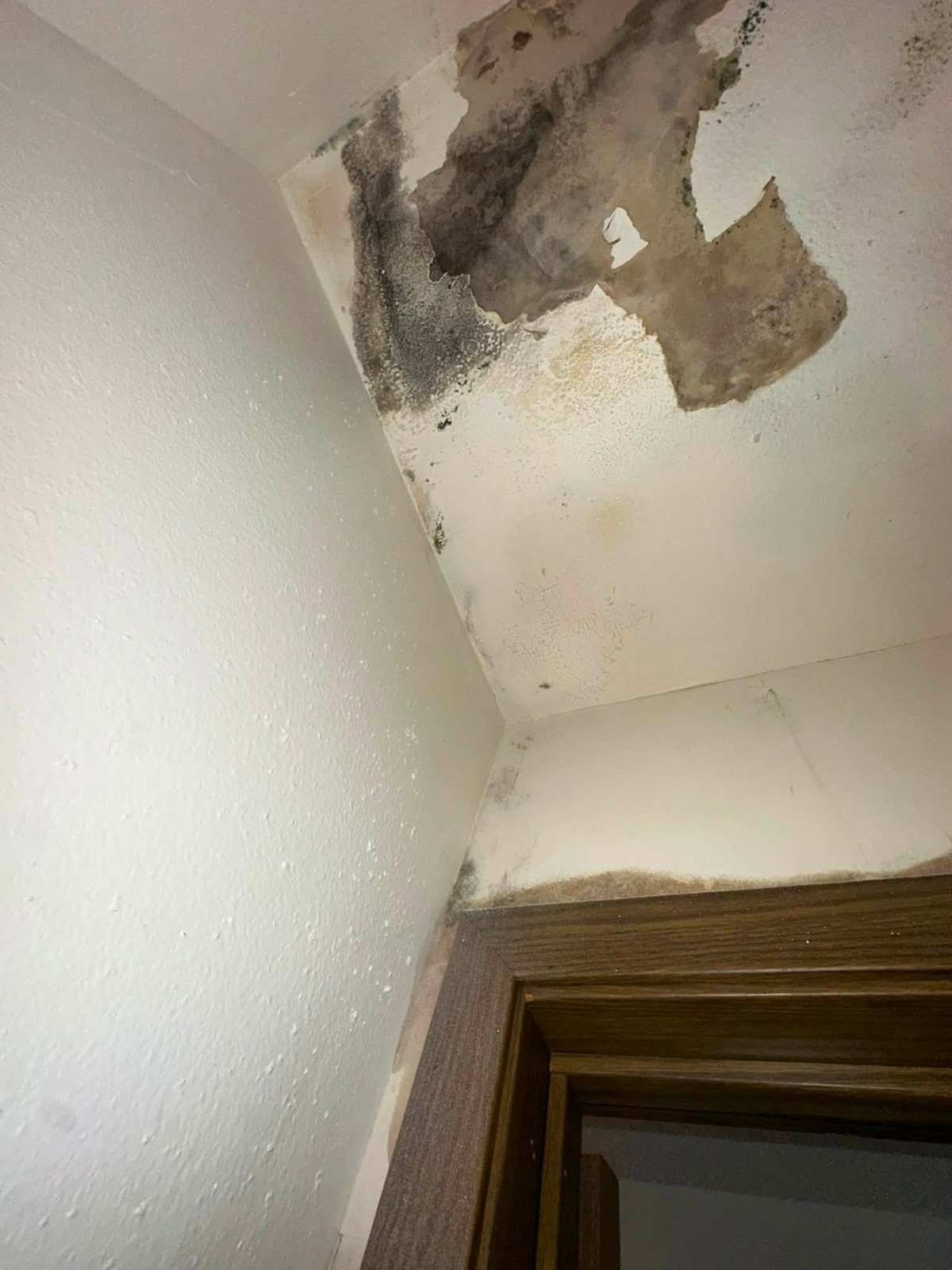
A Brooklyn Upstairs-Unit Leak Project
Insurance Documentation for This Cause
Separate documentation by apartment can help distinguish the source condition from the resulting damage in the unit below.
Water Damage Restoration NYC documents the observed conditions and restoration work. Responsibility between occupants, owners, building management and insurers depends on the facts, building agreements and applicable policies.
Water Damage Restoration NYC Can Document:
- Reported source unit
- Apparent cause of the leak
- Source-repair status
- Date and time the leak was discovered
- Initial photographs
- Rooms and units affected
- Ceiling and wall conditions
- Moisture-reading locations
- Materials removed or retained
- Water removal
- Drying progress
- Remaining interior repairs
What the Service Includes and Does Not Include
Upstairs Apartment Leak Restoration Can Include
- Emergency water-damage assessment
- Source-to-lower-unit moisture tracing
- Accessible water removal
- Ceiling and wall inspection
- Adjacent-room inspection
- Multi-unit damage documentation
- Selective wet-material removal
- Structural drying and monitoring
- Photo and moisture documentation
- Interior repair-scope handoff
Not Automatically Included
- Plumbing-source repair
- Appliance repair
- HVAC or radiator repair
- Determining legal liability
- Resolving landlord/tenant disputes
- Electrical system clearance
- Lead or asbestos testing
- Unrelated mold remediation
- Major reconstruction
- Insurance coverage decisions
Why Choose Water Damage Restoration NYC?
We Trace the Leak Between Units
We connect the source upstairs with the ceiling, walls, flooring and rooms that became wet below instead of treating the visible stain as the entire loss.
We Coordinate Around Building Access
Brooklyn apartment leaks often require access to more than one unit. Our restoration scope can be organized around occupants, supers and property management so the source and affected areas can be addressed together.
We Inspect Hidden Vertical Migration
Ceiling cavities, pipe penetrations, wall cavities and floor assemblies are checked when the moisture path indicates that water may have moved beyond the visible stain.
Drying Has a Defined Handoff
Water Damage Restoration NYC provides water damage services across NYC, while this service is specifically structured for leaks between apartments and units in Brooklyn.
Our estimated Brooklyn arrival is 1–2 hours, subject to traffic, weather, parking, access to the source and affected units, building procedures and current emergency demand.
Frequently Asked Questions
Move away from a sagging ceiling or wet electrical fixtures, protect dry belongings and contact the upstairs occupant or building management to stop the source. Then call Water Damage Restoration NYC at +1 (917) 203-4372 for the resulting water damage.
The appropriate plumber, appliance technician, HVAC professional or heating specialist fixes the source, usually with access coordinated by the occupant or building management. Water Damage Restoration NYC handles the resulting ceiling, wall and flooring damage.
We trace the source location against the damage below and inspect the likely floor, ceiling and wall path using moisture readings and targeted access where required. The darkest stain is not always directly beneath the source.
Materials that are unstable, physically damaged or cannot be effectively dried may require selective removal. Depending on the loss, this can include wet insulation, deteriorated drywall, unstable plaster or damaged composite materials.
Yes. Water Damage Restoration NYC can document the reported source, affected units, photographs, moisture readings, material decisions, drying progress and remaining repairs. Coverage and responsibility decisions remain with the relevant insurers and parties.