Water Damage Restoration NYC provides structural drying in Brooklyn after standing water is removed. We locate concealed moisture, control airflow and humidity, and monitor affected materials until they reach an approved drying target. Estimated arrival is 1–2 hours.
1–2 Hour Estimated Arrival | Moisture Mapping | Monitored Drying Conditions | Documented Dry-Standard Completion
Visible water can be removed while moisture remains inside the structure.
Water can move beneath flooring, behind baseboards, into wall cavities, through insulation, under cabinets and between layers of a subfloor. A wall or floor that feels dry at the surface may still contain moisture below the finish.
Moisture mapping creates a record of the affected area instead of relying on visible staining alone. Readings are taken from wet materials and compared with dry reference areas of the same or similar material where available.
Inspection may include accessible drywall, plaster, wood framing, flooring, subflooring, insulation, masonry, concrete and cabinet bases. Infrared imaging may help identify temperature differences associated with moisture, but suspected areas still require verification with direct moisture readings.
The water-loss class also affects the drying plan. Porous materials such as carpet, gypsum board and insulation release moisture differently from dense or low-evaporation materials such as plaster, hardwood, concrete and masonry. Deeply held moisture in these materials may require longer drying periods or more focused methods.
Structural drying is not a matter of placing several fans in a wet room and waiting.
A controlled drying plan moves moisture through a sequence:
Wet material → evaporation → moisture in the air → dehumidification → controlled discharge
Each part of that sequence must remain balanced. Increasing evaporation without removing moisture from the air can raise indoor humidity and slow the drying process. Running a dehumidifier without adequate air movement may leave moisture trapped at the surface of wet materials.
We build the plan around the affected area, material type, water-loss class, room volume, temperature, humidity and access conditions.
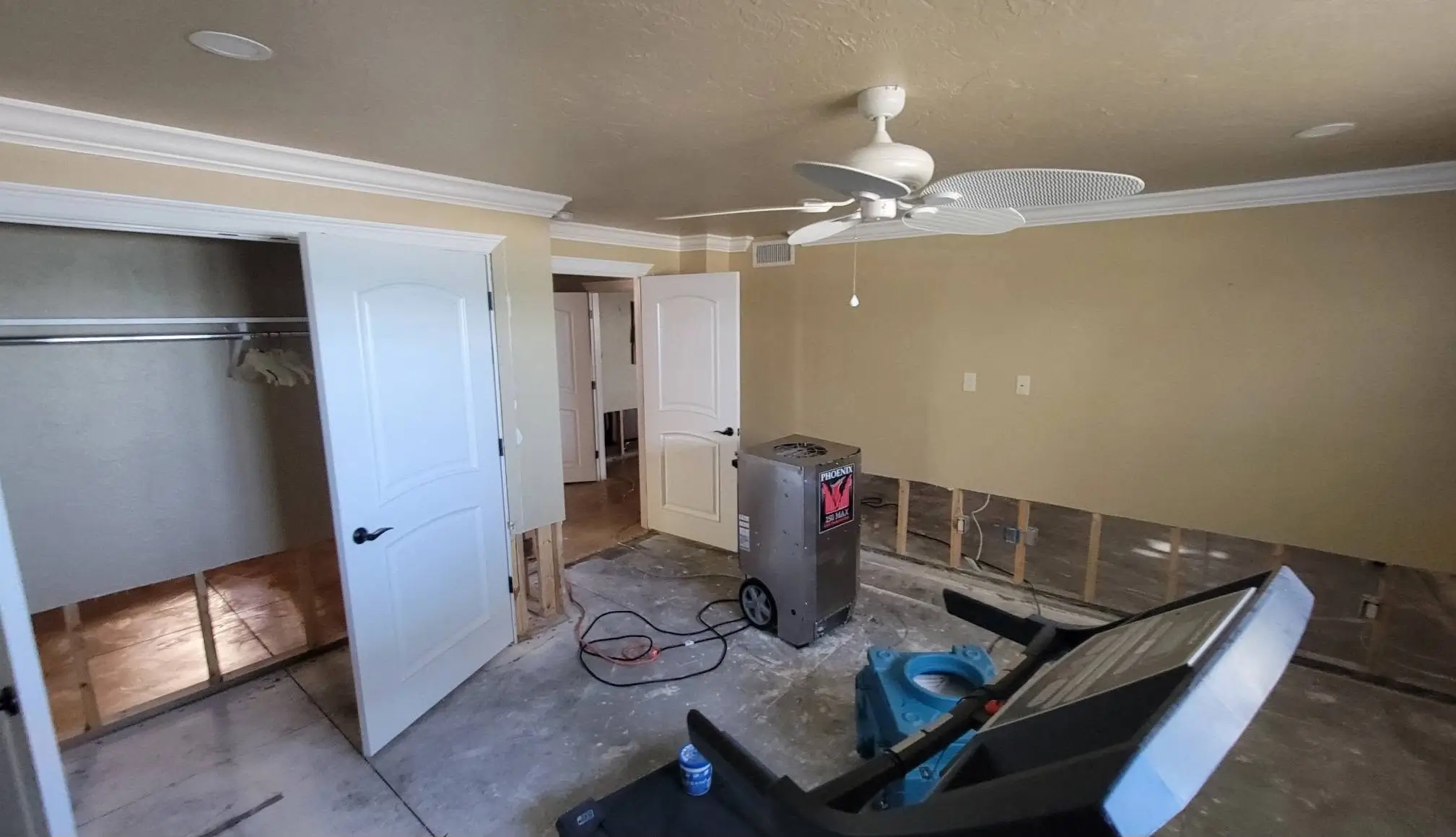
Air movement helps moisture evaporate from wet surfaces and building materials.
Air movers are positioned to direct airflow over affected walls, flooring, framing or other salvageable materials. Placement is based on the moisture map rather than simply lining equipment around the room.
Equipment may need to be repositioned as materials respond. An area that required direct airflow during the first stage may need less airflow later, while a slower-drying wall cavity or floor edge may require additional attention.
Air movement does not remove moisture from the building by itself. It transfers moisture from the material into the surrounding air, where the dehumidification system can collect it.
Dehumidification removes water vapor from the air and helps maintain conditions that support continued evaporation.
The required dehumidification capacity depends on:
Dehumidifiers are selected and positioned to manage the moisture released by affected materials. If indoor humidity remains too high, evaporation can slow and unaffected materials may begin absorbing moisture from the air.
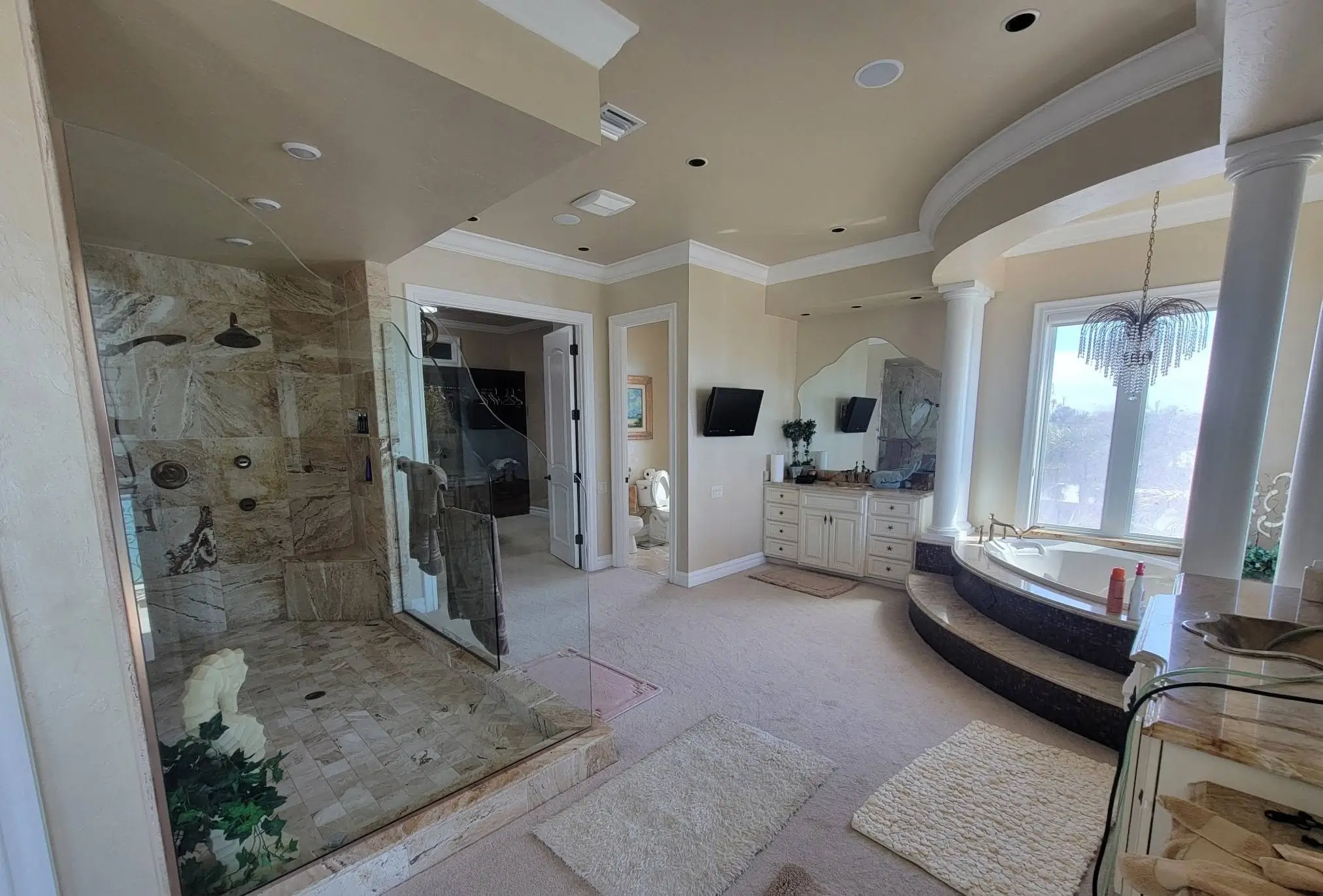
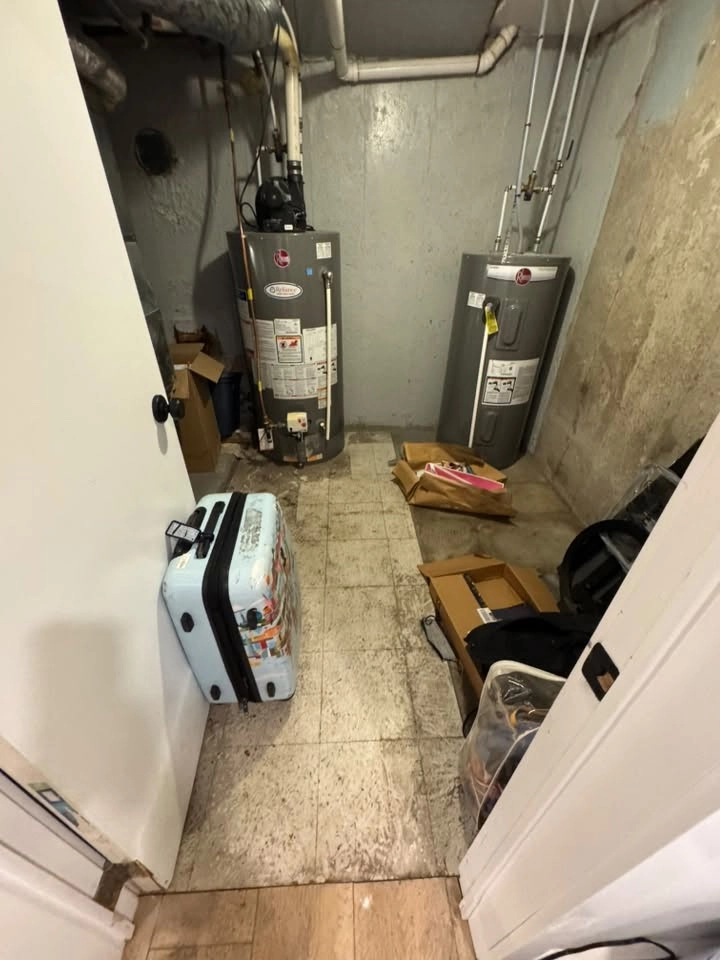
Controlled heat can support evaporation by increasing the energy available for moisture movement. It is used as part of a drying system—not as a substitute for air movement and dehumidification.
More heat is not automatically better. Excessive or uneven temperature can affect finishes, adhesives, wood flooring, furniture and occupied spaces. Temperature is adjusted according to the material, equipment setup and site conditions.
Containment reduces the volume of air the drying system must control.
A temporary drying chamber may be used around a specific wall, floor section, cabinet base or other affected assembly. This allows conditioned air to remain focused on the wet material instead of being dispersed through the entire property.
Containment can also separate the drying area from occupied rooms, common hallways or unaffected parts of a Brooklyn apartment or multifamily property.
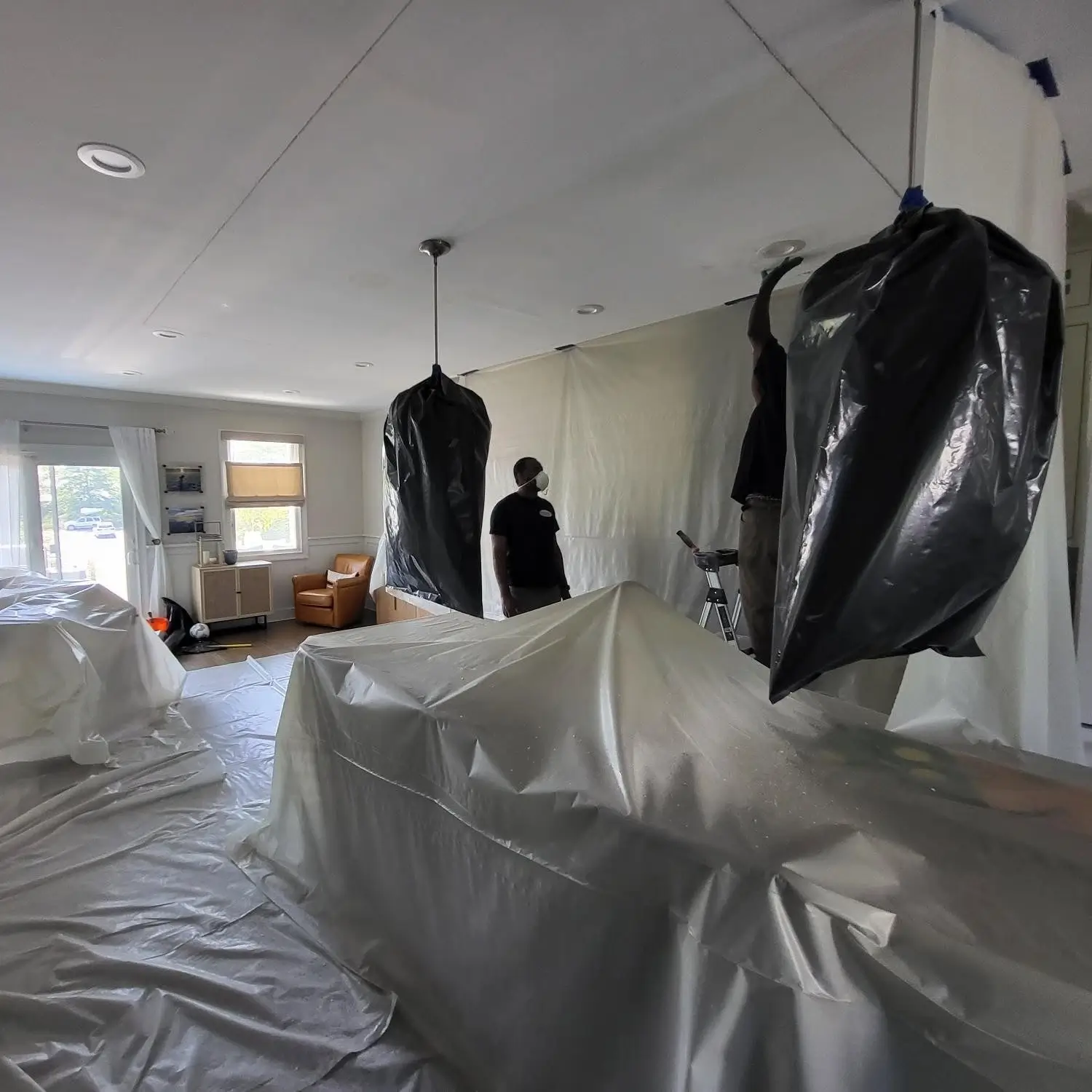
Drying equipment should not be installed and left unchanged until an assumed completion date.
Water Damage Restoration NYC monitors the drying environment and the affected materials to determine whether the current setup is producing measurable progress.
Results are recorded by material and location. This helps distinguish genuine drying progress from a temporary dry surface.
Equipment may be added, reduced, repositioned or removed as conditions change. Airflow may be redirected toward a slower-drying material. Containment may be adjusted. A dehumidifier may need a different placement or drainage route. Material that is not responding may require access or removal.
This measured approach prevents equipment from running longer than the readings support while also reducing the chance of ending the project too early.
A structure is not declared dry because a certain number of days has passed.
Dry-standard completion is based on documented material conditions.
Before the equipment is removed, we evaluate whether:
Different materials can reach completion at different times. Drywall may respond faster than dense plaster. Exposed wood may dry before moisture held beneath multilayer flooring. Concrete and masonry may continue releasing moisture after nearby finishes appear dry.
EPA guidance emphasizes that water-damaged materials should be dried promptly and that materials remaining damp may require removal when they cannot be thoroughly cleaned and dried. It also advises confirming that materials such as walls, cabinets and flooring are dry before refinishing.
Our drying record identifies what reached the drying target, what was removed and what still requires repair.
Structural drying is intended to preserve materials that can be dried safely and effectively. It is not used to justify keeping every wet material in place.
Removal may be recommended when a material:
Drywall may require limited removal when the lower section has deteriorated or when wet insulation is trapped behind it. Fiberboard and composite cabinetry can swell beyond practical recovery. Carpet padding may need removal even when the carpet face appears salvageable.
Plaster, hardwood, concrete and masonry may remain suitable for drying, but their density and construction can extend the timeline. Low-evaporation materials and multilayer assemblies can hold deeply bound moisture that requires focused airflow, containment or greater vapor-pressure control.
Source repair is separate from structural drying. Plumbing, roofing, drainage, appliance, façade or building-envelope failures must be corrected by the responsible trade so moisture does not continue entering the drying area.
Every Brooklyn drying project should create a traceable record from the initial inspection to equipment removal.
Brooklyn recorded 1,101,441 housing units in 2022, at an average density of 15,876 units per square mile. For structural drying, that density makes shared walls, stacked apartments, common access routes and coordination with landlords, tenants or building management operationally important.
A drying record can include:
1
We identify the water source, affected rooms, material types and visible damage. Initial moisture readings establish the boundaries of the drying area.
2
The record identifies where air movement, dehumidification, containment or focused drying is required and what each equipment group is intended to address.
3
Readings are taken from consistent material locations so changes can be compared over time. Notes document equipment adjustments, newly identified moisture and materials that are not responding as expected.
4
Final readings show which materials reached the approved target. Remaining reconstruction, finish replacement or source-repair requirements are recorded separately.
5
The homeowner, tenant, landlord or responsible party receives a clear explanation of what was dried, what was removed and what can proceed to repair.
This creates a measurable completion point instead of ending the project because the room looks dry or no longer has standing water.
The final scope depends on the water source, contamination category, affected materials, evaporation load, property access and moisture inspection findings.
We use moisture mapping and repeat measurements to define the affected area, monitor progress and support equipment removal decisions.
Air movers and dehumidifiers are repositioned or reduced as materials change. The setup is not treated as fixed from the first day to the last.
Water Damage Restoration NYC serves properties throughout NYC, while this service is organized specifically for drying Brooklyn apartments, brownstones, multifamily buildings, basements and commercial spaces.
Access instructions, occupied rooms, shared hallways, elevator use and building-management requirements are considered before equipment is placed.
We separate drying completion from permanent repair. You receive a documented explanation of which materials reached the drying target and which areas still require removal or reconstruction.
You need structural drying when moisture remains inside flooring, walls, ceilings, insulation, cabinets, framing, plaster, concrete or masonry after visible water has been removed.
It may also be necessary when water has traveled into an adjacent room, lower unit or concealed building cavity.
The service can include moisture mapping, material readings, air movement, dehumidification, controlled heat, containment, daily monitoring, equipment adjustments and completion documentation.
The exact setup is determined after the affected materials and drying area are inspected.
The timeline depends on the amount of water absorbed, material density, water category, room conditions, access and how the materials respond to the drying plan.
Completion is determined by readings—not by promising that every property will dry within the same number of days.
Cost is affected by the size of the drying area, number and type of wet materials, equipment requirements, monitoring visits, power access, containment needs and project duration.
A focused wall-cavity drying project will have a different scope from a multilayer floor or several affected rooms.
Yes. Documentation can include initial conditions, moisture readings, affected materials, equipment placement, progress records and completion results.
Water Damage Restoration NYC documents the restoration work performed, while the insurance carrier determines coverage, deductibles, authorization and payment.
Visible water may be gone while moisture remains beneath flooring, behind walls or inside structural materials.
Call Water Damage Restoration NYC at +19172034372 for structural drying and dehumidification in Brooklyn. We will confirm the current estimated 1–2 hour arrival, inspect the affected materials and establish a measurable drying plan before reconstruction begins.