
Sump Pump Failure and Basement Flood Cleanup in Brooklyn
1–2 Hour Estimated Arrival
Basement Water Condition Assessed
Stored Contents and Hidden Moisture Checked
Documented Drying and Repair Handoff
Immediate Actions After Sump Pump Failure
If the sump pump has stopped and water is rising:
- Stay out of standing water near electricity. Do not touch the sump pump, outlets, extension cords, appliances, electrical panels or switches while standing in water.
- Keep people and pets upstairs. Basement water can contain contaminants and concealed debris.
- Do not repeatedly reset a failed pump from a wet area. A power, motor, float-switch or electrical problem may require the appropriate trade.
- Move dry contents higher only when the route is safe. Prioritize documents, electronics, boxes, furniture and stored inventory that have not yet contacted the water.
- Do not run a generator indoors. Backup generators belong outdoors, away from doors, windows and enclosed spaces.
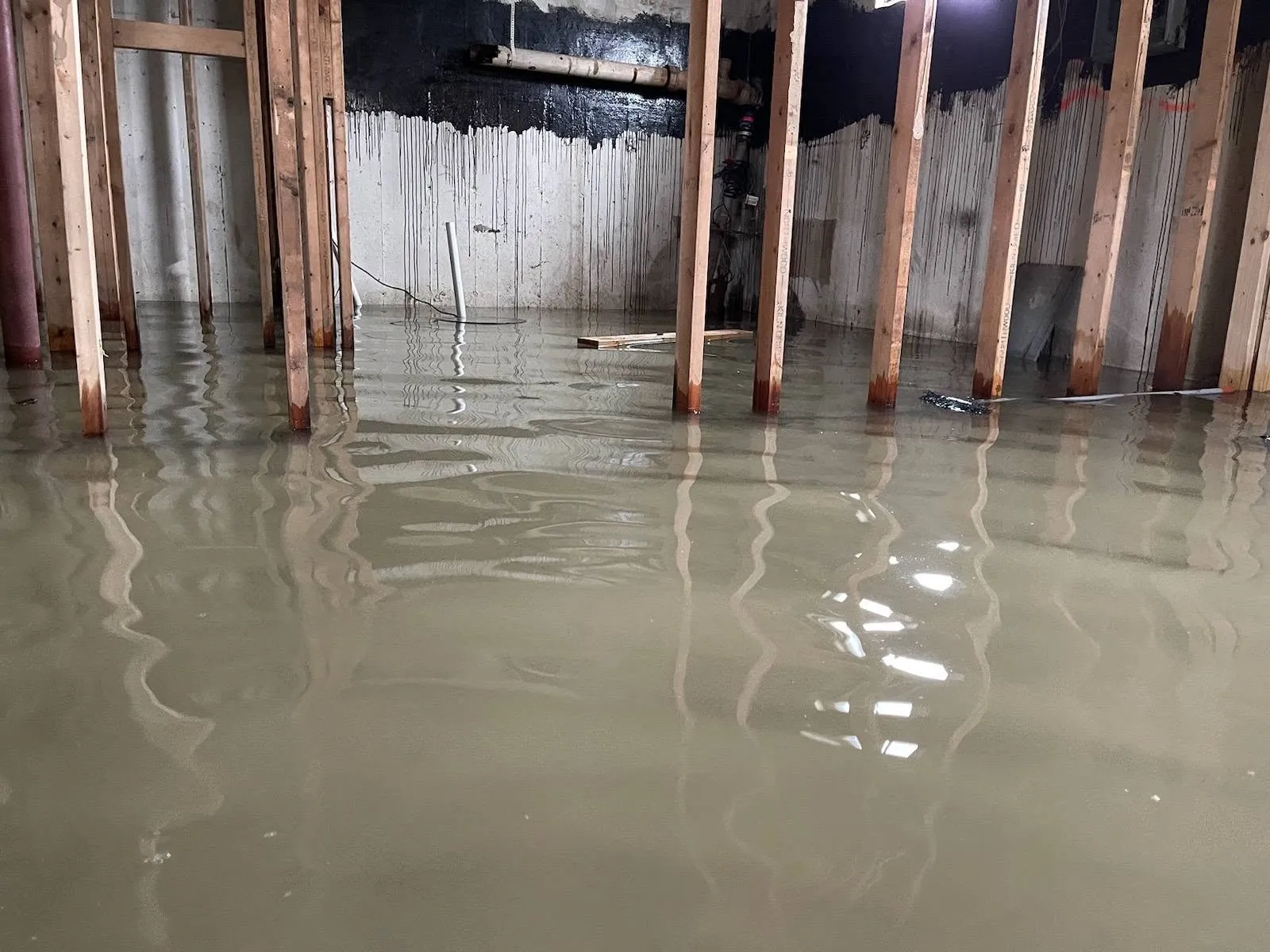
- Use caution with deep basement water. Removing a large volume too quickly can create damaging pressure differences against foundation walls when groundwater remains high outside the building.
- Call for pump repair and water-damage restoration. The failed drainage system needs correction while the basement water and affected materials require a separate restoration scope.
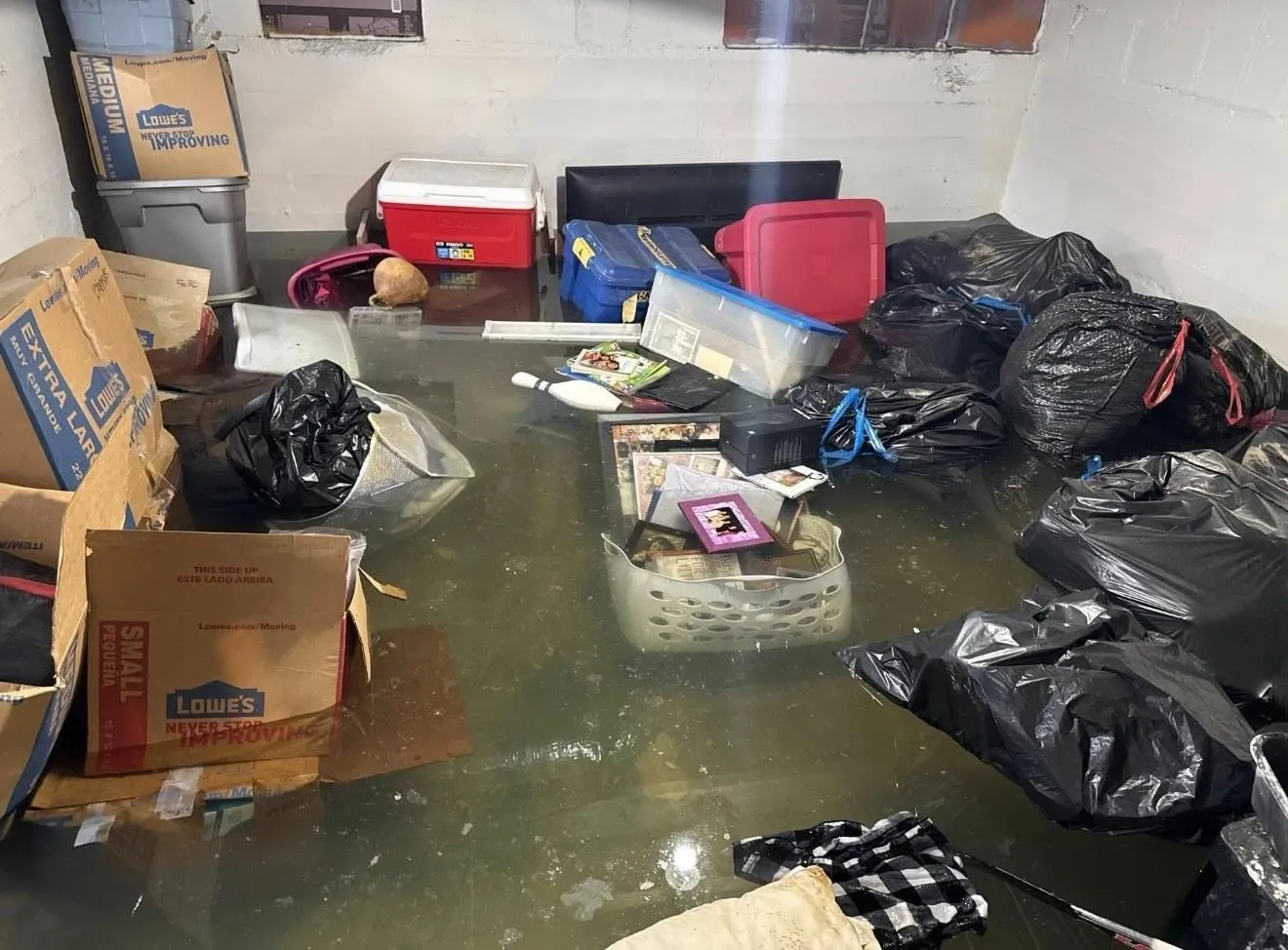
How Failed Basement Drainage Causes Water Damage
Flooding can develop when the system cannot keep up because of:
- Power loss
- Pump motor failure
- Stuck or damaged float switch
- Blocked pump intake
- Clogged or restricted discharge line
- Check-valve problems
- Failed backup pump
- Excessive groundwater inflow
- Drainage entering faster than the pump can discharge it
- Mechanical failure during heavy rainfall
Where the Water Usually Travels
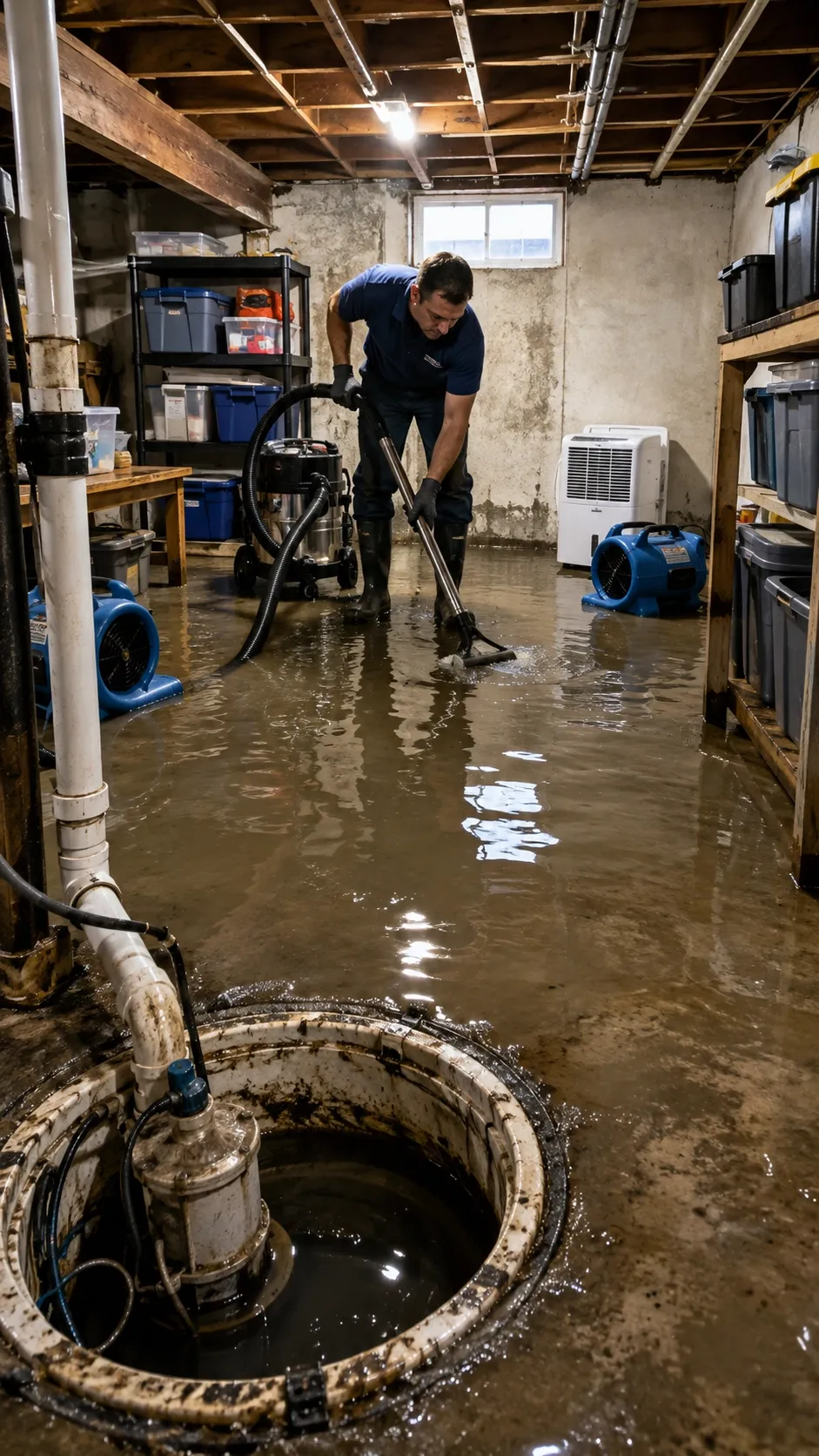
First Affected Area
- Sump-pit water level
- Visible standing-water depth
- Pump and discharge location
- Direction of water movement
- Floor drains
- Foundation-wall bases
- Finished flooring
- Nearby utilities
- Stored contents
- Basement stairs and doorways
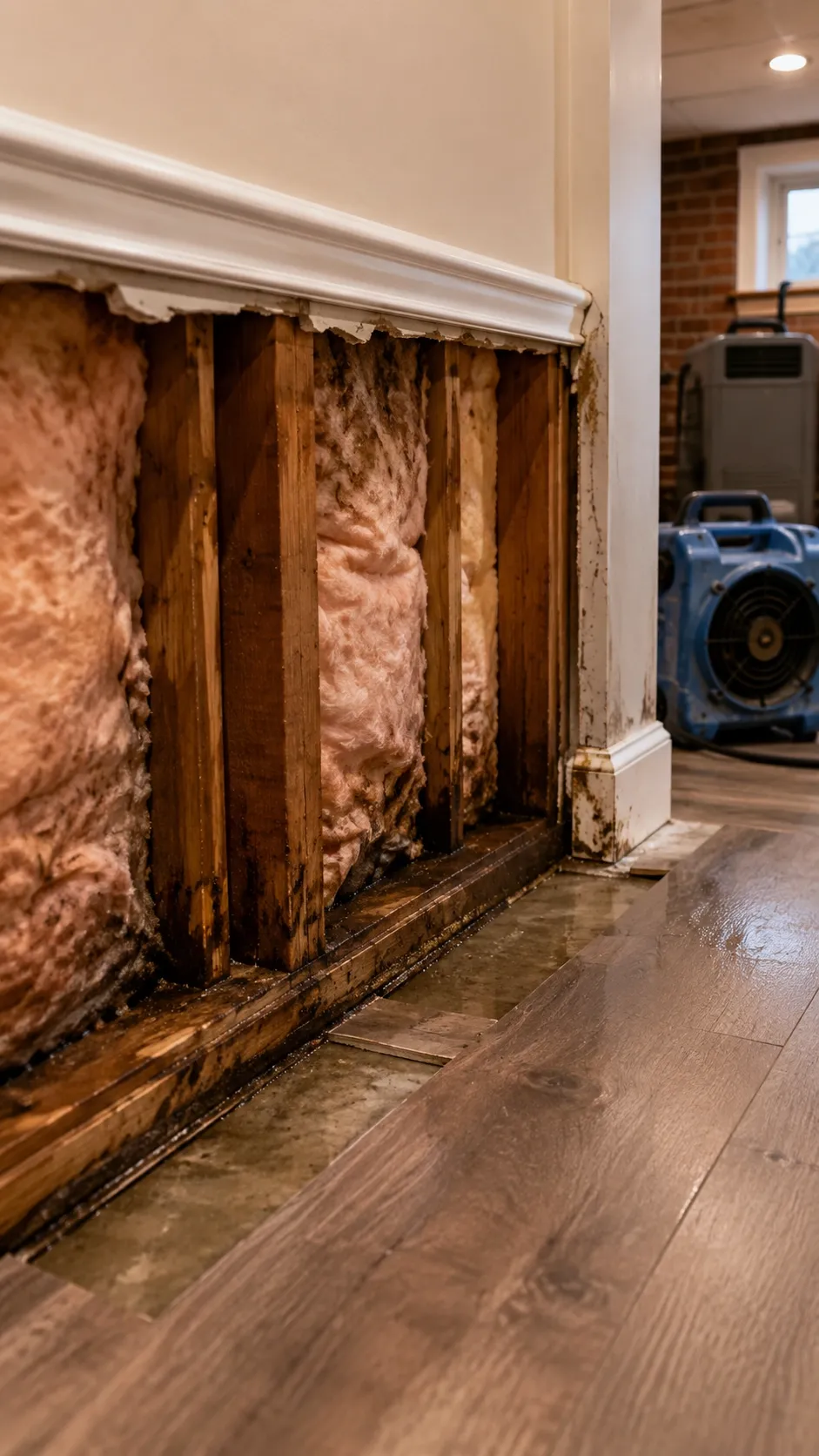
Hidden Cavities
- Behind baseboards
- Inside finished basement walls
- Behind drywall or paneling
- Within insulation
- Under carpet and padding
- Beneath laminate or vinyl
- Inside raised subfloor systems
- Around bottom wall plates
- At concrete-wall and slab intersections
Floor Below
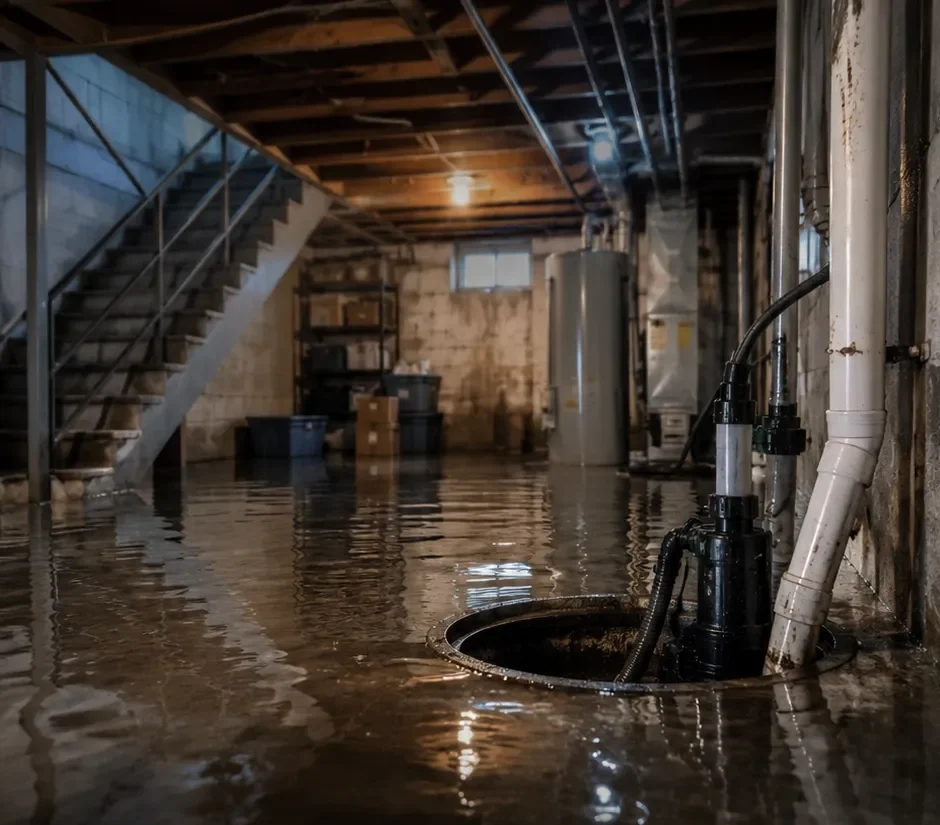
If a property has a sub-basement or another level below the flooded space, that level is included in the migration check.
Adjacent Rooms
- Laundry rooms
- Mechanical rooms
- Storage areas
- Finished recreation rooms
- Hallways
- Basement apartments
- Ground-floor commercial storage
- Closets and utility spaces
Who Repairs the Source and Who Restores the Damage?
Who Repairs the Failed Sump System?
- Replacing a failed sump pump
- Repairing the float switch
- Clearing a discharge line
- Repairing a check valve
- Correcting electrical supply problems
- Installing or repairing a backup pump
- Addressing private drainage defects
What Water Damage Restoration NYC Handles
- Basement water assessment
- Standing-water extraction
- Moisture mapping
- Water-condition evaluation
- Contents protection
- Selective wet-material removal
- Cleaning where required
- Structural drying
- Moisture monitoring
- Damage documentation
- Interior repair planning
Restoration Plan: Address Standing Water, Groundwater, Stored Contents and Backup-Power Context
1. Establish Why the Pump Stopped
2. Determine Whether Water Is Still Entering
3. Assess Water Depth and Condition
Deep flooding may require staged removal rather than uncontrolled rapid pumping.
4. Protect and Separate Contents
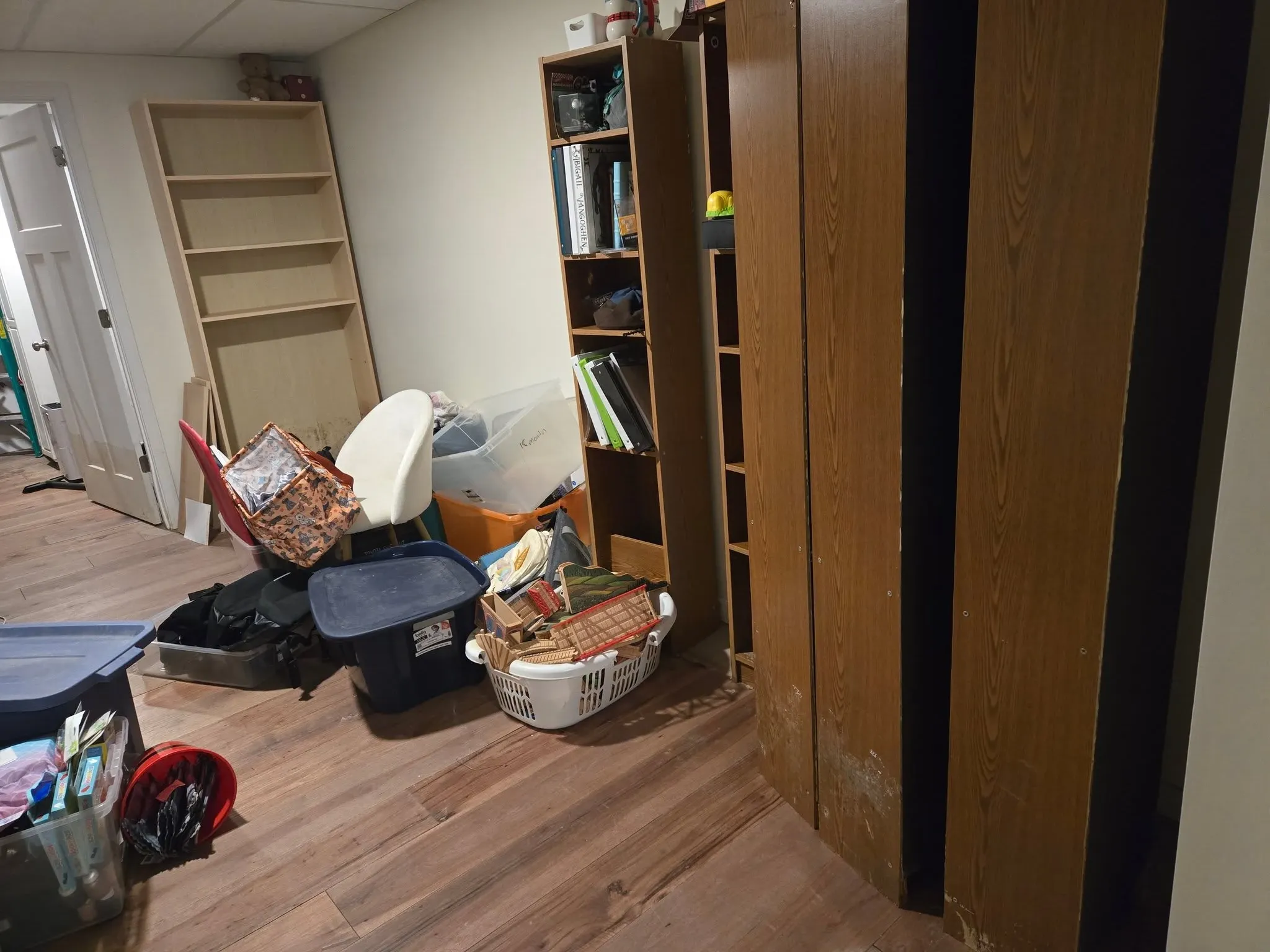
Contents already exposed are separated according to material and condition. Cardboard, paper, upholstered items, wood furniture, electronics and stored inventory do not all receive the same decision.
5. Extract Standing Water
Extraction reveals the true structural drying scope; it does not complete it.
6. Inspect Walls and Flooring
• Wall bases
• Drywall
• Insulation
• Wood framing
• Carpet and padding
• Finished flooring
• Subflooring
• Concrete
• Masonry
Dense materials such as concrete, masonry and wood can retain moisture after surface water disappears.
7. Remove Materials That Cannot Be Restored
8. Dry Retained Assemblies
9. Document the Backup-Power Context
Permanent pump, battery-backup or electrical modifications remain the responsibility of the appropriate trade.
10. Verify the Restoration Handoff
Materials Commonly Affected
Concrete slab
Concrete or masonry walls
Drywall
Insulation
Wood framing
Carpet and padding
Laminate
Vinyl flooring
Stored cardboard and paper
Furniture and contents
A Brooklyn Sump Pump Failure Project
Insurance Documentation for This Cause
Insurance Documentation for This Cause
Water Damage Restoration NYC Can Record:
- Reported sump-pump failure
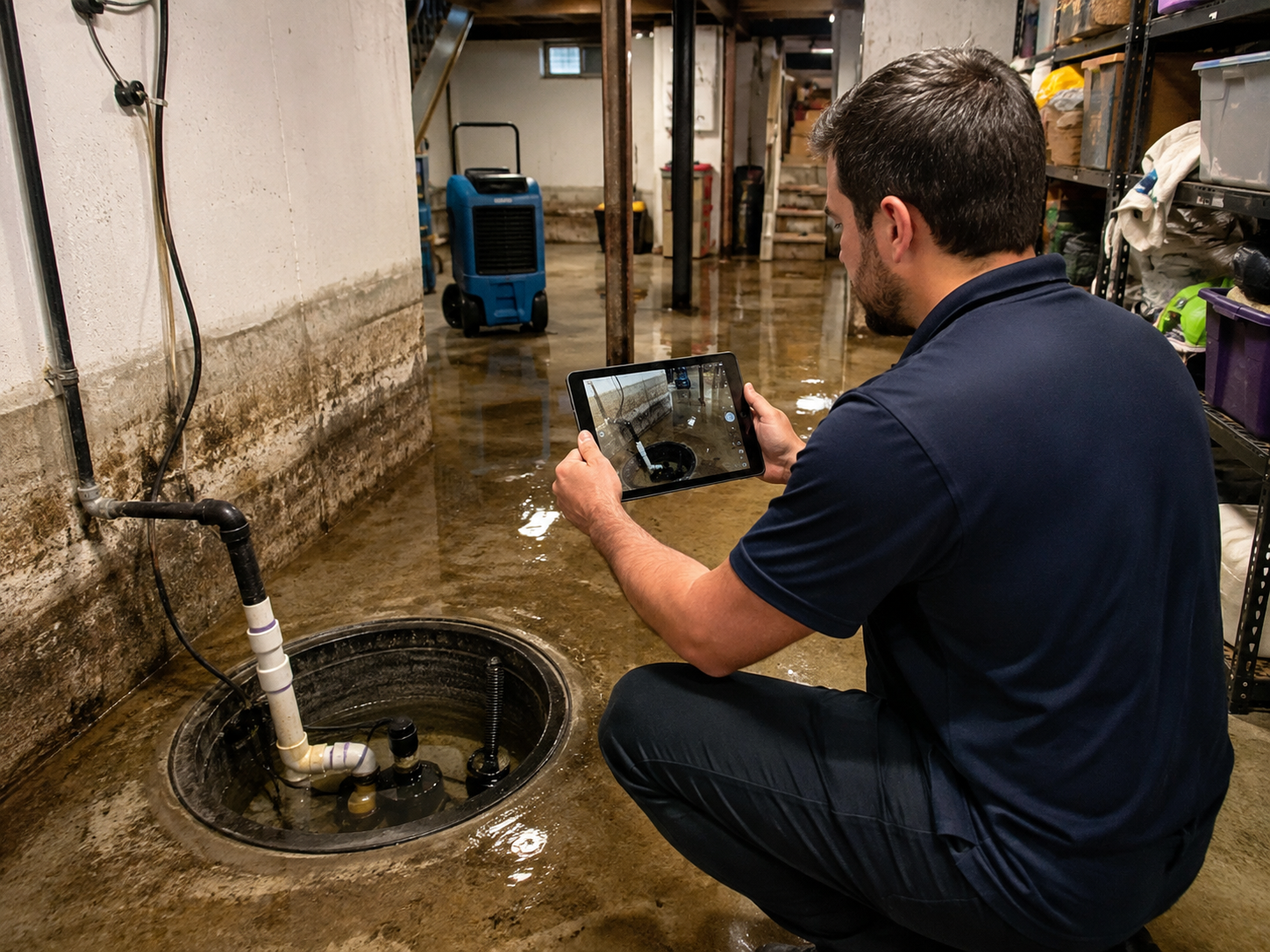
- Pump and pit condition
- Power-outage information when relevant
- Initial water depth
- Groundwater or seepage observations
- Photographs
- Rooms and contents affected
- Moisture-reading locations
- Materials removed or retained
- Extraction progress
- Drying progress
- Remaining repair requirements
What the Service Includes and Does Not Include
Sump Pump Failure Cleanup Can Include
- Emergency basement water assessment
- Standing-water extraction
- Groundwater and contamination assessment
- Contents triage and protection
- Wall and flooring moisture inspection
- Selective wet-material removal
- Cleaning where required
- Structural drying and monitoring
- Photo and moisture documentation
- Repair-scope handoff
Not Automatically Included
- Sump-pump repair or replacement
- Electrical repair
- Permanent backup-power installation
- Foundation waterproofing
- Exterior drainage reconstruction
- Public sewer repair
- Lead or asbestos testing
- Major reconstruction
- Insurance coverage decisions
- Work outside the confirmed loss area
Why Choose Water Damage Restoration NYC?
1. We Treat the Failed Pump as the Cause, Not the Entire Problem
2. Deep Basement Water Changes the Extraction Decision
3. We Check What Remains Wet After the Water Is Gone
4. The Service Is Structured for Brooklyn Basements
Our estimated Brooklyn arrival is 1–2 hours, subject to traffic, weather, street flooding, parking, building access and current emergency demand.
Frequently Asked Questions
Stay out of standing basement water near electricity and call for pump repair and water-damage cleanup.
For emergency service in Brooklyn, call +1 (917) 203-4372. Do not enter deep water just to restart the pump.
A qualified plumbing, pump, drainage or electrical professional handles the failed pump and its related system.
Water Damage Restoration NYC handles standing-water removal, moisture inspection, cleaning, structural drying and the resulting restoration scope.
We follow the waterline using material moisture readings and inspection of wall bases, flooring edges, finished basement cavities, subfloor systems, concrete and masonry.
The visible floor can be dry while deeper materials remain wet.
Materials that are contaminated, physically damaged or cannot be effectively dried may require removal.
Wet insulation, damaged carpet padding, deteriorated drywall and swollen composite flooring are common examples.
Yes. We can document the reported pump failure, water depth, source conditions, photographs, affected materials, extraction, drying progress and repair requirements.
Coverage for sump-pump, drain, seepage or flood losses depends on the specific insurance policy.
Call for Sump Pump Failure Cleanup in Brooklyn
A failed sump pump can leave water moving across a basement floor, into stored contents, behind finished walls and beneath flooring before the complete moisture boundary becomes visible.
Call Water Damage Restoration NYC at +1 (917) 203-4372 or email info@waterdamagerestorationservicesnyc.com for sump pump failure cleanup in Brooklyn.
Our estimated arrival is 1–2 hours. We will assess the standing water, determine the affected boundary and establish the extraction, cleaning, drying and repair requirements.