Water Damage Mitigation in Brooklyn
Water Damage Restoration NYC provides water damage mitigation in Brooklyn to stop active spread, protect unaffected rooms, and stabilize wet materials before repairs begin. Our estimated arrival window is 1–2 hours, subject to traffic, weather, and building access.
Trust Strip:
1–2 Hour Estimated Arrival
Brooklyn-Wide Dispatch
Moisture and Photo Documentation
Clear Scope Before Repair
1–2 Hour Estimated Arrival | Brooklyn-Wide Dispatch | Moisture and Photo Documentation | Clear Scope Before Repair
What Water Damage Mitigation Stops
Water damage mitigation is the loss-control stage between discovering a water problem and completing permanent repairs. Its purpose is not simply to remove visible water. It is to keep the affected area from becoming larger, more contaminated or more expensive to restore.
Call Water Damage Restoration NYC when water is moving through a ceiling, collecting beneath flooring, soaking a wall, entering a basement or spreading from one apartment into another. We assess the visible loss, check likely pathways and explain the next action before mitigation work begins.
Water can damage wood, composite materials, laminated surfaces, metal components and electrical systems, while prolonged moisture can support mold growth. Wet areas and materials should therefore be addressed promptly rather than covered or repaired while moisture remains trapped.
Our Brooklyn mitigation service focuses on five immediate outcomes:
- Control or isolate the water source where safely possible.
- Prevent water and moisture from reaching unaffected rooms.
- Identify materials that can be dried, protected or salvaged.
- Remove materials that cannot remain safely in the drying area.
- Stabilize the property so structural drying or repair can proceed under a defined scope.
Stabilization and Containment Priorities
The first priority is not demolition. It is determining what must happen now to stop the loss from expanding.
Source Control
Mitigation starts by identifying whether the water is still entering the property. Depending on the cause, the immediate action may involve closing a supply valve, isolating an appliance, stopping fixture use, protecting an opening or coordinating with a plumber, roofer, building superintendent or utility provider.
Water Damage Restoration NYC can perform loss-control work, but permanent plumbing, roofing, façade, drainage or mechanical repairs may require the appropriate trade. We separate these responsibilities in the scope so the property owner understands who must correct the source and who will mitigate the resulting damage.
Protect Unaffected Rooms
Water can travel through wall cavities, floor assemblies, pipe penetrations and shared ceilings. We inspect the edge of the affected area rather than assuming the visible stain represents the full loss.
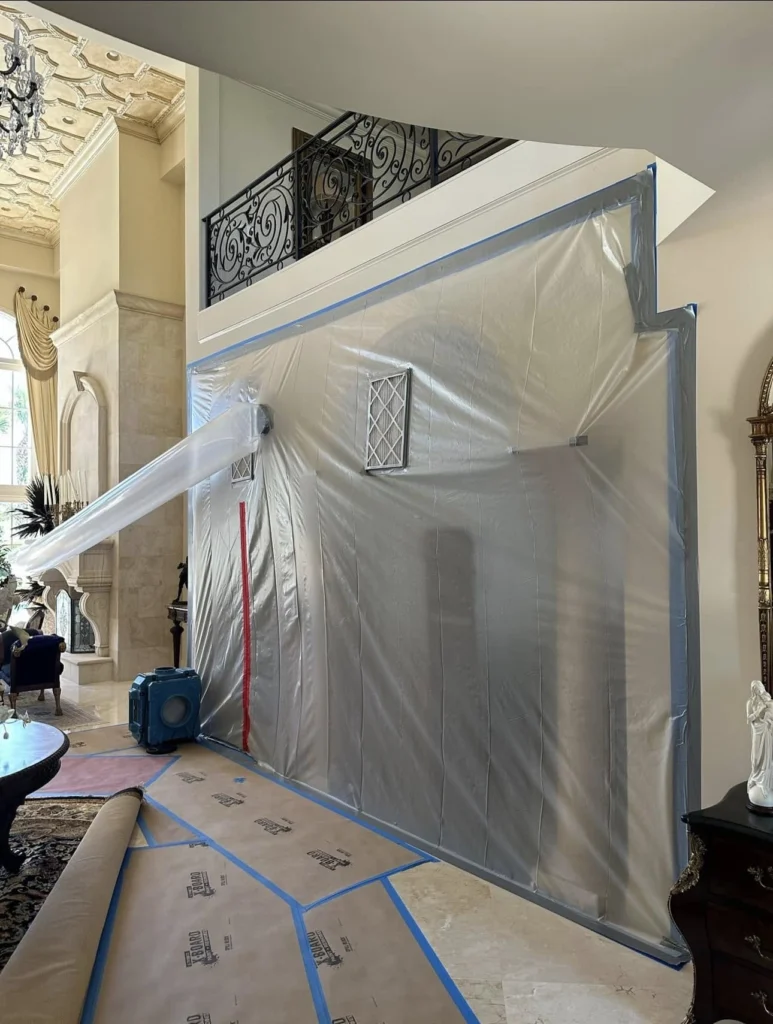
Temporary containment may be used to separate the work zone, protect occupied areas and limit the movement of debris during controlled material removal. Floor protection, plastic barriers and protected access routes may also be required in apartments, common hallways or commercial spaces.
Salvage Contents
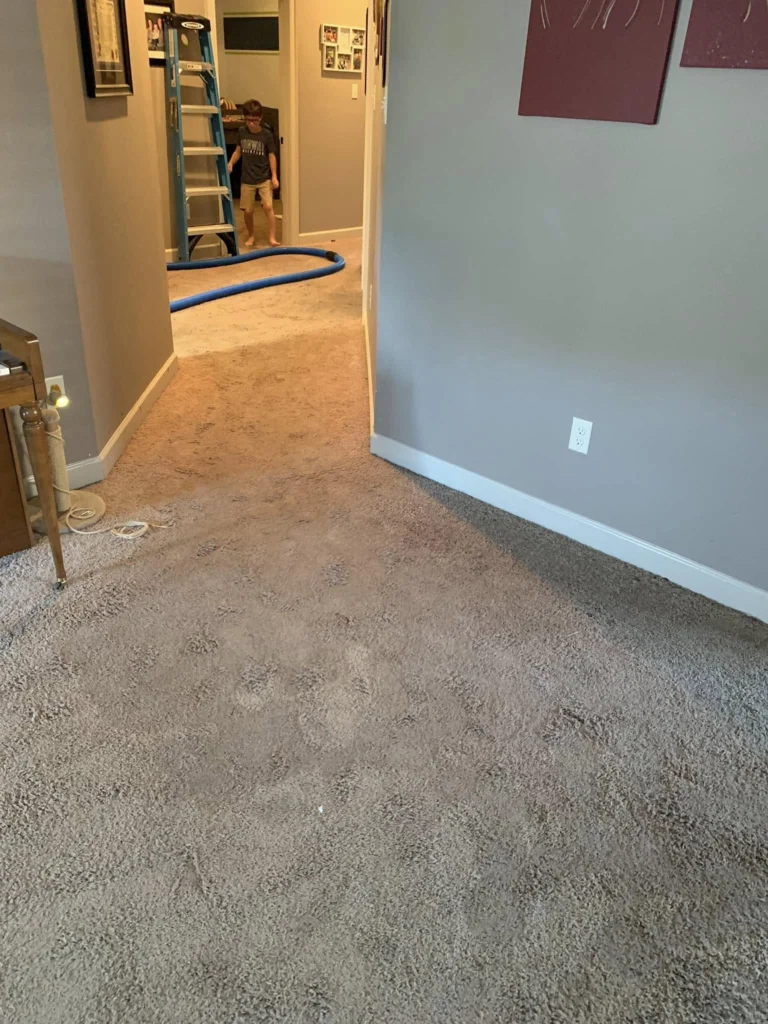
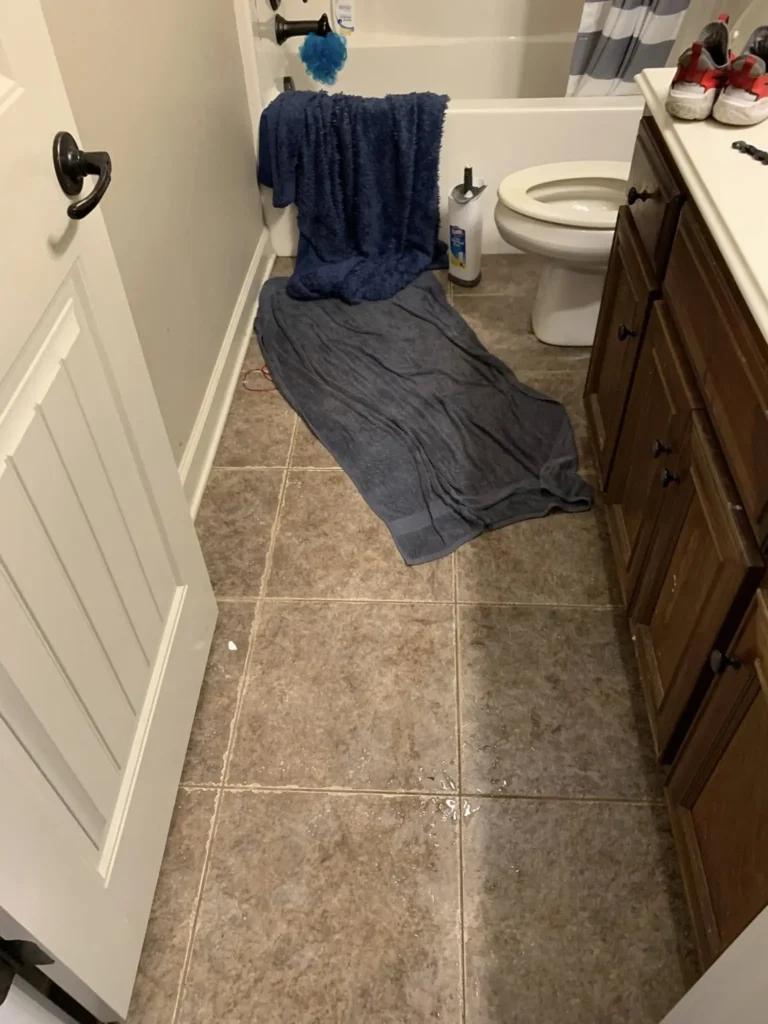
Contents are prioritized according to exposure, material and condition. Dry items may be moved away from the loss. Furniture can be blocked or protected where appropriate. Wet boxes, documents, textiles and personal belongings are separated so they do not continue transferring moisture to nearby surfaces.
The decision is based on whether an item can be cleaned and dried safely—not merely whether it looks undamaged from the outside.
Temporary Barriers and Protection
Openings created for access or controlled removal may need temporary protection before permanent repair begins. Mitigation can also include protecting cabinets, fixtures, adjacent flooring, doorways and unaffected finishes while the wet assembly is opened or dried.
These controls matter in Brooklyn buildings where the work area may share a wall, ceiling, hallway or access route with another apartment or occupied part of the property.
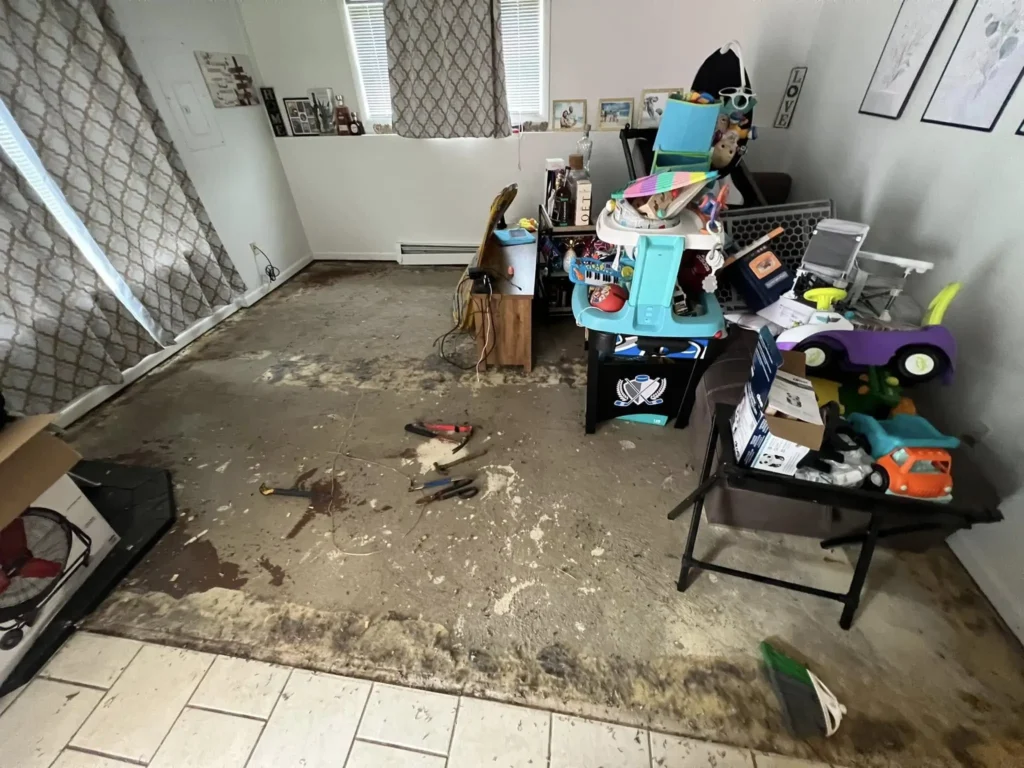
Materials We Dry, Remove or Protect
The correct action depends on the water source, contamination level, exposure time, material porosity and how deeply moisture has entered the assembly.
A clean supply-line leak is not managed in the same way as dishwasher discharge, groundwater or a sewer backup. Water losses are commonly evaluated by contamination category and by the amount and type of material involved. Dense materials such as plaster, wood, concrete and masonry can also hold moisture differently from carpet, insulation or gypsum board.
Our mitigation scope may address:
Drywall, plaster and wall cavities
Baseboards, trim and door casings
Carpet, padding and finished flooring
Hardwood, engineered flooring and subfloors
Cabinets, vanities and built-in components
Fiberglass or fiber-fill insulation
Wood framing and structural assemblies
Concrete, brick and masonry surfaces
Furniture and movable contents
Salvageable material is protected and included in the drying plan. Material that is contaminated, structurally unsound or preventing access to trapped moisture may require controlled removal. We explain the reason for removal before proceeding whenever conditions allow.
Mitigation vs. Repair
Mitigation limits additional damage. Repair rebuilds what the loss damaged.
Mitigation may include assessment, source isolation, containment, water control, selective removal, material protection, drying preparation and documentation. Its completion point is a stabilized property with an approved next-step scope.
Repair begins after the water source has been corrected, affected assemblies have been evaluated and the property is ready for reconstruction. Repair may involve replacing drywall, flooring, insulation, trim, cabinetry or finishes.
Keeping these stages separate prevents new materials from being installed over unresolved moisture. For permanent reconstruction, visit our dedicated water damage repair in Brooklyn page.
Documentation and Scope Approval
Before work expands beyond emergency stabilization, we define the affected area and explain the proposed scope.
Documentation may include:
- Photos of the source and visible damage
- Rooms, assemblies and materials affected
- Initial moisture conditions
- Areas requiring containment or access
- Materials recommended for drying, protection or removal
- Equipment and monitoring requirements
- Work authorized by the owner or responsible party
- Conditions that must be met before repair begins
Moisture maps, readings and drying records can help establish what was affected and what work was performed. They may also support communication with a property manager, building owner or insurance adjuster, although coverage and claim decisions remain with the insurer. Industry procedures commonly place assessment, moisture mapping, extraction, controlled drying and progress documentation before reconstruction.
You receive a clear next step rather than an open-ended promise. Work that depends on concealed conditions is identified as inspection-dependent.
Brooklyn Mitigation Project
Brooklyn contains private homes, rental apartments, cooperative housing, public housing and high-density multifamily properties. More than 1.1 million housing units were recorded in the borough in 2022. That housing density can make access, occupancy and communication part of the mitigation plan—not an administrative detail.
Water Damage Restoration NYC does not use a generic project story for every location page. A verified Brooklyn job, original site photos and actual readings should be added to this section before publication as first-hand evidence.
Brooklyn basements and cellars can also create specific access and safety concerns. They are legally and physically different spaces, and lower-level flooding may require additional evaluation before water is removed or occupants re-enter the area.
A Brooklyn project record should identify:
- The neighborhood and property type
- The source of the water
- The affected rooms and adjacent units
- The materials exposed
- Initial moisture conditions
- Containment and temporary protection
- Material removed, protected or dried
- Building-management or tenant coordination
- Final stabilization or drying result
What the Service Includes and Does Not Include
Water mitigation can include
- Initial damage and safety assessment
- Water-source isolation where safely accessible
- Protection of unaffected rooms and finishes
- Water control and extraction support
- Temporary containment and access protection
- Controlled removal of unsalvageable materials
- Drying preparation and moisture monitoring
- Photos, readings and written scope documentation
Not automatically included
- Permanent plumbing or supply-line repair
- Roof, façade or foundation repair
- Full reconstruction or finish replacement
- Mold assessment or licensed mold remediation
- Asbestos, lead or environmental testing
- Electrical or mechanical system repair
- Insurance coverage or claim approval
- Permit, board, management or access fees
Final inclusions depend on the water source, contamination, affected material, property access and inspection findings. No removal or reconstruction should be assumed solely from a phone description.
Why Choose Water Damage Restoration NYC
A Brooklyn-Focused Response
This page is supported by an NYC-wide company, but the dispatch, property discussion and scope are specific to Brooklyn. Our estimated arrival window is 1–2 hours, with the current timing confirmed when you call.
Mitigation Before Reconstruction
We focus first on stopping spread and stabilizing the loss. Repair recommendations come after the affected area and materials have been evaluated.
Material-Specific Decisions
Drywall, plaster, wood, insulation, flooring and masonry do not respond to water in the same way. We base the scope on the source, material condition and moisture path rather than using the same removal plan for every property.
Clear Records and Service Boundaries
You receive a defined mitigation scope that separates emergency loss control, source repair, drying and reconstruction. This helps homeowners, tenants, landlords and building managers understand what is happening now and what may be required next.
Frequently Asked Questions
Stop the Damage From Spreading
Call Water Damage Restoration NYC at +19172034372 for water damage mitigation in Brooklyn. We will confirm the current arrival estimate, assess what is affected and explain the immediate stabilization scope before repair work begins.