WATER DAMAGE RESTORATION NYC
Toilet Overflow Cleanup in Brooklyn
Water Damage Restoration NYC provides toilet overflow cleanup in Brooklyn for overflowing fixtures, blocked drains and wastewater backups. We isolate affected areas, remove contaminated water, inspect flooring and lower levels, clean exposed surfaces and begin verified drying, with an estimated 1–2 hour arrival.
- 24/7 Emergency Service
- Certified Team
- Rapid Response
- Insurance Assistance
Toilet Overflow Response
1–2 Hour Estimated Arrival
Contamination Assessed Before Cleanup
Hidden Moisture Checked Beyond the Bathroom
Documented Drying and Repair Handoff
Immediate Actions After Toilet Overflows
Stop using the toilet and keep people and pets away from the affected area.
If water is still rising or spreading:
- Do not flush again. Another flush can add water when the toilet trap, branch drain or waste line is already restricted.
- Close the toilet supply valve if it is safe to reach. This stops refill water entering the tank and bowl, but it will not clear a blocked drain.
- Keep foot traffic out of the bathroom. Shoes and paws can carry contaminated water into hallways, bedrooms and other clean areas.
- Avoid electrical equipment. Do not use household vacuums, extension cords or powered appliances around standing water.
- Move unaffected belongings only when safe. Keep towels, rugs, toiletries, storage items and furniture outside the water path.
- Photograph the visible damage. Capture the toilet, affected flooring, doorway, baseboards and any staining on the ceiling below.
- Arrange source repair and cleanup separately. A plumber addresses the blockage or drain problem. Water Damage Restoration NYC handles the resulting water damage.
Flood or sewage-affected areas should be kept away from children and pets, and contaminated items that cannot be adequately cleaned, disinfected and dried may need to be discarded.
How Toilet Fixture or Drain Overflow Causes Water Damage
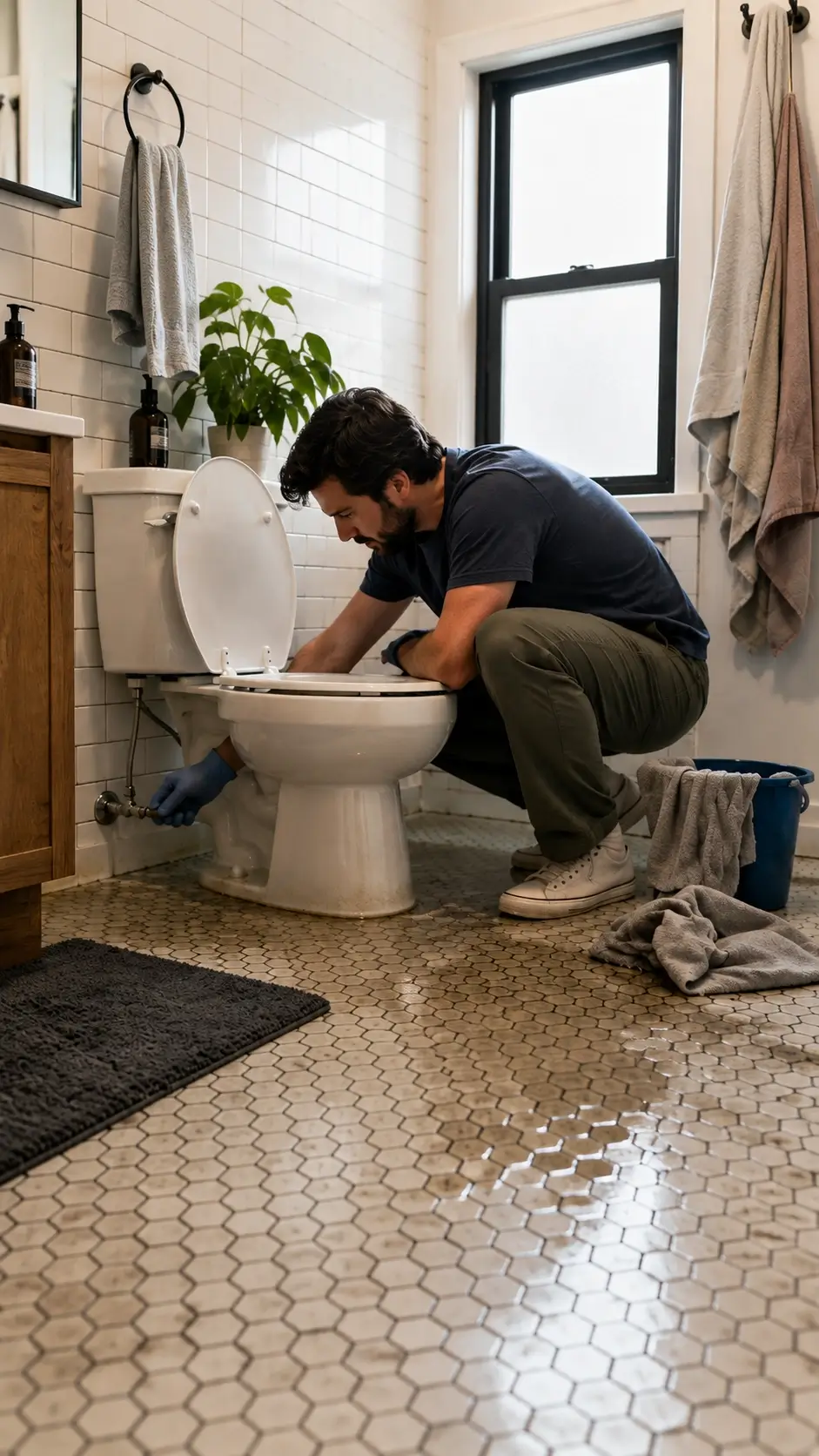
The cleanup scope depends on what actually overflowed.
A toilet incident can involve:
- Clean water from the toilet supply line
- Bowl water from a localized fixture blockage
- Wastewater pushed back through the fixture
- A restricted branch drain
- A private sewer-service problem
- A broader building sewer backup
These are not interchangeable conditions.
A leaking supply connection beside the toilet can begin as clean supply water. Toilet-bowl water containing urine but no fecal matter carries a higher contamination concern, while water containing sewage or fecal material requires substantially stricter contamination controls. Water quality can also deteriorate after prolonged contact with dirty flooring, cavities and building materials.
That is why our first decision is not simply, “How much water is on the floor?” We establish where it came from, what it contained, how long it was present and what materials it contacted.
Those findings determine the removal, cleaning, sanitization and drying scope.
Where the Water Usually Travels
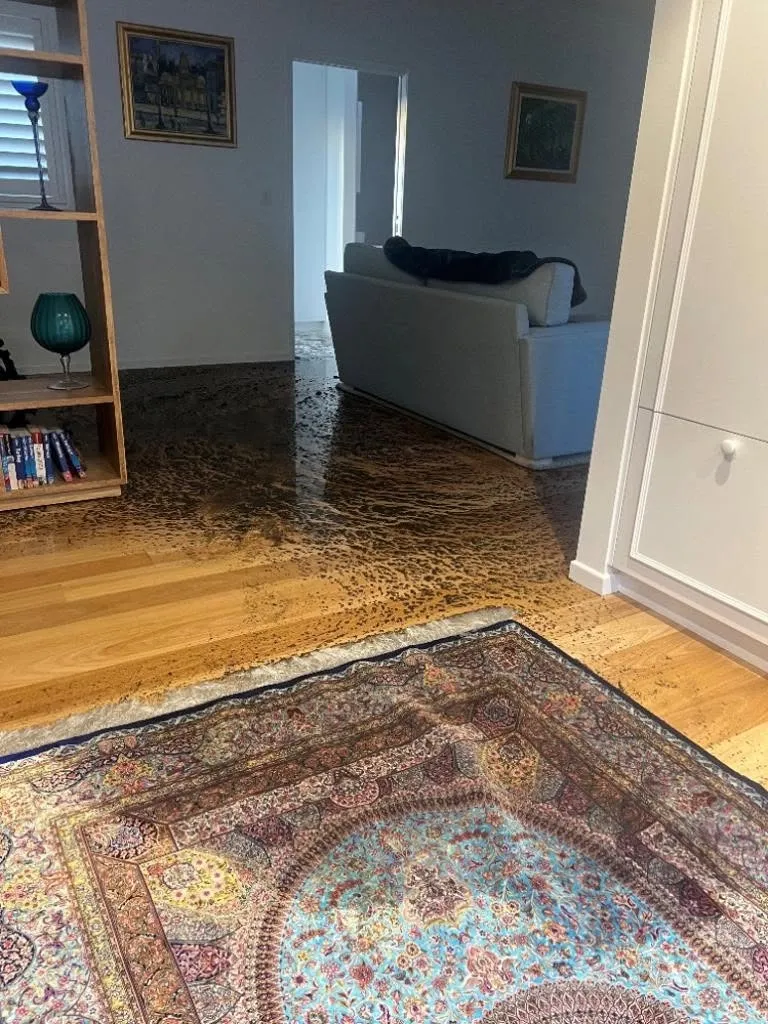
A bathroom can look like a small affected area while water has already moved beyond the visible floor.
First Affected Area
Inspection starts around the toilet and follows the initial water boundary.
We check the:
- Toilet base
- Tile and grout
- Vinyl seams
- Flooring edges
- Baseboards
- Vanity toe kicks
- Wall-floor joints
- Door threshold
- Nearby contents
Water collecting around the fixture can enter small joints before the visible surface begins to look damaged.
Hidden Cavities
Overflow water can move beneath:
- Baseboards
- Tile assemblies
- Vinyl flooring
- Laminate
- Hardwood
- Underlayment
- Subflooring
- Vanity cabinets
- Wall plates
Pipe openings and floor penetrations can also give water a route into concealed assemblies.
A dry-looking tile surface does not prove that the material beneath it is dry.
Floor Below
This is particularly important in Brooklyn apartments, brownstones and other multi-level properties.
Water can move through pipe penetrations, subfloor joints and framing openings into the ceiling below. Damage may appear as a stain, drip, soft ceiling area or moisture around a fixture several feet away from the bathroom above.
Brooklyn had more than 1.1 million housing units in 2022, with an average housing density of 15,876 units per square mile. That dense building environment makes stacked-unit and shared-assembly checks especially relevant when an overflow occurs above another occupied space.
Adjacent Rooms
Water can cross the bathroom doorway or travel beneath continuous flooring into a hallway, closet, bedroom or neighboring room.
Water Damage Restoration NYC follows the confirmed moisture path rather than stopping the inspection at the bathroom threshold.
Who Repairs the Source and Who Restores the Damage?
The plumbing professional corrects the toilet, drain or sewer problem. Water Damage Restoration NYC handles the resulting water damage.
Plumbing Work May Include
Plumbing work may include clearing a toilet blockage, opening a restricted drain, repairing a fixture or addressing a damaged private sewer line.
When the problem originates in a private sewer service line, the property owner is responsible for that line, and damaged private sewer-line repairs require the appropriate licensed plumbing professional.
Our Restoration Scope Can Include
- Contamination assessment
- Bathroom isolation
- Water extraction
- Moisture inspection
- Flooring and subfloor assessment
- Adjacent-room checks
- Ceiling-below inspection
- Removal of unsalvageable materials
- Cleaning and sanitization
- Structural drying
- Moisture monitoring
- Damage documentation
- Interior repair planning
Clearing the drain does not remove contaminated water from a subfloor, and sanitizing the bathroom does not repair a blocked waste line. Both sides of the loss need to be addressed.
Restoration Plan: Classify Contamination, Isolate the Bathroom, Inspect Flooring and Sanitize Affected Surfaces
1. Identify the Water Source
We determine whether the overflow came from the supply connection, toilet bowl, branch drain or sewer system.
The source establishes the starting contamination condition.
2. Define the Affected Boundary
The visible waterline is documented, then flooring edges, wall bases, adjoining rooms and the ceiling below are checked where the building layout supports further migration.
3. Isolate Contaminated Areas
Traffic through affected areas is restricted so wastewater and debris are not carried into unaffected rooms.
Clean belongings are separated from exposed materials.
4. Remove Standing Water and Contamination
Accessible water and gross contamination are removed before detailed cleaning begins.
Where an overflow has reached carpet, padding or another absorbent material, surface extraction alone may not be enough.
5. Inspect Flooring and Subflooring
Bathroom finishes can conceal moisture.
Tile, grout, vinyl, laminate, hardwood, underlayment and subflooring are assessed according to exposure, contamination and physical condition.
6. Remove Materials That Cannot Be Restored
Porous materials that cannot be thoroughly cleaned, disinfected and dried may require removal. Contaminated carpet padding and heavily affected porous contents are common examples.
Removal is limited to material condition and the confirmed affected boundary rather than unnecessary tear-out.
7. Clean and Sanitize Retained Surfaces
Suitable hard and semi-porous materials are cleaned after contaminated water and debris have been removed.
Sanitization follows the actual affected surfaces. Spraying deodorizer over the room does not replace physical cleaning.
8. Dry the Remaining Structure
Subflooring, framing, drywall, plaster and other retained components are dried according to their material and moisture condition.
Porous materials release moisture differently from dense or multilayer assemblies, so equipment use and drying time depend on what actually became wet.
9. Verify Completion
The cleanup reaches its restoration handoff when contaminated water has been removed, required cleaning is complete, unsalvageable materials have been addressed and retained materials have reached the established drying condition.
Remaining finish repairs are then identified separately.
Materials Commonly Affected
| Material | Main Concern | Restoration Decision |
|---|---|---|
| Tile | Contaminated surface and moisture through joints | Clean, sanitize and inspect supporting assembly |
| Grout | Porous exposure | Clean and evaluate condition |
| Vinyl | Water trapped beneath seams | Access, dry or replace as required |
| Laminate | Swollen or contaminated fiber core | Remove affected sections where necessary |
| Hardwood | Joint and subfloor exposure | Evaluate contamination and drying potential |
| Carpet and padding | Absorption of contaminated water | Padding or affected carpet may require removal |
| Drywall | Wet lower edge or contamination | Dry, selectively remove or replace |
| Baseboards | Hidden moisture behind trim | Detach, clean, dry or replace |
| Subflooring | Concealed water beneath finished floor | Inspect, clean and dry when restorable |
| Vanity materials | Wet toe kicks or composite panels | Clean retained material or replace damaged sections |
A Brooklyn Toilet Overflow Project
A Brooklyn toilet-overflow job is managed from the fixture outward, not as a generic bathroom clean.
We first document the toilet and the initial water boundary. The floor around the fixture, doorway and wall bases are checked before the inspection expands along the likely migration route.
In an apartment or multi-level property, the ceiling below is checked when water may have passed through the floor assembly. If the overflow crosses the bathroom doorway, adjoining flooring and baseboards are included in the moisture map.
Contaminated water is removed before retained surfaces are cleaned. Materials that cannot be adequately cleaned and dried are separated from materials that can remain. The remaining assembly is then dried and monitored.
The final project record identifies what was cleaned, what was removed, which materials reached the drying target and what interior repairs remain.
This gives the property owner, tenant, landlord or manager a defined handoff instead of leaving the job at “the bathroom looks dry.”
Insurance Documentation for This Cause
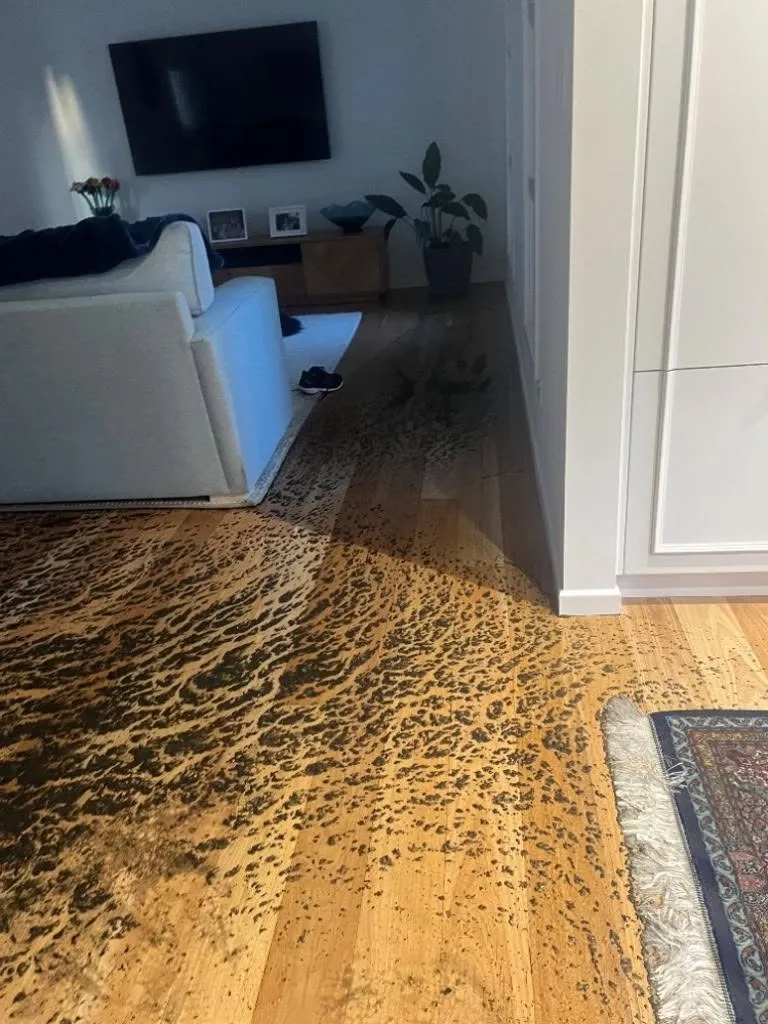
Documentation should connect the toilet or drain event with the resulting property damage.
Water Damage Restoration NYC can record:
- Reported cause of the overflow
- Fixture and drain condition
- Initial photographs
- Visible contamination
- Rooms or units affected
- Initial water boundary
- Flooring and wall conditions
- Moisture-reading locations
- Materials removed or retained
- Cleaning completed
- Drying progress
- Remaining repair requirements
If a city sewer backup is suspected, property owners can also report the condition through NYC311. The Department of Environmental Protection investigates reported sewer backups and determines whether the problem is in the city sewer system or a private service line.
Water Damage Restoration NYC documents the observed loss and restoration work. Coverage, deductibles, exclusions and claim payment remain decisions for the insurance carrier.
What the Service Includes and Does Not Include
Toilet Overflow Cleanup Can Include
- ✓ Contamination assessment
- ✓ Bathroom and work-area isolation
- ✓ Contaminated-water extraction
- ✓ Flooring and subfloor inspection
- ✓ Adjacent-room moisture checks
- ✓ Ceiling-below inspection
- ✓ Selective material removal
- ✓ Cleaning and sanitization
- ✓ Structural drying and monitoring
- ✓ Photo and moisture documentation
Not Included Unless Separately Arranged
- × Toilet repair
- × Drain clearing
- × Private sewer-line repair
- × Plumbing replacement
- × Electrical system clearance
- × Lead or asbestos testing
- × Unrelated mold remediation
- × Major reconstruction
- × Insurance coverage decisions
- × Work outside the confirmed affected area
The final scope depends on the overflow source, contamination level, materials affected, water migration, property access and findings during inspection.
Why Choose Water Damage Restoration NYC?
We Determine What Actually Overflowed
A toilet supply-line leak, bowl overflow and sewer backup require different contamination and restoration decisions.
We Check Beyond the Visible Bathroom Floor
Our Brooklyn toilet overflow cleanup can include flooring edges, wall bases, adjoining rooms and the ceiling below when the water path indicates those areas may be affected.
Cleaning and Drying Are Separate Checkpoints
Contaminated water and residue are addressed before retained building materials are treated as a structural drying project.
You Receive a Defined Restoration Handoff
Water Damage Restoration NYC provides water damage services across NYC, while this service is specifically organized for toilet overflow cleanup in Brooklyn apartments, brownstones, houses, multifamily buildings and commercial bathrooms.
Our estimated arrival in Brooklyn is 1–2 hours, subject to traffic, weather, parking, building access and current emergency demand.
Frequently Asked Questions
Stop flushing, close the toilet supply valve if it is safe to reach and keep people and pets out of the affected area. Then arrange plumbing help for the source and call Water Damage Restoration NYC at +1 (917) 203-4372 for the resulting cleanup.
A plumber or appropriate drain professional fixes the blockage, fixture, waste line or sewer problem. Water Damage Restoration NYC handles contaminated-water removal, cleaning, moisture inspection, structural drying and the interior restoration scope.
We follow the water boundary through flooring edges, wall bases, penetrations, adjoining rooms and lower ceilings using moisture inspection. A visually dry bathroom floor does not automatically mean the subfloor or ceiling below is dry.
Materials that cannot be adequately cleaned, sanitized and dried may require removal. Depending on exposure, this can include carpet padding, severely contaminated drywall, insulation, swollen composite flooring or porous contents.
Yes. Water Damage Restoration NYC can document the reported source, contamination condition, water path, affected materials, photographs, cleanup work, drying progress and remaining repairs. The insurance carrier determines coverage and payment.
Call for Toilet Overflow Cleanup in Brooklyn
An overflowing toilet can move contaminated water beneath flooring, behind baseboards, through the bathroom doorway and into the ceiling below before the full extent of the damage becomes visible.
Call Water Damage Restoration NYC at +1 (917) 203-4372 or email info@waterdamagerestorationservicesnyc.com for toilet overflow cleanup in Brooklyn.
Our estimated arrival is 1–2 hours. We will identify the source condition, establish the affected boundary and define the water removal, sanitization, drying and repair requirements.