WATER DAMAGE RESTORATION NYC
Wall and Wall-Cavity Water Damage Restoration in Brooklyn
Water Damage Restoration NYC provides wall water damage repair in Brooklyn for wet drywall, plaster and concealed wall cavities. We trace moisture beyond visible stains, determine what can dry in place, and define selective removal and repair needs, with an estimated 1–2 hour arrival.
Wall Damage Response
1–2 Hour Estimated Arrival
Full Wall-Cavity Moisture Inspection
Salvage Decision Before Removal
Drying Verified Before Repair
Warning Signs in Walls
Water inside a wall does not always produce an obvious puddle. A small stain can represent moisture extending farther through drywall, plaster, insulation or framing.
Signs that need inspection include:
- Bubbling or peeling paint
- Brown or yellow staining
- Soft drywall
- Swollen baseboards
- Damp plaster
- Cracking around a previously wet area
- Warped trim
- A wall that feels unusually cool or damp
- Water appearing at the floor-wall joint
- A musty odor near one section of wall
- Staining that returns after repainting
- Moisture around pipe penetrations
- Water entering from the ceiling and continuing down the wall
Stay away from outlets, switches or electrical equipment in a visibly wet wall. The water source should also be controlled before restoration is treated as complete.
Wet building materials should be addressed quickly. EPA guidance notes that moisture problems should be investigated and that water-damaged materials such as drywall and paneling need prompt attention; prolonged dampness increases the chance of mold growth.
How We Inspect the Full Moisture Footprint
The visible stain is the starting point, not the repair boundary.
Water can move vertically through a wall cavity, follow plumbing or framing, collect behind baseboards, enter insulation and continue beneath flooring.
Water Damage Restoration NYC inspects the wall according to its construction and the likely water route.
That can include:
- Drywall or gypsum board
- Plaster
- Lath
- Stud framing
- Insulation
- Base plates
- Baseboards and trim
- Pipe penetrations
- Wall-floor joints
- Adjoining walls
- Flooring beside the wall
- The room or unit on the opposite side
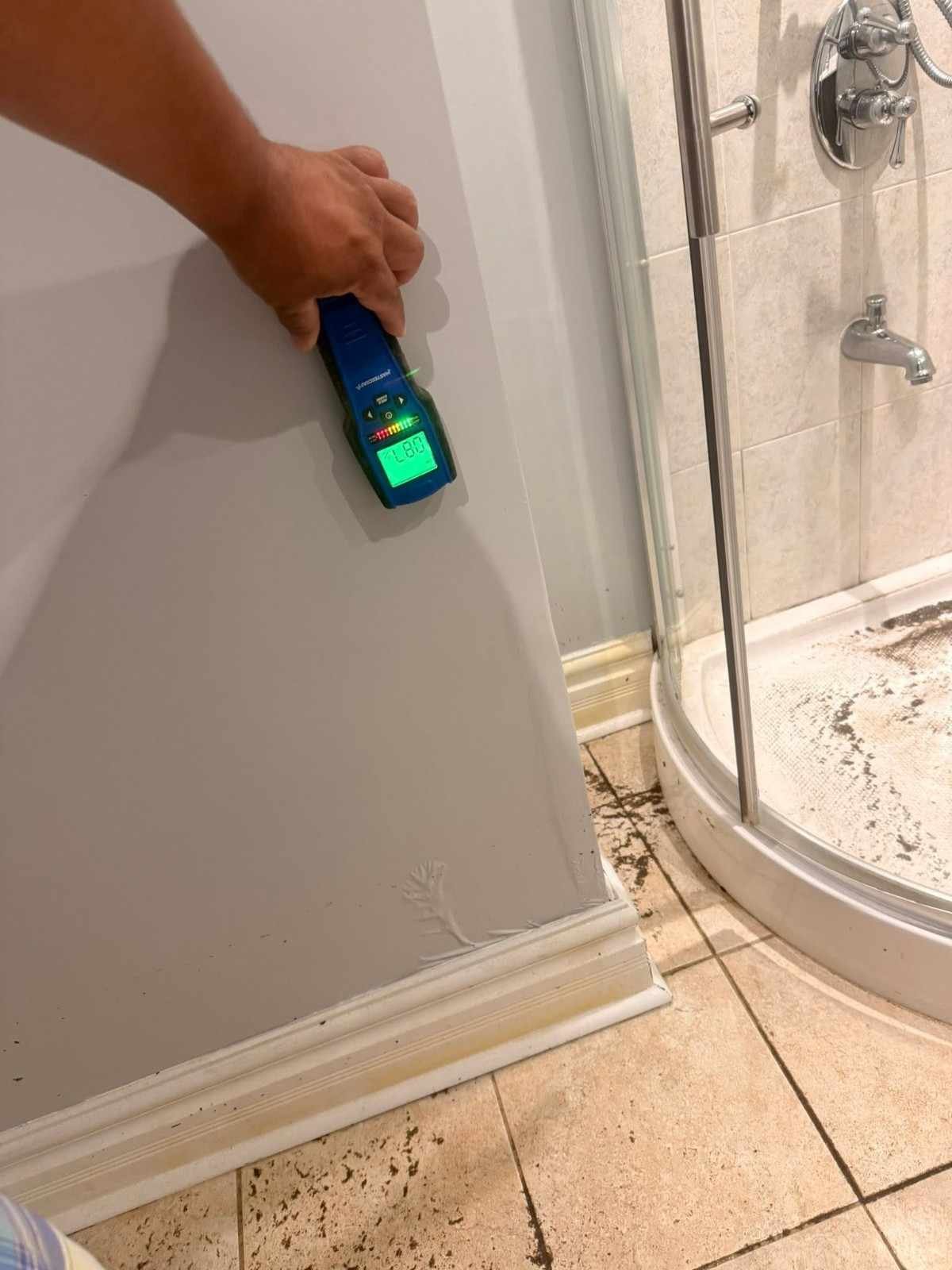
Moisture readings help distinguish a surface stain from water held deeper inside the assembly.
We also identify where the water came from.
A leaking supply pipe, upstairs apartment leak, roof leak, HVAC condensate line, appliance release, groundwater intrusion and contaminated wastewater can all wet a wall, but they do not create the same salvage decision.
Water-damage assessment therefore connects source, water condition, affected material and moisture depth before removal or reconstruction begins.
Can the Walls Be Saved?
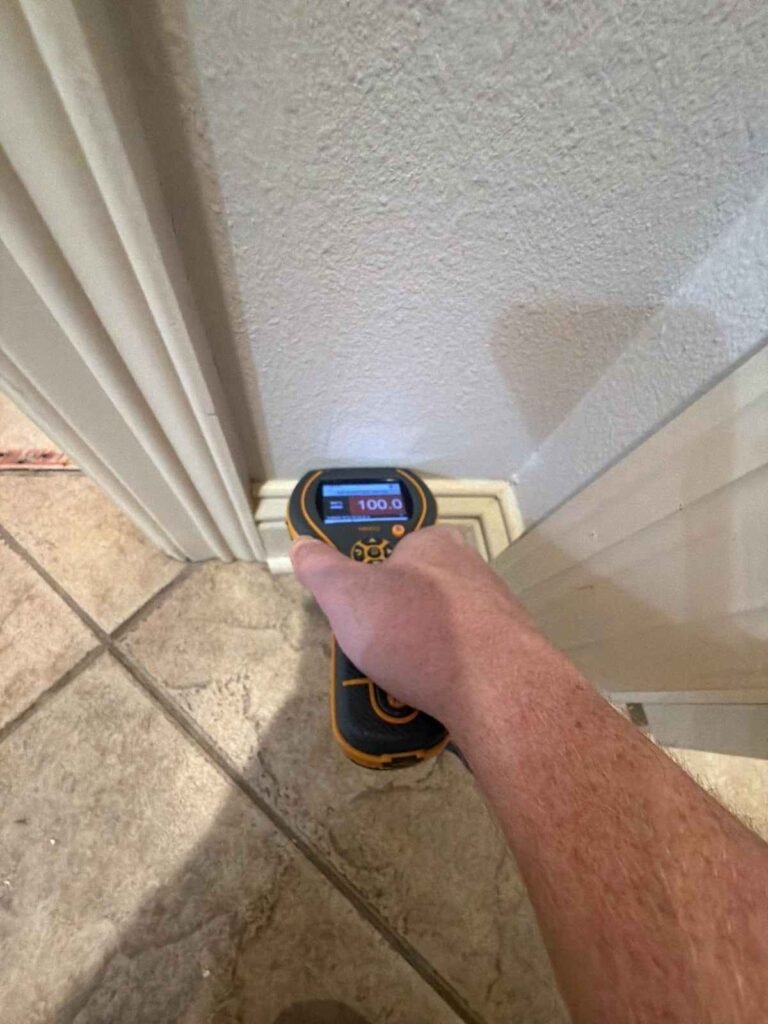
Many wet walls can be partly or fully retained, but the decision depends on material condition, contamination, drying access and whether moisture is trapped inside the cavity.
Dry-in-Place Conditions
Drying in place may be appropriate when:
- The water condition permits material retention
- Drywall or plaster remains physically stable
- Insulation is not trapping inaccessible water
- Framing can release moisture
- The source has been controlled
- The cavity can be effectively dried
- Moisture readings show continued progress
- There is no reason to open the wall for source repair
A wall does not have to be removed merely because it became wet.
The decision is based on whether the assembly can be restored without leaving moisture trapped behind the finish.
Removal Conditions
Selective opening or removal becomes more likely when:
- Drywall has lost strength
- Gypsum is deteriorated or separating
- Plaster is loose or delaminating
- Insulation is saturated
- Composite trim has swollen
- Moisture is trapped behind a finish
- The cavity cannot be adequately dried
- Source repair requires wall access
- Repeated leakage has damaged the same area
- Framing or another concealed component needs direct inspection
The objective is to open only the affected area needed for access, drying and repair, rather than automatically removing an entire wall.
Contamination Conditions
The water source can change the removal threshold.
Drywall, insulation and other porous wall materials that absorb significantly contaminated water may not be appropriate for drying in place.
A wall affected by sewage or surface floodwater is therefore evaluated differently from a wall wet by a recent clean supply-line release.
EPA guidance also distinguishes between materials that can be dried and absorbent materials that may need replacement when they cannot be effectively cleaned or restored.
Drying and Restoration Method for Walls
1. Control the Water Source
The leaking pipe, roof, appliance, HVAC system, upstairs fixture or other source must be stopped by the appropriate trade.
Drying cannot reach a stable completion point while water continues entering the wall.
2. Establish the Moisture Boundary
We inspect around the visible damage and follow moisture:
- Up and down the wall
- Toward adjoining walls
- Behind baseboards
- Toward the floor
- Around pipe penetrations
- Into the opposite side of the assembly where accessible
3. Determine Whether the Cavity Can Stay Closed
When the wall remains stable and moisture can be effectively removed, drying may proceed without large-scale demolition.
Where insulation, trapped water or damaged material blocks drying, selective access becomes necessary.
4. Remove Only What Prevents Restoration
Affected drywall, insulation, trim or other material is removed when its condition or the cavity configuration makes retention impractical.
Opening the wall also allows concealed framing to be inspected where necessary.
5. Dry the Retained Assembly
Drying focuses on the materials actually holding water, not simply the room air.
That can include:
- Wood studs
- Bottom plates
- Plaster
- Masonry
- Remaining wallboard
- Adjacent flooring
Water-damage restoration generally progresses from assessment and moisture mapping into water removal, structural drying, monitoring and repair once retained materials reach the required drying condition.
6. Verify Drying Before Closing the Wall
Moisture readings are monitored through the drying period.
The wall moves into repair only when retained materials reach the established drying condition and the source of water is no longer active.
When Repair or Replacement Is Required
Cosmetic repair comes last.
Stable drywall with limited suitable exposure
Dry and monitor
Soft or deteriorated drywall
Selectively remove and replace
Stable plaster with manageable moisture
Dry and reassess
Loose or separating plaster
Remove unstable sections and repair
Wet batt insulation
Evaluate for removal based on saturation and condition
Wet wood studs
Expose where necessary and dry
Swollen MDF/composite trim
Replacement may be required
Water behind baseboards
Remove trim where needed for inspection and drying
Contaminated porous wall material
Removal may be required
Repeated staining
Correct recurring source before refinishing
Painting, patching or replacing trim before the wall assembly is dry can hide the symptom while leaving the moisture problem unresolved.
A Brooklyn Walls Project
A Brooklyn wall-water-damage project begins by connecting the visible wall condition to the actual water route.
A stain near the bottom of a wall may have started from water traveling down from a ceiling. Moisture around a plumbing chase may originate inside another room or apartment. A wet baseboard can also be the point where water from beneath flooring finally becomes visible.
The affected wall is checked vertically and laterally before removal decisions are made.
Where drywall remains stable and cavity drying is practical, more material can stay. Where insulation is saturated, gypsum has deteriorated or source repair requires access, the affected section is opened selectively.
Brooklyn/Kings County has 1,141,824 housing units, while the owner-occupied housing rate is 29.5%. In Brooklyn’s heavily rented housing environment, wall damage can require access coordination between tenants, landlords, supers or property managers when plumbing, shared walls or neighboring units are involved.
Water Damage Restoration NYC moves the wall to repair only after the affected boundary is defined, retained components are dry and the remaining replacement work is clear.
Causes That Commonly Damage This Area
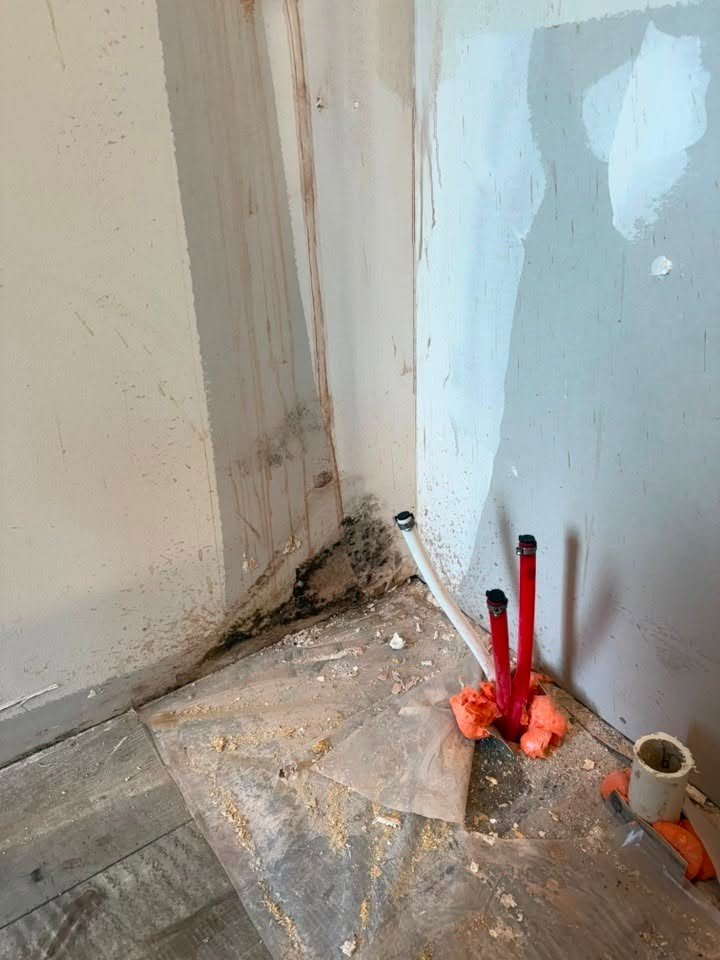
Several water sources can create the same visible wet-wall symptom.
Plumbing leaks
Plumbing leaks may wet drywall from inside the cavity before staining appears.
Upstairs apartment leaks
Upstairs apartment leaks can enter ceilings first and continue vertically down wall cavities.
Roof and roof-drain leaks
Roof and roof-drain leaks can move through upper walls after entering the building envelope.
HVAC and AC condensate leaks
HVAC and AC condensate leaks may affect walls beside mechanical closets, drain lines or concealed equipment.
Bathroom fixture overflows
Bathroom fixture overflows can enter wall bases and adjacent rooms.
Foundation seepage and groundwater
Foundation seepage and groundwater commonly affect below-grade wall bases and finished basement walls.
Fire sprinkler or firefighting water
Fire sprinkler or firefighting water can saturate walls from above and spread between rooms or floors.
What the Service Includes and Does Not Include
Wall and Wall-Cavity Restoration Can Include
- ✓ Wall moisture inspection
- ✓ Source-to-wall moisture tracing
- ✓ Drywall and plaster assessment
- ✓ Wall-cavity inspection where required
- ✓ Insulation assessment
- ✓ Salvage-versus-removal decision
- ✓ Selective wall opening/removal
- ✓ Structural drying and monitoring
- ✓ Moisture documentation
- ✓ Wall repair-scope handoff
Not Automatically Included
- × Plumbing-source repair
- × Roof repair
- × HVAC repair
- × Appliance repair
- × Electrical repair or clearance
- × Lead or asbestos testing
- × Unrelated mold remediation
- × Whole-property reconstruction
- × Insurance coverage decisions
- × Work outside the confirmed affected area
The final scope depends on the water source, contamination, wall construction, moisture depth, insulation, physical damage and access.
Why Choose Water Damage Restoration NYC?
We Inspect the Wall Assembly, Not Just the Paint
Visible bubbling or staining may be smaller than the actual wet cavity. Our inspection follows moisture through wallboard, plaster, framing, insulation and adjoining materials.
We Make the Salvage Decision Before Demolition
Wall material is evaluated for stability, contamination and drying potential before removal is recommended.
Source Repair and Wall Restoration Stay Separate
The plumber, roofer, HVAC technician or other appropriate trade corrects the source. Water Damage Restoration NYC handles the resulting wet wall, drying and repair requirements.
Drying Ends With Verification
Water Damage Restoration NYC provides restoration services across NYC, while this service is specifically structured for wet walls and wall cavities in Brooklyn apartments, houses, multifamily properties and commercial spaces.
Our estimated arrival in Brooklyn is 1–2 hours, subject to traffic, weather, parking, building access and current service demand.
Frequently Asked Questions
Yes, some wet drywall, plaster and framing can be retained when the material remains stable, the water condition permits salvage and the cavity can be effectively dried.
Material that is deteriorated, contaminated or blocking access to trapped moisture is more likely to require selective removal.
We follow the likely water route using moisture readings and inspection of the wall surface, baseboards, adjoining materials and cavity where access is required.
The visible stain alone does not establish how high, low or far sideways the water traveled.
Wall material may need removal when it is unstable, significantly contaminated, physically deteriorated or preventing the cavity behind it from drying.
Selective access may also be required to inspect wet insulation or framing.
There is no fixed drying time for every wall.
Drywall versus plaster, insulation, framing, water volume, contamination, cavity depth and continued leakage all affect the drying period. Progress should be based on material readings rather than a preset number of days.
Repairs may include replacing removed drywall, plaster sections, insulation, baseboards, trim and finishes after retained materials are dry.
Plumbing, roof, HVAC or other source repairs remain separate when required.
Call for Wall Water Damage Repair in Brooklyn
A wall can look dry while moisture remains behind drywall, inside insulation or around framing. Closing or repainting the surface too early can conceal the affected assembly rather than restore it. Call Water Damage Restoration NYC at +1 (917) 203-4372, email info@waterdamagerestorationservicesnyc.com or request an inspection for wall and wall-cavity water damage restoration in Brooklyn. Our estimated arrival is 1–2 hours. We will identify the full moisture footprint, determine what can stay, open only what is required and establish the drying and wall-repair scope.