SPRINKLER WATER DAMAGE RESPONSE
Fire Sprinkler Water Damage Cleanup in Brooklyn
Water Damage Restoration NYC provides fire sprinkler water damage cleanup in Brooklyn after sprinkler discharge, damaged heads or sprinkler-pipe failures. We remove released water, inspect connected rooms and floors, and begin verified drying, with an estimated 1–2 hour arrival.
1–2 Hour Estimated Arrival
Multi-Room and Multi-Floor Moisture Inspection
Sprinkler Repair Kept Separate From Restoration
Documented Drying and Repair Handoff
IMMEDIATE SAFETY ACTIONS
Immediate Actions After Sprinkler Discharge
If there is an active fire, smoke condition or evacuation order, leave the building and follow FDNY instructions before dealing with water damage.
Once the immediate fire hazard is controlled:
Once the immediate fire hazard is controlled:
- Do not shut the building sprinkler system off yourself. Sprinklers are part of the building's fire-protection system, and taking them out of service creates additional life-safety requirements.
- Notify the superintendent, property manager or building owner immediately. They can coordinate the building's impairment procedures and appropriate sprinkler-system contractor.
- Keep away from wet electrical equipment. Avoid outlets, panels, light fixtures, appliances, elevators and powered equipment exposed to water.
- Move unaffected contents only when it is safe. Protect documents, electronics, furniture, stock and other dry belongings from the continuing water path.
- Check connected spaces. Sprinkler water released near a ceiling can move into neighboring rooms and the floors below before all damage becomes visible.
- Photograph the affected areas after life-safety conditions are controlled. Record the discharge location, water boundary, ceilings, floors, walls and affected contents.
- Call Water Damage Restoration NYC for the water-loss scope. We address extraction, moisture inspection, drying and resulting interior damage while the sprinkler system is handled separately.
In New York City, sprinkler work is regulated fire-protection work. Sprinkler-system alterations and repairs are handled by appropriately licensed professionals, and an impaired system can trigger FDNY notification and fire-watch requirements.
WATER-DAMAGE PATTERN
How Fire-Sprinkler Release Causes Water Damage
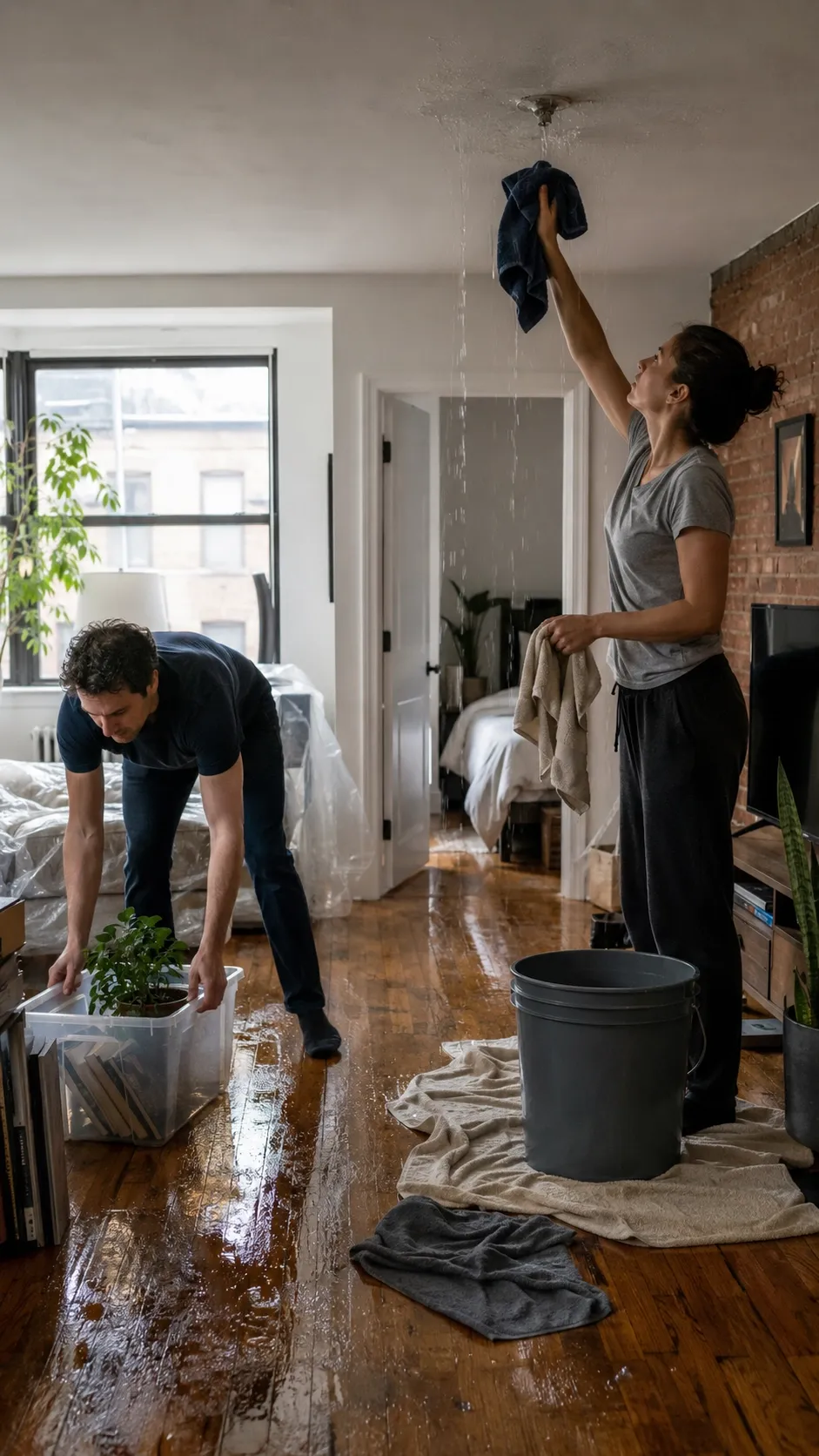
A sprinkler discharge can create a very different moisture pattern from a sink leak or floor-level plumbing failure because water often begins overhead and then moves through the building vertically.
Once water is released, ceiling finishes and upper wall sections may become wet before the floor accumulates visible standing water.
A Release May Involve:
- A sprinkler operating during a fire
- Physical damage to a sprinkler head
- A broken sprinkler pipe
- A failed fitting or connection
- Freeze-related sprinkler piping damage
- An accidental system discharge
- Damage during construction or maintenance
AFFECTED ASSEMBLIES
Water Can Then Reach:
Suspended ceilings
Drywall or plaster
Ceiling insulation
Wall cavities
Wood framing
Flooring and subflooring
Carpets
Millwork
Furniture
Electronics
Stored inventory
Rooms or units below
The cleanup scope also depends on what happened before and during the discharge. Water released during an actual fire may contact smoke residue, soot, burned materials and debris, creating a different cleaning condition from an accidental sprinkler-pipe break with no fire involvement.
Water Damage Restoration NYC evaluates the actual water path and materials contacted rather than assuming every sprinkler discharge has the same restoration requirements. Water-damage severity is influenced by contamination, material porosity, absorption and how deeply water has entered the building assembly.
WATER MIGRATION
Where the Water Usually Travels
Sprinkler water can spread both across the original floor and vertically through the building.
WATER MIGRATION
First Affected Area
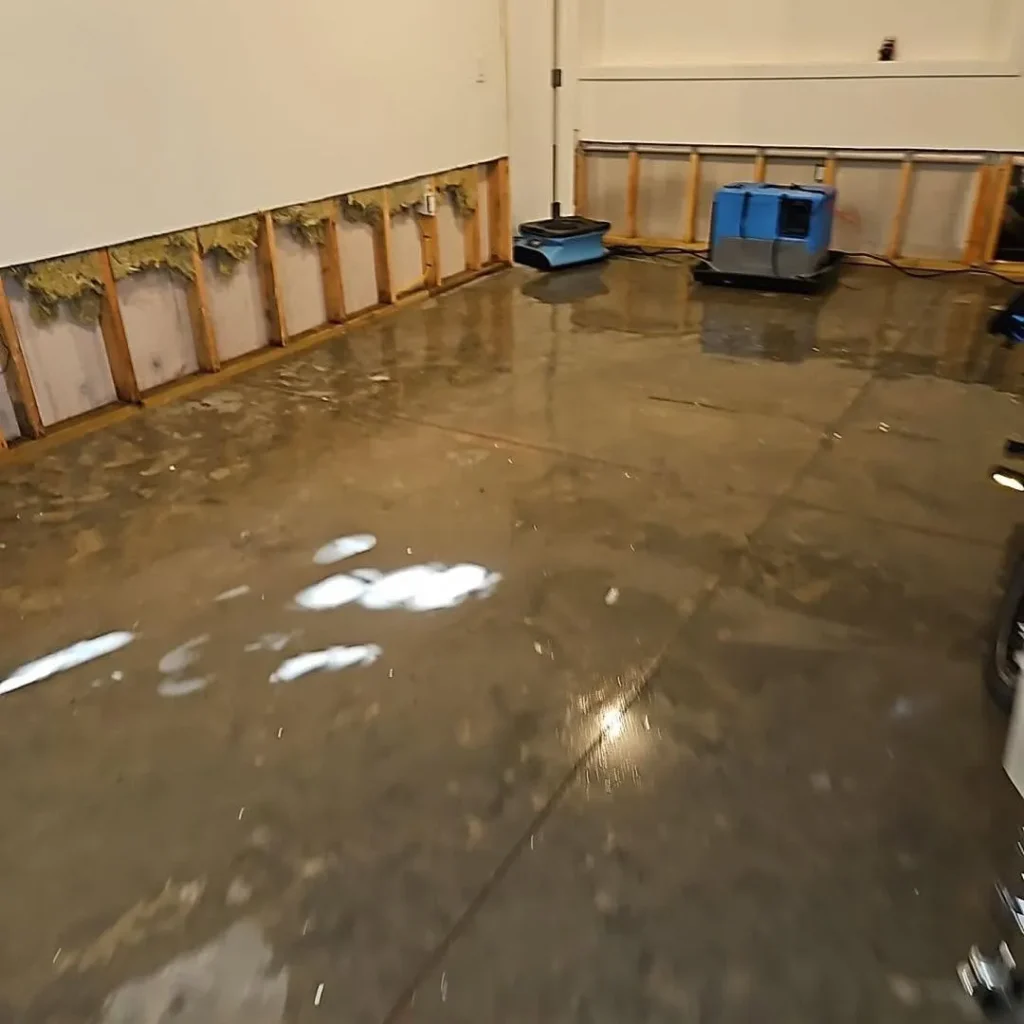
The inspection begins at the discharged sprinkler head, broken pipe or reported release area.
We check:
We check:
- Ceiling immediately around the source
- Suspended ceiling grid
- Ceiling tiles
- Drywall or plaster
- Insulation
- Upper wall sections
- Floor below the discharge
- Nearby furniture or contents
- Electrical fixtures
- Doorways and adjoining spaces
Water striking a floor can spread far beyond the point directly beneath the sprinkler.
WATER MIGRATION
Hidden Cavities
Water can remain inside:
- Ceiling plenums
- Insulation
- Wall cavities
- Pipe chases
- Framing spaces
- Multilayer ceilings
- Raised floors
- Flooring assemblies
- Areas above cabinets or built-ins
A ceiling may stop dripping while insulation, framing or wallboard remains wet.
Moisture inspection therefore follows the construction of the affected area rather than relying only on visible stains.
Moisture inspection therefore follows the construction of the affected area rather than relying only on visible stains.

WATER MIGRATION
Floor Below
Vertical migration is a major part of a sprinkler-discharge assessment.
Water can pass through:
Water can pass through:
- Pipe penetrations
- Floor joints
- Framing openings
- Mechanical penetrations
- Ceiling cavities
- Wall intersections
- Light-fixture openings
In a Brooklyn apartment or commercial building, a discharge on one floor may require inspection of several rooms on the source floor and one or more spaces below.
WATER MIGRATION
Adjacent Rooms
Water may travel horizontally above a ceiling before dropping into another room.
Adjacent offices, bedrooms, hallways, closets, apartments or commercial spaces may show moisture even when the sprinkler did not discharge inside those rooms.
The restoration boundary follows the confirmed water path—not the number of sprinkler heads involved.
The restoration boundary follows the confirmed water path—not the number of sprinkler heads involved.
CLEAR RESPONSIBILITY
Who Repairs the Source and Who Restores the Damage?
SPRINKLER-SYSTEM WORK
Who Repairs the Fire-Suppression System?
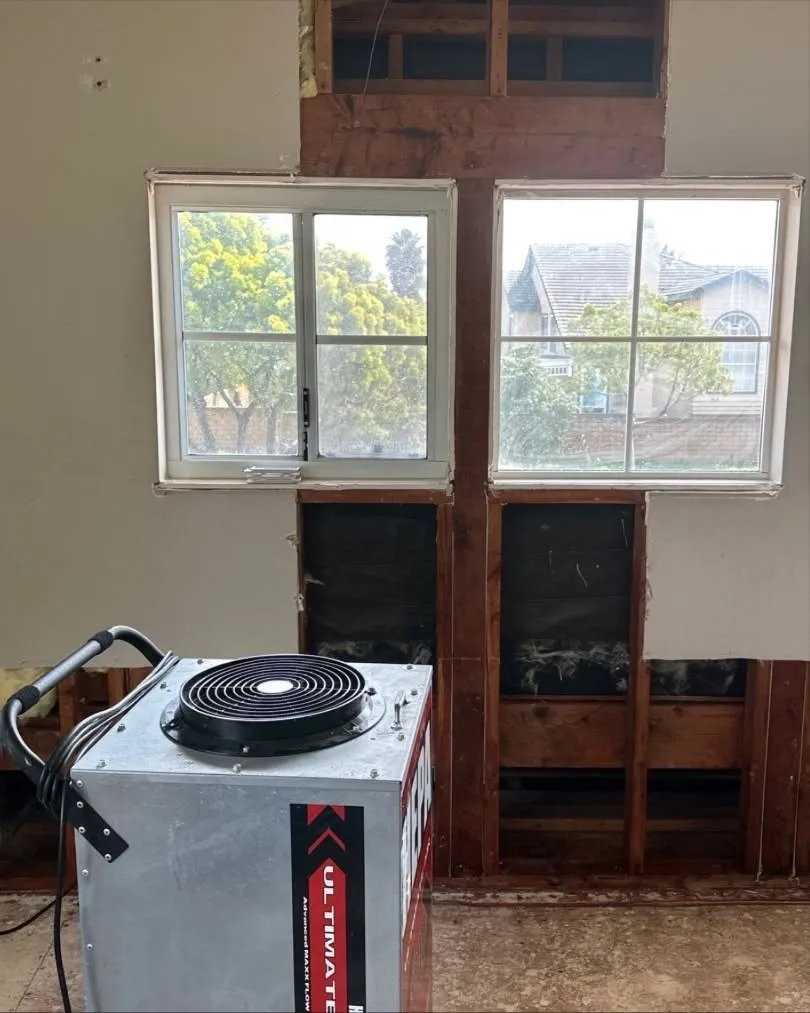
An appropriately licensed sprinkler professional handles the fire-suppression system. Water Damage Restoration NYC handles the resulting water damage.
Sprinkler-system work may include:
- Replacing a damaged sprinkler head
- Repairing broken sprinkler piping
- Replacing failed fittings
- Pressure testing
- Restoring system valves
- Returning the system to service
- Completing required inspection or notification procedures
New York City specifies that sprinkler-system work must be performed by an appropriately licensed Master Plumber or Licensed Fire Suppression Contractor depending on the scope. NYC sprinkler-system requirements also address permits and regulated system work.
WATER-DAMAGE RESTORATION
What Water Damage Restoration NYC Handles
Water Damage Restoration NYC focuses on:
- Water-damage assessment
- Standing-water extraction
- Multi-room moisture mapping
- Floor-below inspection
- Contents protection
- Selective wet-material removal
- Structural drying
- Moisture monitoring
- Damage documentation
- Interior repair planning
If the incident also caused fire, smoke or soot damage, those conditions are assessed separately from the sprinkler-water scope.
RESTORATION WORKFLOW
Restoration Plan: Coordinate Building Management, Inspect Multiple Rooms and Floors and Separate Fire-Water Cleanup From Fire Restoration
1. Confirm the Building Is Released for Restoration Work
Fire response and building safety come first.
We establish whether emergency personnel have completed their immediate work and whether property management has authorized access to the affected areas.
We establish whether emergency personnel have completed their immediate work and whether property management has authorized access to the affected areas.
2. Confirm Sprinkler-System Status
Building management coordinates with the appropriate fire-suppression professional to determine which part of the system discharged, whether the system is impaired and what is required to return it to service.
Water Damage Restoration NYC does not independently shut down or restore the fire-protection system.
Water Damage Restoration NYC does not independently shut down or restore the fire-protection system.
3. Map the Discharge Area
We document the source room, adjoining spaces, hallways, ceiling areas and lower floors that may have received water.
The moisture map is built by room, floor and material.
The moisture map is built by room, floor and material.
4. Separate Water Damage From Fire Damage
When sprinkler discharge occurred during a fire, we distinguish among:
• Direct water saturation
• Smoke or soot deposits
• Burned materials
• Fire debris
• Wet fire debris
• Unaffected areas
This prevents a water-drying scope from being confused with smoke, soot or fire reconstruction work.
• Direct water saturation
• Smoke or soot deposits
• Burned materials
• Fire debris
• Wet fire debris
• Unaffected areas
This prevents a water-drying scope from being confused with smoke, soot or fire reconstruction work.
5. Remove Standing Water
Accessible water is extracted from flooring and low areas.
Carpet, hard flooring and other surfaces are addressed according to their material and the condition of the water.
Carpet, hard flooring and other surfaces are addressed according to their material and the condition of the water.
6. Inspect Ceilings and Concealed Assemblies
Sprinkler water commonly reaches ceiling materials first.
Wet ceiling tile, drywall, plaster, insulation and concealed framing are evaluated for retention, drying access or selective removal.
Wet ceiling tile, drywall, plaster, insulation and concealed framing are evaluated for retention, drying access or selective removal.
7. Inspect the Floors Below
Moisture checks continue vertically when the building configuration indicates water could have passed through the floor assembly.
A visually unaffected lower room is not excluded merely because it has not started dripping.
A visually unaffected lower room is not excluded merely because it has not started dripping.
8. Dry Retained Materials
Drying conditions are established around the amount and type of material that absorbed water.
Plaster, wood and multilayer assemblies can retain moisture more deeply than an exposed hard surface and may require longer or more targeted drying.
Plaster, wood and multilayer assemblies can retain moisture more deeply than an exposed hard surface and may require longer or more targeted drying.
DEFINED HANDOFF
9. Verify the Handoff
The water-restoration stage reaches its handoff when:
- Accessible standing water is removed
- Required water-related cleaning is complete
- Materials that cannot remain have been addressed
- Retained materials meet the established drying condition
- Sprinkler-system work remains clearly separated
- Fire or smoke restoration needs are identified separately
- Interior repairs are documented
MATERIAL DECISIONS
Materials Commonly Affected
MATERIAL
Acoustic ceiling tiles
Concern: Rapid saturation and deformation
Restoration decision: Remove affected tiles
MATERIAL
Drywall ceilings
Concern: Water loading and hidden cavity moisture
Restoration decision: Dry, selectively open or replace
MATERIAL
Plaster
Concern: Deeper absorption and possible delamination
Restoration decision: Monitor, dry or repair unstable sections
MATERIAL
Insulation
Concern: Hidden saturation above ceilings or walls
Restoration decision: Remove where necessary
MATERIAL
Wood framing
Concern: Moisture inside ceiling and wall assemblies
Restoration decision: Expose where required and dry
MATERIAL
Carpet and padding
Concern: Broad water spread across rooms
Restoration decision: Extract and evaluate padding
MATERIAL
Hardwood
Concern: Cupping and subfloor moisture
Restoration decision: Dry, monitor or repair
MATERIAL
Laminate
Concern: Swelling and core damage
Restoration decision: Replace affected sections where required
MATERIAL
Millwork and cabinets
Concern: Swelling at edges and joints
Restoration decision: Dry or replace damaged components
MATERIAL
Electronics and equipment
Concern: Direct or indirect water exposure
Restoration decision: Isolate and refer for appropriate evaluation
FIRST-HAND PROJECT STRUCTURE
A Brooklyn Sprinkler Discharge Project
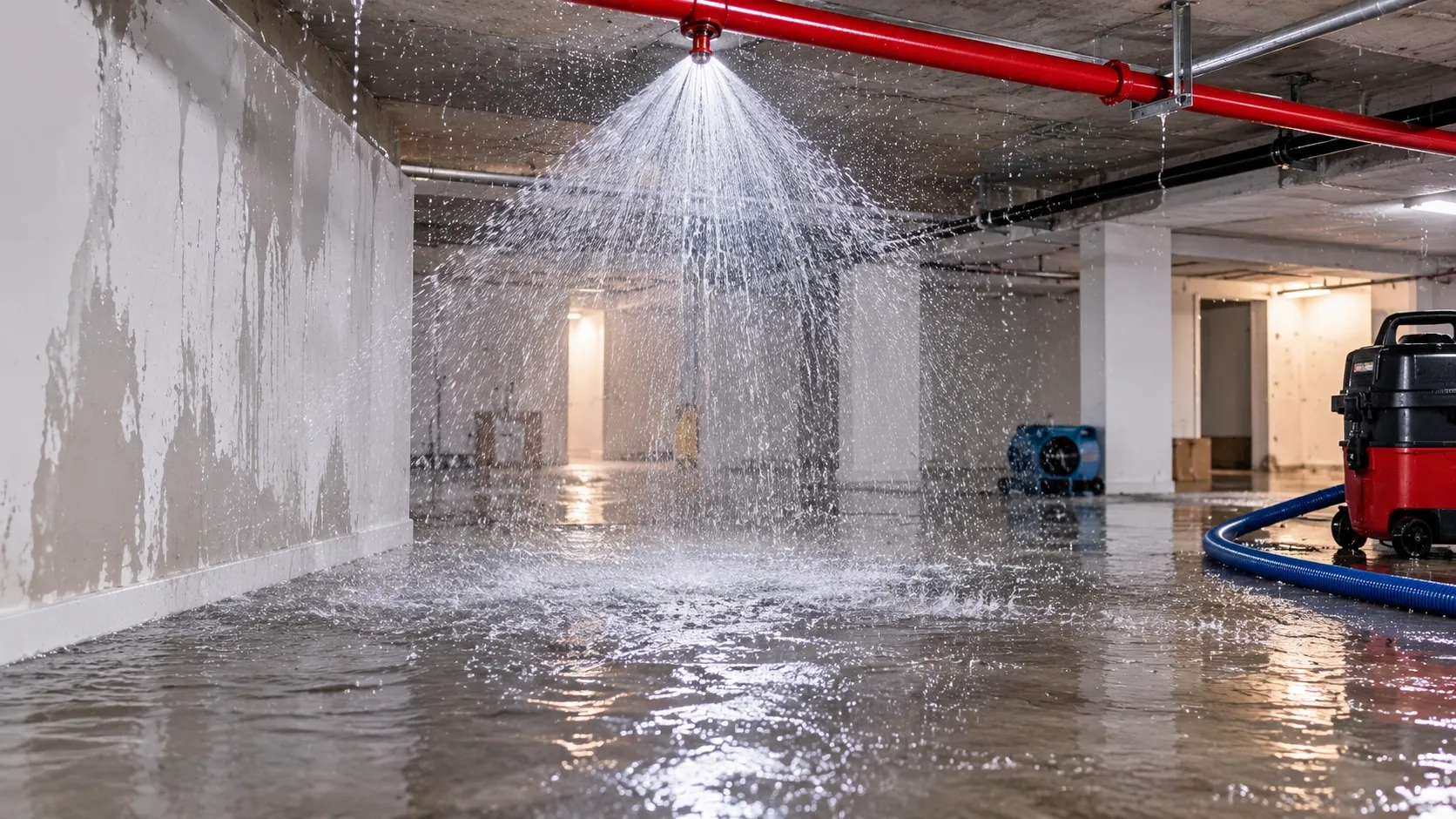
A Brooklyn sprinkler-discharge project is mapped vertically as well as horizontally.
The first inspection starts at the discharged head or failed sprinkler pipe and identifies every room receiving visible water. The ceiling assembly is then checked because the source is often overhead and water may remain above the finished surface.
Where the property has stacked apartments, offices or commercial spaces, inspection continues to the floor below. Moisture around ceilings, wall tops, penetrations and flooring is documented by location rather than assuming all water remained in the source room.
Brooklyn has a particularly dense housing environment. Kings County had 1,122,604 housing units in 2024, while only 29.5% of occupied housing units were owner-occupied during 2020–2024. A sprinkler-water loss may therefore require access and decisions involving tenants, landlords, superintendents, property managers, condo or co-op representatives and occupants on lower floors.
For commercial or multifamily losses, we can also separate affected spaces into immediate water-removal areas, active drying areas and spaces that remain usable when conditions allow.
The project reaches water-restoration handoff only after the confirmed moisture areas have been addressed and remaining interior repairs are clearly defined.
LOSS DOCUMENTATION
Insurance Documentation for This Cause
Sprinkler-Discharge Documentation
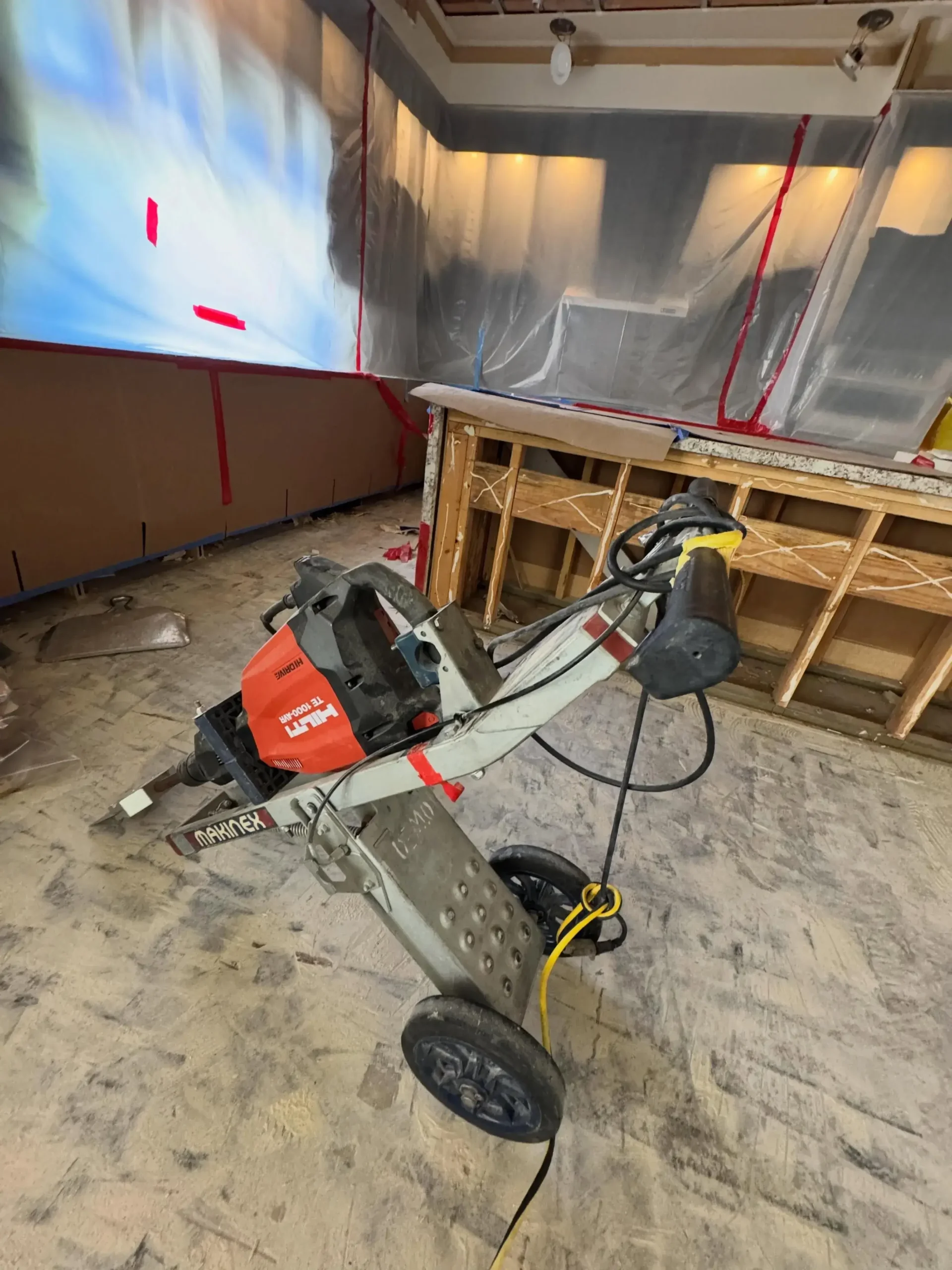
Sprinkler-discharge documentation should connect the system event to the complete water-damage path.
Water Damage Restoration NYC Can Record:
- Reported cause of discharge
- Sprinkler head or piping location
- Whether fire was involved
- Building-management contact
- Sprinkler-repair status
- Initial photographs
- Rooms and floors affected
- Ceiling and flooring conditions
- Moisture-reading locations
- Contents affected
- Materials removed or retained
- Extraction work
- Drying progress
- Final repair requirements
When fire and water damage are both present, documenting them separately helps show which materials were affected by water, smoke, soot or direct fire damage.
Water Damage Restoration NYC documents the condition observed and work performed. The insurance carrier determines coverage, exclusions, deductibles, authorization and payment.
SCOPE BOUNDARIES
What the Service Includes and Does Not Include
Fire Sprinkler Water Damage Cleanup Can Include
- Emergency water-damage assessment
- Standing-water extraction
- Multi-room moisture mapping
- Lower-floor inspection
- Ceiling and wall-cavity inspection
- Contents protection
- Selective wet-material removal
- Structural drying and monitoring
- Photo and moisture documentation
- Interior water-damage repair handoff
Not Automatically Included
- Sprinkler-system shutoff
- Sprinkler-head replacement
- Sprinkler-pipe repair
- Fire alarm reset or repair
- Required FDNY impairment management
- Electrical system clearance
- Lead or asbestos testing
- Smoke and soot cleanup unless separately scoped
- Major fire reconstruction
- Insurance coverage decisions
Final scope depends on why the sprinkler discharged, whether a fire occurred, the amount of water released, rooms and floors affected, material condition and building access.
EVIDENCE-LED RESPONSE
Why Choose Water Damage Restoration NYC?
1. We Respect the Sprinkler System as a Life-Safety System
We keep sprinkler shutdown, repair, testing and return-to-service work with the appropriate building and fire-suppression professionals instead of treating the system like an ordinary plumbing valve.
2. We Inspect the Vertical Water Path
Sprinkler discharge begins overhead, so our assessment can extend from ceiling cavities and the source room to adjoining spaces and lower floors.
3. Fire Damage and Water Damage Stay Clearly Separated
When an actual fire caused the sprinkler activation, water extraction and drying are distinguished from smoke, soot, burned-material and fire-reconstruction work.
4. We Use a Defined Drying Handoff
Water Damage Restoration NYC provides restoration services across NYC, while this service is specifically structured for fire sprinkler water damage in Brooklyn apartments, multifamily buildings, commercial spaces and other sprinkler-protected properties.
Our estimated Brooklyn arrival is 1–2 hours, subject to emergency-scene access, traffic, weather, parking, building procedures and current demand.
Our estimated Brooklyn arrival is 1–2 hours, subject to emergency-scene access, traffic, weather, parking, building procedures and current demand.
FIRE SPRINKLER WATER DAMAGE QUESTIONS
Frequently Asked Questions
If there is an active fire or evacuation order, leave the building first; once the emergency is controlled, notify building management and call Water Damage Restoration NYC for the water damage.
Do not independently close the sprinkler control valve. Call +1 (917) 203-4372 for the Brooklyn restoration response.
Do not independently close the sprinkler control valve. Call +1 (917) 203-4372 for the Brooklyn restoration response.
An appropriately licensed fire-suppression professional handles sprinkler heads, piping, valves, testing and return-to-service work.
Water Damage Restoration NYC handles the resulting water extraction, moisture inspection, structural drying and interior water-damage scope.
Water Damage Restoration NYC handles the resulting water extraction, moisture inspection, structural drying and interior water-damage scope.
We follow the discharge from the ceiling outward and downward using visual inspection, material moisture readings and checks in adjoining spaces and lower levels.
Ceiling plenums, insulation, wall cavities, penetrations and floor assemblies can hold moisture after visible dripping stops.
Ceiling plenums, insulation, wall cavities, penetrations and floor assemblies can hold moisture after visible dripping stops.
Materials that are structurally damaged or cannot be effectively dried may require removal.
Depending on the loss, this can include saturated ceiling tiles, wet insulation, deteriorated drywall, damaged carpet padding and swollen composite materials.
Depending on the loss, this can include saturated ceiling tiles, wet insulation, deteriorated drywall, damaged carpet padding and swollen composite materials.
Yes. We can document the discharge location, rooms and floors affected, photographs, moisture readings, extraction, material decisions, drying progress and remaining repairs.
When fire damage is also present, the water-damage scope can be documented separately from smoke, soot and burned-material damage.
When fire damage is also present, the water-damage scope can be documented separately from smoke, soot and burned-material damage.
REQUEST EMERGENCY RESPONSE
Call for Fire Sprinkler Water Damage Cleanup in Brooklyn
Sprinkler water can move from a ceiling into wall cavities, flooring, adjoining rooms and lower units before the complete damage becomes visible.
Call Water Damage Restoration NYC at +1 (917) 203-4372 or email info@waterdamagerestorationservicesnyc.com for fire sprinkler water damage cleanup in Brooklyn.
Our estimated arrival is 1–2 hours. We will establish the affected water-damage boundary, remove accessible water, inspect connected rooms and floors, and define the drying and interior repair requirements.
Emergency Service Form
Submitting the form does not guarantee an immediate response. For active water emergencies, call +19172034372.