WATER DAMAGE RESTORATION NYC
Floor and Subfloor Water Damage Restoration in Brooklyn
Water Damage Restoration NYC provides floor water damage restoration in Brooklyn for wet hardwood, laminate, vinyl, carpet, tile assemblies and subfloors. We trace water beneath the visible surface, decide what can be saved and verify drying before repair, with an estimated 1–2 hour arrival.
Floor & Subfloor Response
1–2 Hour Estimated Arrival
Floor-to-Subfloor Moisture Mapping
Salvage Decision Before Removal
Drying Verified Before Repair
Warning Signs in Floors and Subfloors
Water can remain beneath a floor after the exposed surface looks dry. That makes the layers underneath just as important as the flooring you can see.
Arrange an inspection when you notice:
- Hardwood boards cupping or crowning
- Floorboards lifting at the edges
- Laminate swelling at joints
- Vinyl bubbling or releasing
- Carpet remaining damp after surface extraction
- Soft or uneven areas underfoot
- Darkened seams between floorboards
- Loose tiles or changes around grout joints
- Swollen thresholds or baseboards
- Water appearing between flooring joints
- A musty odor close to the floor
- Moisture returning after the floor was previously dried
- Ceiling staining in the room or apartment below
A dry surface does not necessarily mean the underlayment or subfloor has returned to a suitable moisture condition. Water can move through joints and penetrations before becoming trapped beneath the finish layer.
If water is near electrical equipment, floor outlets or damaged wiring, avoid the affected area until the electrical condition can be evaluated safely.
How We Inspect the Full Moisture Footprint
The first question is not simply, “Is the floor wet?”
We determine which layer is wet.
A floor assembly may include:
- Hardwood or engineered wood
- Laminate
- Vinyl or resilient flooring
- Tile
- Carpet
- Carpet padding
- Underlayment
- Plywood or OSB subfloor
- Wood framing or joists beneath the subfloor
- Concrete slab in below-grade or ground-level spaces
Water Damage Restoration NYC begins with the source and visible water boundary, then checks how the flooring is constructed.
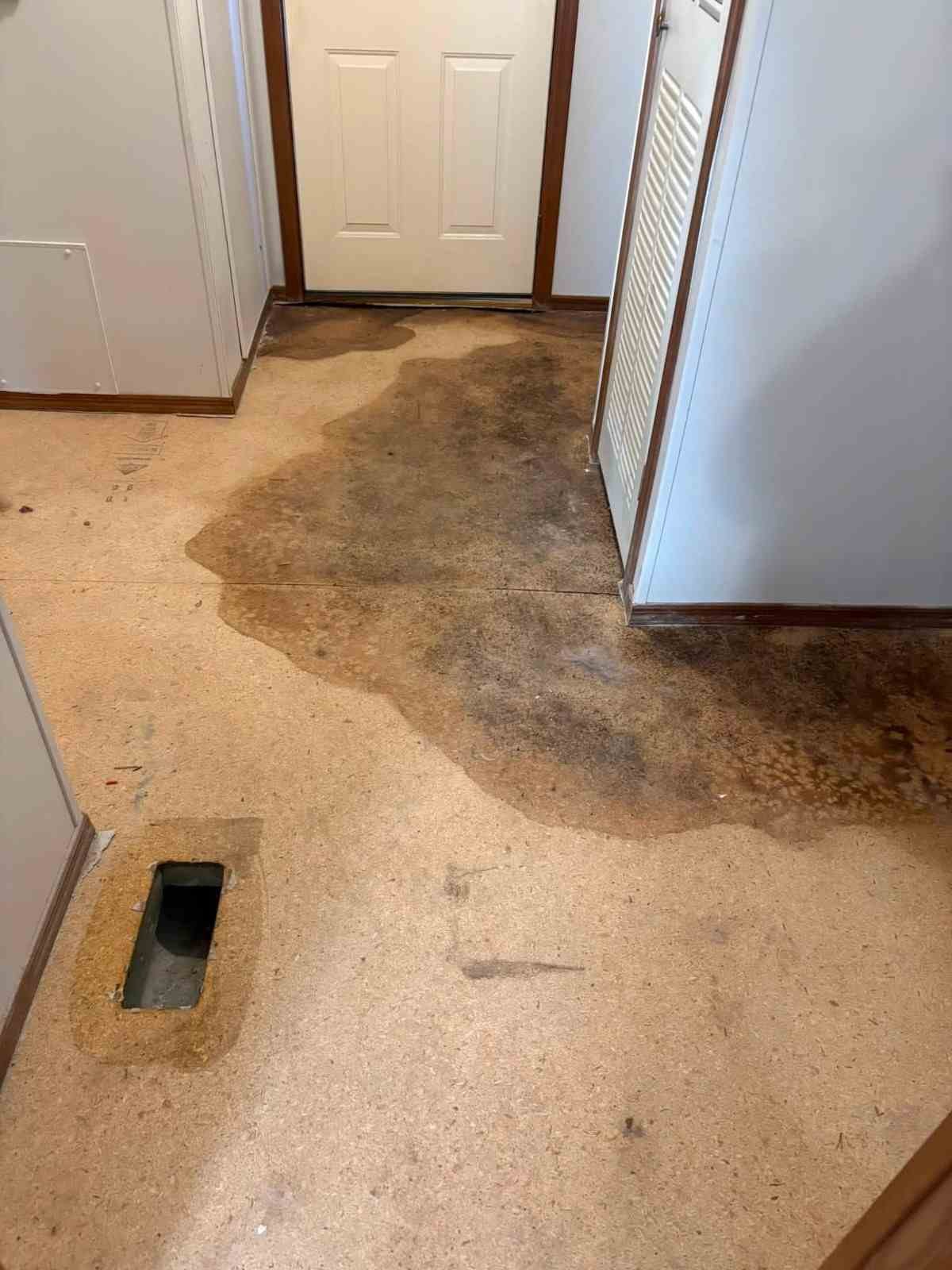
Moisture can move beneath continuous flooring beyond the edge of the original puddle. Water from a bathroom overflow, appliance leak or pipe break may travel under flooring into a hallway or adjacent room without producing obvious surface water in every location.
We inspect transitions, seams, wall edges, thresholds and accessible floor penetrations. Where the property has another unit or room below, ceiling conditions can also help identify whether water passed through the floor assembly.
The result is a floor-to-subfloor moisture footprint, not simply a map of where the surface once looked wet.
Can the Floors and Subfloors Be Saved?
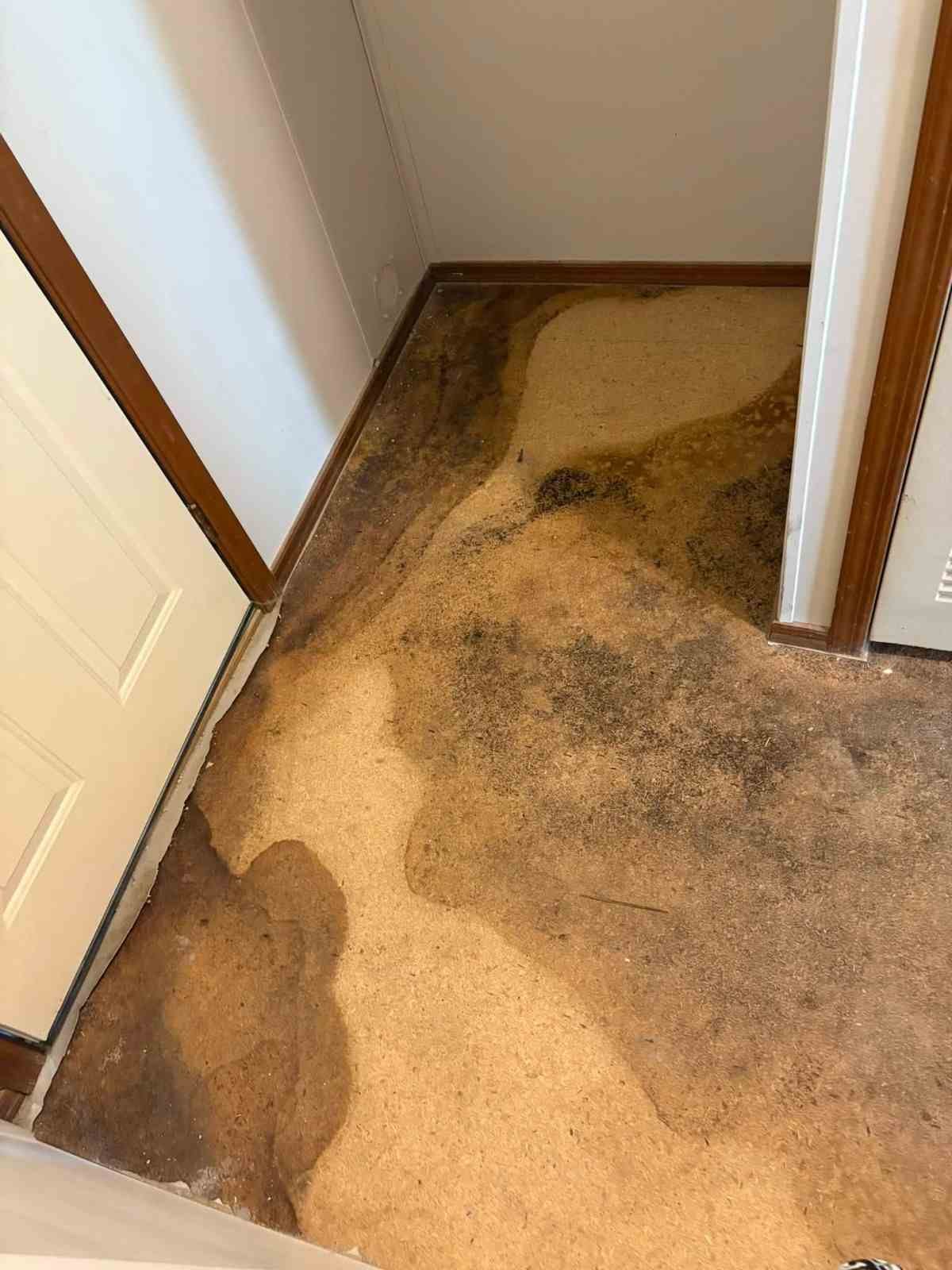
Sometimes. The answer depends on the flooring material, subfloor condition, water source, contamination, physical damage and whether the assembly can actually release trapped moisture.
Dry-in-Place Conditions
A floor or subfloor may be considered for retention when:
- The water source has been controlled
- The water condition permits salvage
- The material remains dimensionally stable
- Significant delamination has not occurred
- The finish layer allows adequate drying access
- Moisture readings show consistent reduction
- The subfloor remains structurally sound
- Water is not trapped indefinitely beneath an impermeable layer
Solid wood and structurally sound subflooring may sometimes be dried rather than automatically replaced.
Concrete can also retain a substantial amount of moisture beneath a surface that already appears dry, so drying decisions need to consider the underlying material as well as the finish.
Removal Conditions
Removal becomes more likely when flooring:
- Has swollen beyond practical recovery
- Has delaminated
- Has buckled or permanently distorted
- Traps water beneath an impermeable finish
- Blocks access to a saturated underlayment
- Has a deteriorated composite core
- Prevents effective subfloor drying
- Has lost adhesion
- Is physically damaged beyond repair
Removal may be selective.
One affected area may need access while another portion of the same floor can remain. The repair boundary should follow material condition and moisture—not an arbitrary room boundary.
Contamination Conditions
Water quality changes the salvage decision.
Flooring affected by a recent clean supply-line leak can be approached differently from flooring exposed to sewage, groundwater or contaminated floodwater.
Carpet padding, porous underlayment and some composite flooring can retain contaminated water deep within the material.
Even if those materials look physically intact, contamination may change whether drying in place is appropriate. Water-damage decisions therefore consider both moisture and the source of the water.
Drying and Restoration Method for Floors and Subfloors
1. Control the Water Source
The pipe, appliance, fixture, roof, HVAC system, sump pump or other source must be stopped or repaired by the appropriate trade.
Drying cannot be verified while new water continues entering the floor assembly.
2. Remove Accessible Water
Standing water is extracted from the exposed floor.
Carpeted areas may also require extraction from the carpet and underlying layers depending on the water condition.
Surface extraction reduces the water load, but it does not prove that the subfloor is dry.
3. Map Moisture Through the Floor Layers
We compare the visible water boundary with moisture conditions at:
- Floor seams
- Thresholds
- Perimeter edges
- Baseboards
- Adjacent rooms
- Underlayment
- Accessible subfloor
- The ceiling below where relevant
This establishes how far the water traveled beneath the finish.
4. Decide What Must Be Opened
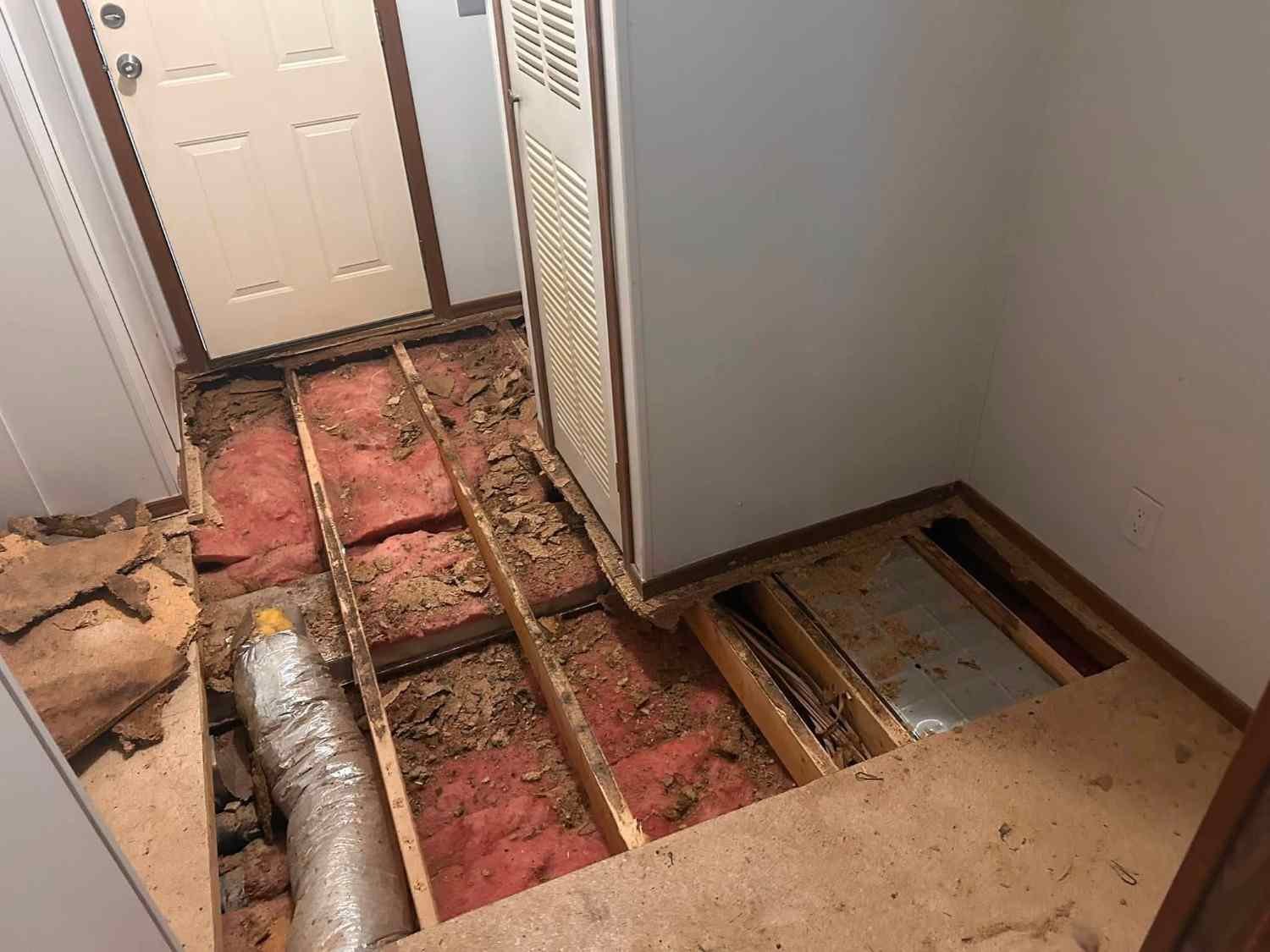
When moisture is trapped beneath flooring, access may be required.
That can involve selective removal of:
- Carpet padding
- Laminate
- Damaged engineered flooring
- Vinyl
- Underlayment
- Baseboards
- Individual damaged floor sections
The purpose is to expose the wet assembly—not remove unaffected flooring unnecessarily.
5. Dry the Subfloor and Retained Materials
The drying target is the material holding the moisture.
That may include:
- Hardwood
- Plywood
- OSB
- Wood joists
- Concrete
- Wall plates beside the floor
Material density, thickness and the number of layers affect how moisture leaves an assembly. Deeply absorbed water can remain after surface materials feel dry.
6. Monitor Before Repair
Moisture readings are checked through the drying period.
Floor replacement or refinishing begins only after the retained supporting materials reach the established drying condition.
Installing a new finish over a wet subfloor can conceal the original problem instead of resolving it.
When Repair or Replacement Is Required
The visible floor covering and the structural layer below it do not always receive the same decision.
Solid hardwood
Can often be considered for retention when boards remain stable and drying progresses.
Replacement becomes more likely when: severe buckling, splitting or unrecoverable deformation occurs.
Engineered wood
Can often be considered for retention when layers remain bonded and stable.
Replacement becomes more likely when: veneers or core layers delaminate.
Laminate
Can often be considered for retention with very limited exposure and no swelling.
Replacement becomes more likely when: the composite core swells or joints deform.
Vinyl
Can often be considered for retention when material remains bonded and moisture can escape.
Replacement becomes more likely when: water is trapped below or adhesive fails.
Tile
Can often be considered for retention when tile remains firmly bonded.
Replacement becomes more likely when: supporting layers fail or tile becomes loose.
Carpet
Can often be considered for retention when the water condition permits cleaning and drying.
Replacement becomes more likely when: contamination or physical damage prevents restoration.
Carpet padding
Can often be considered for retention after limited suitable exposure.
Replacement becomes more likely when: saturated or contaminated padding cannot be retained.
Plywood subfloor
Can often be considered for retention when structurally sound and drying progresses.
Replacement becomes more likely when: delamination or structural deterioration develops.
OSB subfloor
Can often be considered for retention when stable with limited swelling.
Replacement becomes more likely when: severe edge swelling or loss of integrity occurs.
Concrete
Can often be considered for retention when structurally sound.
Repair becomes more likely when: separate structural deterioration requires repair.
A damaged laminate floor may need removal while the plywood beneath it can be dried and retained. In another property, hardwood may remain while saturated material below requires access.
That is why subfloor water damage repair in Brooklyn should begin with inspection, not replacement assumptions.
A Brooklyn Floors and Subfloors Project
A Brooklyn floor-water-damage project is mapped from the surface downward and outward.
If an appliance leak begins in a kitchen, the visible waterline is documented first. Moisture checks then follow seams beneath cabinets, thresholds and adjoining flooring to determine whether water moved outside the kitchen.
If hardwood is present, board condition and moisture are evaluated before deciding whether sections can remain. With laminate or other composite flooring, swelling and trapped moisture beneath the finish become more important removal indicators.
The supporting subfloor is then checked wherever access and construction allow.
Brooklyn/Kings County had 1,141,824 housing units in 2025, while the owner-occupied housing-unit rate was 29.5% during 2020–2024. In Brooklyn’s apartment and multifamily housing environment, a wet subfloor can also matter to the unit below because water can pass through floor penetrations and assemblies into ceilings underneath.
Water Damage Restoration NYC moves the project to flooring repair only after the wet boundary is established, retained supporting materials are dried and replacement requirements are clear.
Causes That Commonly Damage This Area
Different water sources produce different floor and subfloor decisions.
Appliance leaks
Appliance leaks from washing machines, dishwashers or refrigerators can move beneath cabinets and continuous flooring.
Sink, bathtub and toilet overflows
Sink, bathtub and toilet overflows can cross bathroom thresholds and reach underlayment or subflooring.
Upstairs apartment leaks
Upstairs apartment leaks may saturate a floor assembly before water appears in the ceiling below.
Burst and leaking pipes
Burst and leaking pipes can release water directly into wall-floor intersections or beneath finished flooring.
Sump-pump failure and basement flooding
Sump-pump failure and basement flooding can affect flooring from below as well as from the exposed surface.
Foundation seepage and groundwater
Foundation seepage and groundwater can become trapped beneath finished basement floors.
Stormwater and firefighting water
Stormwater and firefighting water can spread across several rooms and penetrate multiple floor layers.
What the Service Includes and Does Not Include
Floor and Subfloor Restoration Can Include
- ✓ Floor moisture inspection
- ✓ Water-under-flooring assessment
- ✓ Surface-water extraction
- ✓ Underlayment and subfloor evaluation
- ✓ Salvage-versus-removal decision
- ✓ Selective flooring removal
- ✓ Structural drying and monitoring
- ✓ Moisture documentation
- ✓ Repair-scope handoff
- ✓ Inspection of connected lower areas where relevant
Not Automatically Included
- × Plumbing-source repair
- × Appliance repair
- × Roof repair
- × HVAC repair
- × Permanent foundation waterproofing
- × Electrical repair or clearance
- × Lead or asbestos testing
- × Unrelated mold remediation
- × Whole-property reconstruction
- × Insurance coverage decisions
Final scope depends on the water source, contamination, flooring material, underlayment, subfloor construction, depth of moisture, physical damage and access.
Why Choose Water Damage Restoration NYC?
We Inspect More Than the Finished Floor
The visible surface may be dry while the underlayment or subfloor remains wet. Our inspection follows moisture through the floor assembly.
We Make the Salvage Decision Before Removal
Water Damage Restoration NYC evaluates material stability, moisture and drying access before recommending which floor sections should stay or come out.
We Separate Floor Damage From Source Repair
The appropriate plumber, appliance technician, roofer or other trade fixes the original leak. Our scope focuses on the water-damaged flooring, subfloor and associated drying.
Drying Is Verified Before New Flooring Goes Down
Water Damage Restoration NYC provides restoration services across NYC, while this service is specifically structured for floor and subfloor water damage in Brooklyn apartments, houses, multifamily properties and commercial spaces.
Our estimated Brooklyn arrival is 1–2 hours, subject to traffic, weather, parking, building access and current service demand.
Frequently Asked Questions
Yes, some floors and subfloors can be retained when the material remains stable, the water condition permits salvage and moisture can be effectively removed. The decision depends heavily on the flooring type and condition of the supporting layers.
We trace moisture through seams, perimeter edges, transitions, underlayment and accessible subfloor areas instead of relying on the surface alone. Lower ceilings may also be checked when water could have traveled through the floor assembly.
Removal becomes more likely when flooring is swollen, buckled, delaminated, contaminated or preventing the subfloor underneath from drying. Selective removal can sometimes provide the access needed without replacing the entire floor.
There is no fixed drying time for every floor assembly. Hardwood, laminate, concrete, plywood, OSB, underlayment, water volume and the number of wet layers all affect drying time.
Repair may include replacing damaged floor covering, underlayment or selected subfloor sections after retained supporting materials reach the drying target. Refinishing, trim replacement and related finish work can then follow where required.
Call for Floor and Subfloor Water Damage Restoration in Brooklyn
A floor can look dry while moisture remains beneath hardwood, laminate, vinyl, carpet or tile. Repairing the surface before checking the supporting layers can leave water trapped inside the assembly. Call Water Damage Restoration NYC at “tel:+19172034372″>+1 (917) 203-4372 mailto:info@waterdamagerestorationservicesnyc.com”>info@waterdamagerestorationservicesnyc.com or request an inspection for floor and subfloor water damage restoration in Brooklyn. Our estimated arrival is 1–2 hours. We will identify where the water traveled, determine what can remain, open only the flooring necessary for access and establish the drying and repair requirements.