
WATER DAMAGE RESTORATION NYC
Water Heater Leak Cleanup in Brooklyn
Water Damage Restoration NYC provides water heater leak cleanup in Brooklyn after tank, valve, or connection failures. We remove released water, inspect utility-area floors and walls, and begin verified drying, with an estimated 1–2 hour arrival.
- 24/7 Emergency Service
- Certified Team
- Rapid Response
- Insurance Assistance
WATER-HEATER CLEANUP COMMITMENTS
●
1–2 Hour
Estimated Arrival
●
Tank-to-Damage
Inspection
●
Floor + Wall
Moisture Mapping
●
Documented
Drying + Repair Handoff
Immediate Actions After Water Heater Leaks
Keep people away from the water heater and affected utility area until the water, electricity, and fuel conditions are understood.
Take these actions only when they can be completed safely:
1
Stop using hot water.
Do not run faucets or appliances that may cause the tank to refill or continue leaking.
2
Close the cold-water supply valve when it is safely accessible.
Do not reach across hot water, wet electrical components, or damaged equipment.
3
Do not operate electrical switches in a wet area.
An electrician or other qualified professional may need to isolate power to an electric water heater.
4
Leave immediately if you smell gas.
Do not use switches, phones, matches, appliances, or flashlights inside the affected area. Call 911 from a safe location. NYC guidance treats suspected gas leaks as an emergency because a spark can cause a fire or explosion.
5
Do not operate the relief or drain valve.
Hot water may discharge under pressure, and an active valve problem should be evaluated by a qualified plumbing professional.
6
Photograph the initial condition.
Record the tank, visible failure point, standing water, nearby walls, flooring, belongings, and any damage below the utility room.
7
Call a licensed plumber and Water Damage Restoration NYC.
The plumber repairs or replaces the tank and connections. Our restoration scope addresses the released water and resulting building damage.
New York City Plumbing Code requires water-heating systems to have a means of disconnecting their energy source and requires storage water heaters to have approved pressure and temperature relief protection. Those components should not be altered as part of do-it-yourself water cleanup.
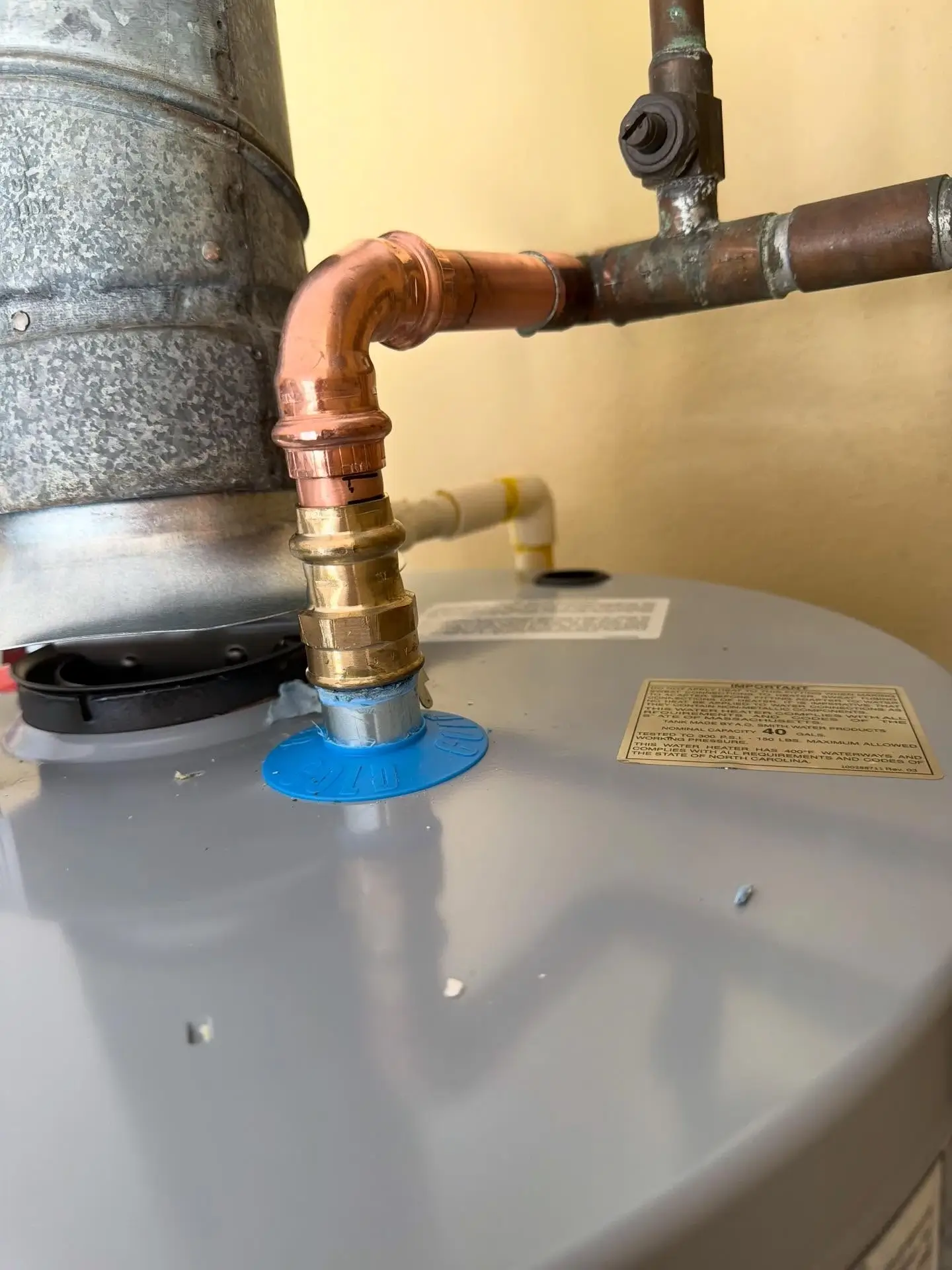
TANK AND CONNECTION FAILURE
How Tank or Connection Failure Causes Water Damage
A water heater can leak from the tank itself or from a connected plumbing component.
Potential failure points include:
A small connection leak may release water slowly behind or beside the unit. A failed tank can release its stored water and may continue receiving replacement water until the supply is isolated.
Washing-Machine Failures
Water may come from:
- Cold-water inlet connection
- Hot-water outlet connection
- Flexible or rigid supply piping
- Drain valve
- Temperature-and-pressure relief valve or discharge piping
- Expansion-related components
- Corroded tank seams
- Internal tank failure
- Nearby recirculation piping
- Connections disturbed during maintenance or construction
A pressurized supply-hose failure can continue releasing water until the valve is closed. A drain-side release may contain detergent, soil, lint, and residue.
Dishwasher Failures
Common source areas include:
- Supply-line connections
- Drain hoses
- Door seals
- Pumps and internal components
- Overflow conditions
- Sink or garbage-disposal connections
Dishwasher water can collect beneath the appliance and cabinet toe kick before it reaches the visible kitchen floor.
Why the Site Condition Matters
The source commonly begins as supply water, but the condition can change after contact with rust, sediment, utility-room debris, insulation, flooring, stored chemicals, or dirty building cavities. Water category and required cleaning are therefore evaluated from the actual site condition.
Water damage can lead to wood deterioration, composite-material swelling, plywood delamination, metal corrosion, microbial growth, and electrical damage. The drying load also depends on whether water entered porous materials or low-evaporation assemblies.
A slow refrigerator leak can remain hidden behind the appliance, cabinets, or finished flooring. The first sign may be a swollen floor seam, stained baseboard, soft cabinet panel, or ceiling mark below.
Appliance Supply-Line Failures
A failed supply connection may release relatively clean water at the source, but its condition can change after contacting food residue, detergent, dirty cavities, flooring layers, or stored materials.
Water damage may be gradual or sudden and can affect wood, composite products, laminated materials, metal components, flooring, drywall, and electrical systems.
MOISTURE MIGRATION
Where the Water Usually Travels
Water released around a tank follows floor slope, wall intersections, pipe penetrations, utility openings, and gravity.
First Affected Area
The first affected area normally includes the floor beneath and around the water heater. We inspect:
- The tank base and drain pan
- Supply and discharge connections
- Concrete, tile, vinyl, wood, or finished flooring
- Wall bases and baseboards
- Nearby furnace or boiler components
- Stored belongings
- Floor drains
- Electrical outlets and equipment
- Adjacent plumbing penetrations
A floor drain can limit visible pooling, but it does not confirm that nearby walls, flooring layers, or stored materials remained dry.
Hidden Cavities
Water can enter concealed areas through:
- Gaps around pipes
- Wall-floor intersections
- Cabinet or closet voids
- Framing channels
- Insulation
- Flooring seams
- Subfloor joints
- Openings around mechanical systems
Moisture readings may be required behind baseboards, at wall bases, beneath flooring edges, and inside accessible cavities.
Floor Below
A water heater located in an apartment, upper utility closet, mechanical room, or raised area can affect the ceiling and walls below. Water may travel through:
- Pipe penetrations
- Framing gaps
- Floor joints
- Ceiling cavities
- Electrical openings
- Plumbing chases
A ceiling stain may appear several feet from the tank because water follows the easiest route through the assembly.
Adjacent Rooms
Water may move from the utility area into:
- Hallways
- Closets
- Laundry rooms
- Kitchens
- Basements
- Storage rooms
- Residential or commercial units beside or below the source
We inspect connected rooms according to flooring continuity, wall construction, floor slope, and confirmed moisture—not only the visible puddle.
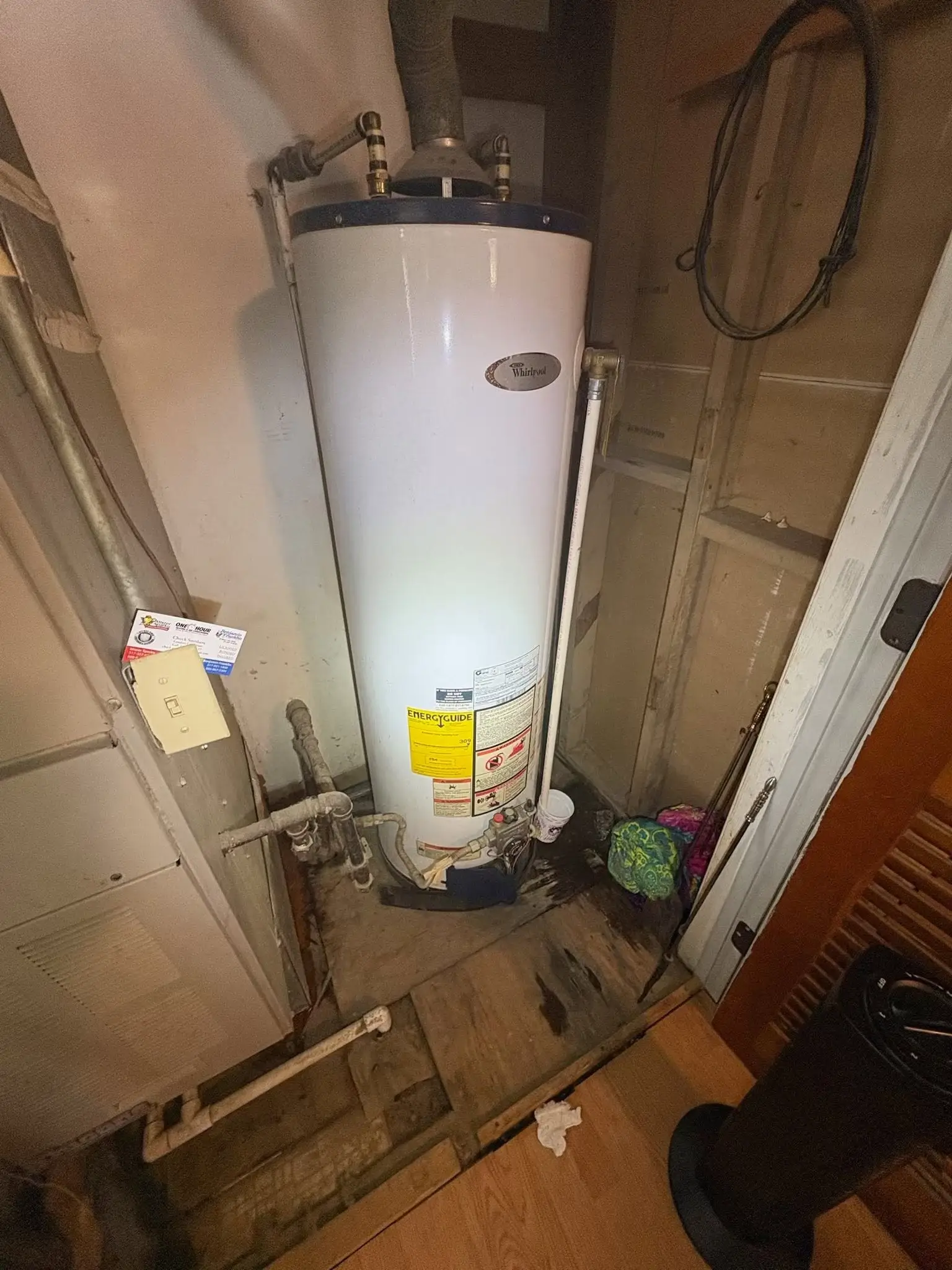
Trace the Tank-to-Damage Path
The visible water around the heater is only the starting point. Flooring layers, wall bases, utility cavities, adjacent rooms and the level below are checked against documented moisture conditions.
CLEAR SCOPE BOUNDARIES
Who Repairs the Source and Who Restores the Damage?
A licensed plumbing or qualified water-heater professional repairs or replaces the failed equipment. Water Damage Restoration NYC restores the resulting property damage.
Licensed Plumbing or Water-Heater Professional
The source-repair scope may include:
- Isolating the water supply
- Disconnecting the energy or fuel source
- Identifying the failed tank, valve, or connection
- Repairing eligible piping or fittings
- Replacing the water heater where required
- Testing plumbing connections
- Restoring water and hot-water service
- Completing required filings or inspections
Water Damage Restoration NYC
Water Damage Restoration NYC may handle:
- Water-damage assessment
- Standing-water extraction
- Moisture mapping
- Protection of unaffected areas
- Selective wet-material removal
- Structural drying
- Progress monitoring
- Damage documentation
- Interior repair planning
New York City requires licensed professionals for regulated plumbing and fuel-gas work. Plumbing permits are issued to Licensed Master Plumbers, and only those licensees or their supervised employees may perform covered piping work.
We do not present water extraction, floor drying, or drywall removal as water-heater repair.
CONTROLLED RECOVERY SEQUENCE
Restoration Plan: Address Hot-Water Release, Utility-Area Damage and Floor or Wall Saturation
1
Confirm Source and Utility Control
We establish whether the cold-water supply has been isolated and whether the water heater’s electrical or fuel source has been handled by the appropriate person.
2
Document the Failure Area
The tank, valves, connections, drain pan, visible corrosion, water depth, and surrounding materials are photographed before restoration work expands.
3
Extract Released Water
Standing water is removed from accessible floors, carpet, low points, and adjoining areas. Water removal is only the first stage; it does not establish that walls or flooring assemblies are dry.
4
Inspect Utility-Area Assemblies
Moisture checks cover the floor beneath and around the tank, wall bases, nearby framing, insulation, adjacent rooms, and the level below.
5
Remove Materials That Cannot Be Restored
Wet insulation, deteriorated drywall, damaged carpet padding, swollen composite materials, or contaminated contents may require selective removal.
6
Dry Retained Materials
Air movement and dehumidification are assigned according to the moisture footprint, material type, room volume, and evaporation load. Dense concrete, masonry, wood, plaster, and multilayer flooring may require different drying conditions from carpet or drywall.
7
Verify the Drying Condition
Readings are monitored until retained materials meet the established drying target. EPA guidance states that wet walls and flooring should be completely dry before refinishing or replacement to reduce mold risk and material deterioration.
8
Define Interior Repairs
The handoff identifies drywall, plaster, flooring, trim, paint, insulation, or other finishes requiring repair after drying.
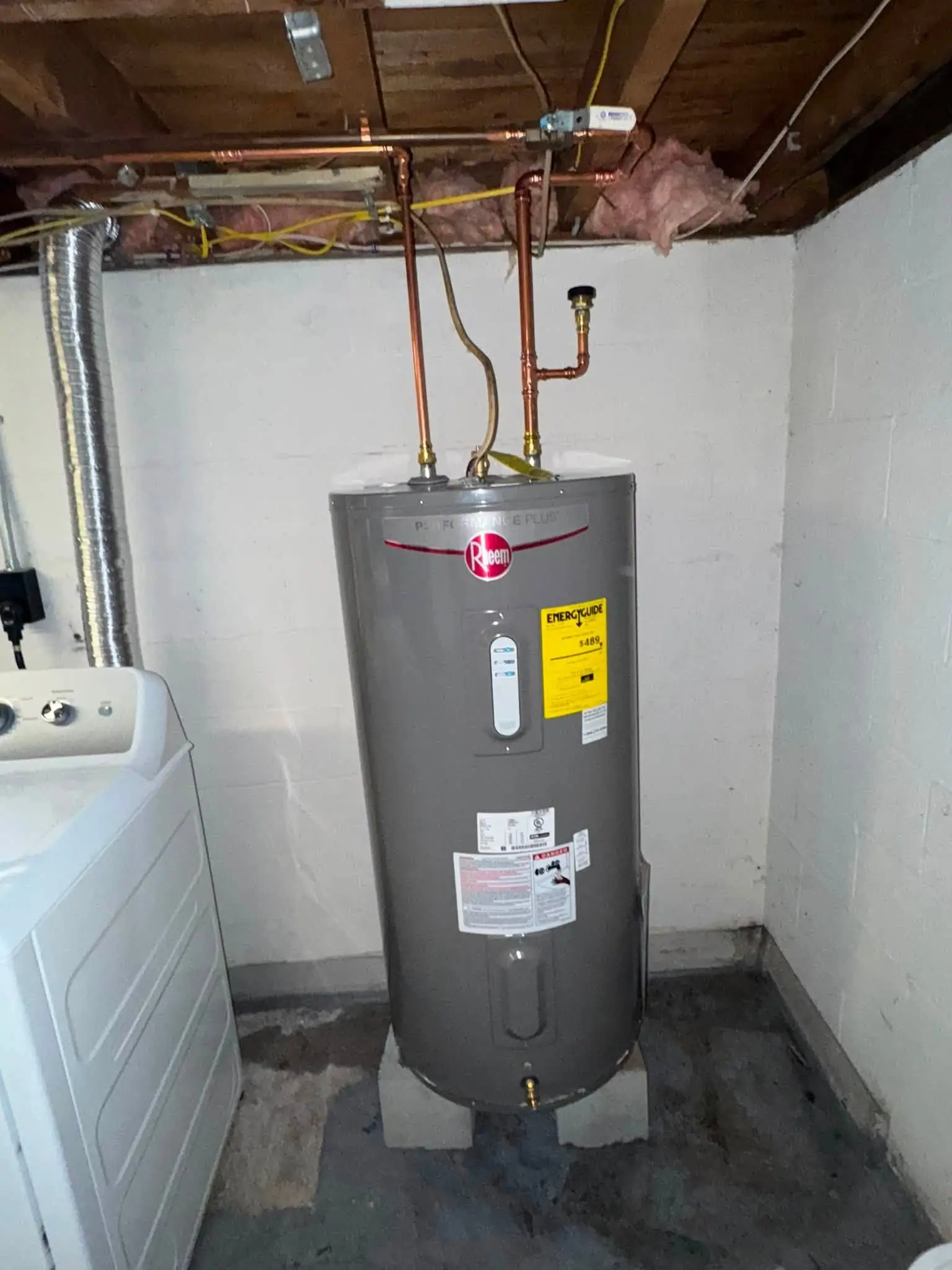
MATERIAL-SPECIFIC DECISIONS
Materials Commonly Affected
Concrete floor
Water-heater leak concern: Water spread and moisture at wall intersections
Possible restoration decision: Extract, clean and dry
Vinyl flooring
Water-heater leak concern: Trapped water and adhesive failure
Possible restoration decision: Lift, dry or replace
Hardwood
Water-heater leak concern: Cupping and subfloor moisture
Possible restoration decision: Dry, monitor or replace
Carpet and padding
Water-heater leak concern: Water retained beneath the surface
Possible restoration decision: Extract and assess padding
Drywall
Water-heater leak concern: Wet wall base and cavity moisture
Possible restoration decision: Dry, selectively open or replace
Plaster
Water-heater leak concern: Deep moisture and possible delamination
Possible restoration decision: Monitor, dry or repair
Insulation
Water-heater leak concern: Saturation behind the utility-area wall
Possible restoration decision: Remove when wet or inaccessible
Wood framing
Water-heater leak concern: Moisture inside enclosed assemblies
Possible restoration decision: Expose where needed and dry
Composite shelving
Water-heater leak concern: Swelling and loss of strength
Possible restoration decision: Replace damaged sections
Electrical equipment
Water-heater leak concern: Exposure near the tank or floor
Possible restoration decision: Refer for qualified evaluation
Final decisions depend on source condition, exposure time, material type, contamination, accessibility, and drying response.
A Brooklyn Water Heater Leaks Project
A credible project for this page must connect the tank or connection failure to the complete migration route.
Consider a tank failure inside a Brooklyn apartment utility closet. Water initially collects around the tank base, moves beneath the closet flooring, reaches the hallway wall, and produces a ceiling stain in the unit below.
A cause-matched project record would include:
- Water-heater type and location
- Confirmed tank or connection failure
- Water and utility shutoff status
- Plumber or replacement-provider coordination
- Initial floor and wall readings
- Adjacent-room inspection
- Ceiling-below inspection
- Materials removed or retained
- Drying progress
- Final interior repair boundaries
Kings County had an estimated 1,141,824 housing units in 2025, while only 29.5% of occupied units were owner-occupied during 2020–2024. A Brooklyn water-heater loss may therefore require coordination among tenants, landlords, supers, property managers, condo boards, co-op boards, or lower-floor occupants.
This is an operating example, not a fabricated customer project. Add an address, photographs, readings, review, timeline, or outcome only when verified company evidence is available.
Insurance Documentation for This Cause
Water-heater damage documentation should connect the failed equipment to the resulting material damage.
Our record can include:
- Water-heater location and type
- Apparent failure point
- Water and utility shutoff status
- Repair or replacement status
- Initial photographs
- Standing-water and affected-area conditions
- Rooms and units inspected
- Moisture-reading locations
- Materials removed or retained
- Drying records
- Interior repair requirements
Water Damage Restoration NYC documents the observed condition and work performed. The insurance carrier determines coverage, exclusions, deductibles, authorization, depreciation, and payment.
SCOPE BOUNDARIES
What the Service Includes and Does Not Include
Water-Heater Cleanup Can Include
- Emergency water-damage assessment
- Tank-to-damage moisture tracing
- Standing-water extraction
- Floor, wall, and lower-level inspection
- Protection of unaffected areas
- Selective wet-material removal
- Structural drying and monitoring
- Photographs and moisture records
- Interior repair-scope handoff
Not Automatically Included
- Tank repair or replacement
- Gas, electrical, or fuel-system work
- Plumbing connection repair
- Water-heater code inspection
- Electrical safety certification
- Lead or asbestos testing
- Mold remediation under a separate scope
- Major reconstruction
- Insurance coverage or claim approval
Final inclusions depend on the failure point, affected area, water condition, materials, property access, utility conditions, and inspection findings.
EVIDENCE-LED RESPONSE
Why Choose Water Damage Restoration NYC?
01
We Inspect Beyond the Tank Base
The assessment follows water into flooring layers, wall bases, utility cavities, adjacent rooms, and the level below.
02
Source Repair and Restoration Stay Separate
The licensed trade repairs or replaces the heater and connections. We handle the released water, affected materials, drying, and interior handoff.
03
Drying Is Verified by Material
Equipment is removed according to documented moisture conditions—not because standing water is gone.
04
The Response Is Organized for Brooklyn Properties
Water Damage Restoration NYC serves properties throughout NYC, while this service is focused on water-heater leak cleanup in Brooklyn homes, apartments, brownstones, multifamily buildings, and commercial spaces.
Our estimated arrival is 1–2 hours, subject to traffic, weather, parking, building access, and current emergency demand.
WATER-HEATER LEAK QUESTIONS
Frequently Asked Questions
Keep away from hot water and wet electrical equipment, close the cold-water supply only when it is safely accessible, and call the appropriate licensed trade plus Water Damage Restoration NYC.
Leave immediately and call 911 from a safe location if you smell gas.
A Licensed Master Plumber or other properly qualified water-heater professional should repair or replace the tank, valve, piping, or connection.
Water Damage Restoration NYC handles the water extraction, moisture inspection, drying, and resulting interior restoration scope.
We combine visual inspection, material moisture readings, thermal patterns, flooring-edge checks, wall-base readings, and inspection of adjacent or lower areas.
Thermal patterns guide the inspection but require direct moisture verification.
Wet insulation, damaged carpet padding, deteriorated drywall, swollen composite shelving, and failed flooring may require removal.
Concrete, plaster, framing, hardwood, and other materials may remain suitable for controlled drying depending on their condition and readings.
Yes. Documentation can include the tank or connection failure, source-repair status, water path, photographs, moisture readings, removed materials, drying progress, and repair requirements.
The insurance carrier makes the final coverage and payment decisions.
Stop Water-Heater Damage From Spreading Beyond the Utility Area
A leaking tank or connection can saturate utility-room floors, wall bases, nearby rooms, and the ceiling below.
Call Water Damage Restoration NYC at +19172034372 for water heater leak cleanup in Brooklyn. We will confirm the estimated 1–2 hour arrival, trace the tank-to-damage path, extract accessible water, and establish the drying and repair plan.
Emergency Service Form
Enter the property and callback details needed for first-call triage.