
WATER DAMAGE RESTORATION NYC
Plumbing Leak Water Damage Restoration in Brooklyn
Water Damage Restoration NYC provides plumbing leak water damage cleanup in Brooklyn after hidden or active pipe leaks. We trace moisture beyond the visible stain, coordinate plumber source repair, remove affected water, and begin verified drying, with an estimated 1–2 hour arrival.
- 24/7 Emergency Service
- Certified Team
- Rapid Response
- Insurance Assistance
PLUMBING-LEAK SERVICE COMMITMENTS
●
1–2 Hour
Estimated Arrival
●
Source + Restoration
Responsibilities Defined
●
Hidden Moisture
Path Traced
●
Documented
Drying + Repair Handoff
IMMEDIATE SAFETY ACTIONS
Immediate Actions After Plumbing Leaks
Stop the water first when the control valve is safe and accessible.
Take these steps while arranging plumbing and restoration service:
1
Close the nearest fixture or branch valve.
If that does not stop the leak, close the building’s house control valve when you can reach it safely.
2
Notify building management.
In a Brooklyn apartment, condo, co-op, or mixed-use building, a superintendent or manager may need to isolate a riser or provide access to another unit.
3
Keep away from electrical hazards.
Do not operate switches, outlets, appliances, ceiling lights, or electrical panels near standing water.
4
Protect dry belongings.
Move documents, electronics, rugs, furniture, and stored items away from the affected area when this can be done safely.
5
Photograph the source and visible damage.
Record stains, dripping water, flooring, cabinets, ceilings, and belongings before moving or discarding materials.
6
Call a licensed plumber and Water Damage Restoration NYC.
The plumber repairs the leak. Our restoration scope addresses the water and resulting property damage.
NYC311 states that a property owner can temporarily close the house control valve to stop water flow during leak repairs. A plumber should restore the water supply after the repair is completed.
Do not open a wall, remove a ceiling, or enter standing water when electrical, structural, sewage, mold, lead, or asbestos concerns may be present.
Authoritative reference anchor: NYC guidance for temporarily shutting off water during leak repairs.
How Hidden or Active Plumbing Leaks Cause Water Damage
An active leak releases visible water from a failed pipe, valve, fitting, fixture, drain, or appliance connection.
A hidden plumbing leak may release a smaller volume behind a wall, below a fixture, beneath flooring, or inside a ceiling over an extended period. The first visible sign may be staining, peeling paint, a soft baseboard, swollen flooring, an odor, an unusually high water bill, or damage in the unit below.
Common plumbing-related sources include:
- Supply-line joints and fittings
- Pipes behind bathroom or kitchen walls
- Toilet supply and waste connections
- Tub and shower plumbing
- Sink drains and cabinet plumbing
- Radiator valves and heating pipes
- Dishwasher and washing-machine connections
- Refrigerator and icemaker lines
- Water-heater connections
- Vertical plumbing risers
- Private water-service lines
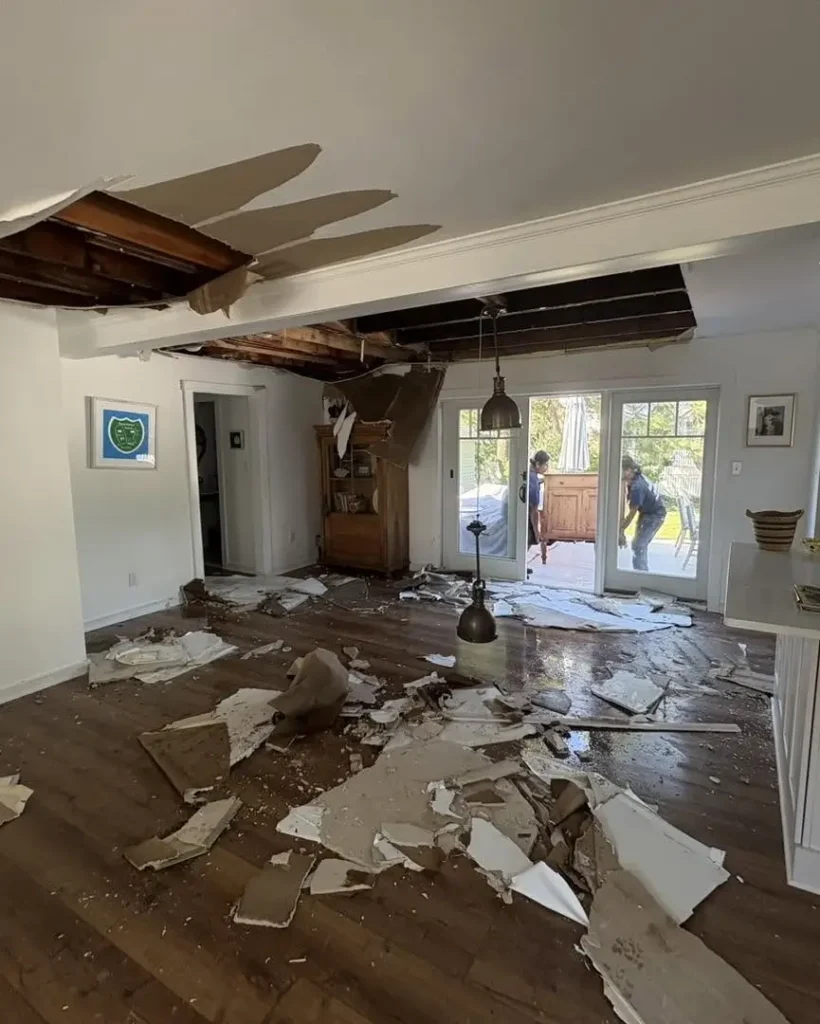
Material Damage and Water Category
Water damage can cause wood deterioration, composite-material swelling, plywood delamination, metal corrosion, mold growth, and electrical damage. The condition may develop suddenly or gradually depending on the source and exposure.
A clean supply-line leak can also change condition after contacting dirty cavities, insulation, flooring, stored materials, or other contaminants. Water category is therefore assessed at the property rather than assumed only from the original plumbing source.
MOISTURE MIGRATION
Where the Water Usually Travels
The visible stain does not always show where the leak began or how far the water moved.
First Affected Area
The first affected area surrounds the failed pipe or fixture. This may include:
- The cabinet beneath a sink
- The wall behind a tub or shower
- Flooring around a toilet
- A ceiling below an upstairs fixture
- The wall surrounding a plumbing riser
- A utility or mechanical room
- The area beneath an appliance
We inspect the source-side material and the surfaces receiving the water. A small cabinet stain may connect to wet drywall, a damaged toe kick, flooring, and the wall cavity behind it.
Hidden Cavities
Water can move along pipes, studs, wall plates, insulation, masonry, and floor assemblies before reaching the finished surface.
Common hidden locations include:
- Behind drywall or plaster
- Under wallpaper or paneling
- Inside pipe chases
- Beneath carpet and padding
- Below hardwood or laminate flooring
- Behind cabinets and vanities
- Above ceiling finishes
- Around plumbing penetrations
EPA guidance identifies areas inside walls around leaking or condensing pipes, beneath carpets and pads, and behind drywall or paneling as possible locations for concealed moisture and mold.
Moisture meters, thermal patterns, visual evidence, and targeted access may be used together. Thermal imaging can identify an area requiring verification, but it does not prove that a material is wet.
Floor Below
A plumbing leak can follow gravity through framing gaps, pipe openings, ceiling cavities, light fixtures, and wall intersections.
The lower level may show:
- A ceiling stain away from the original fixture
- Dripping near a light or detector
- Moisture at the top of a wall
- Swollen ceiling drywall
- Wet plaster or insulation
- Flooring damage beside the receiving wall
The source unit and the lower unit may both require inspection before the complete migration route can be documented.
Adjacent Rooms
Water can cross a doorway, follow continuous flooring, travel under a wall plate, or enter a closet on the opposite side of the plumbing wall.
We check adjacent areas based on the pipe route and material construction—not simply whether another room has a visible stain.
Trace the Leak Beyond the Stain
The inspection connects the plumbing source to concealed cavities, flooring, ceilings, adjacent rooms, and lower units before the drying boundary is finalized.
CLEAR SCOPE BOUNDARIES
Who Repairs the Source and Who Restores the Damage?
Licensed Plumber
A licensed plumber repairs the plumbing source.
The plumber may be responsible for:
- Locating the failed pipe or fitting
- Isolating the plumbing line
- Repairing or replacing the damaged component
- Testing the repair
- Restoring water pressure
- Obtaining plumbing permits where required
Water Damage Restoration NYC
Water Damage Restoration NYC restores the affected property.
Water Damage Restoration NYC may be responsible for:
- Assessing the water-damage area
- Mapping visible and hidden moisture
- Extracting standing water
- Protecting unaffected rooms and belongings
- Removing unsalvageable wet materials
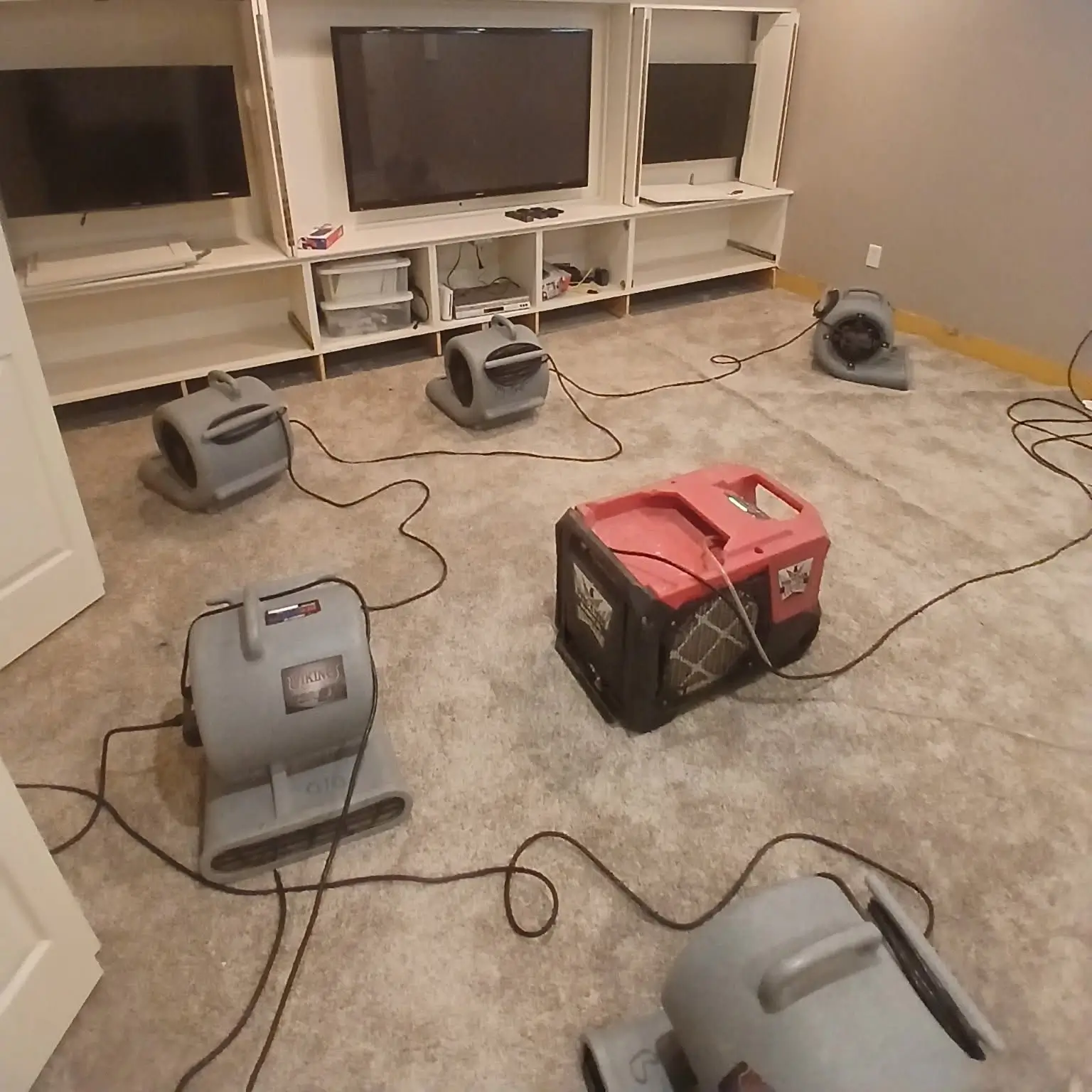
- Drying retained building assemblies
- Recording drying progress
- Defining interior repair requirements
NYC DEP states that property owners are responsible for their property’s plumbing and water-service lines and should hire a Licensed Master Plumber for plumbing work.
Our service coordinates with the plumber but does not present extraction, drying, or drywall work as permanent source repair.
Restoration Plan: Separate Plumber Source Repair From Moisture Assessment, Drying and Interior Restoration
1
Confirm Source Control
We verify whether the fixture, branch, riser, or house control valve has stopped the flow and whether the plumber has identified the source.
2
Document the Source-Repair Boundary
The project record identifies the suspected or confirmed plumbing failure and the work assigned to the plumber.
3
Map the Moisture Path
We inspect the source area, wall or floor assembly, adjacent rooms, and the level below. Readings are connected to a material and location.
4
Extract Accessible Water
Standing water is removed from flooring, carpet, cabinets, and low points. Water removal does not establish that concealed cavities are dry.
5
Open or Remove Materials When Required
Wet insulation, deteriorated drywall, damaged padding, or swollen composite materials may require selective access or removal.
6
Dry Retained Assemblies
Drying equipment is planned around the affected material, room conditions, and evaporation load. Dense plaster, wood, concrete, masonry, and multilayer assemblies may require a different approach from carpet or drywall.
7
Monitor Progress
Material readings and environmental conditions are recorded until the retained assembly reaches the established drying target.
8
Define Interior Restoration
After drying, the handoff identifies drywall, plaster, flooring, trim, paint, cabinets, or other finishes requiring repair.
Materials Commonly Affected
Drywall
Plumbing-leak concern: Softening and hidden cavity moisture
Possible restoration decision: Dry, selectively open or replace
Plaster
Plumbing-leak concern: Moisture retention and separation
Possible restoration decision: Monitor, dry or repair unstable areas
Insulation
Plumbing-leak concern: Saturation around concealed pipes
Possible restoration decision: Remove when wet or inaccessible
Wood framing
Plumbing-leak concern: Moisture inside closed assemblies
Possible restoration decision: Expose where required and dry
Hardwood
Plumbing-leak concern: Cupping and wet subflooring
Possible restoration decision: Extract, dry, monitor or replace
Laminate
Plumbing-leak concern: Swollen seams and damaged core
Possible restoration decision: Replace affected sections
Carpet and padding
Plumbing-leak concern: Water retained beneath the surface
Possible restoration decision: Extract and assess padding separately
Cabinets
Plumbing-leak concern: Wet backs, toe kicks and composite panels
Possible restoration decision: Dry accessible wood or replace damaged parts
Electrical components
Plumbing-leak concern: Water exposure around outlets and fixtures
Possible restoration decision: Refer for qualified evaluation
Personal belongings
Plumbing-leak concern: Moisture transfer and staining
Possible restoration decision: Protect, clean, relocate or document
The final decision depends on the water category, exposure duration, material condition, accessibility, and drying response.
A Brooklyn Plumbing Leak Project
A credible project for this page must show the complete connection between the plumbing leak and the interior restoration scope.
Consider a slow supply connection leak behind a bathroom vanity in a Brooklyn apartment. The first sign may be swelling at the cabinet base rather than visible running water.
A cause-matched project record would document:
- The leaking fitting or pipe
- Water shutoff and plumber response
- Moisture inside the cabinet wall
- Flooring and wall-base readings
- The adjoining room checked
- The unit or ceiling below inspected
- Materials retained or removed
- Drying progress
- Final repair boundaries
Brooklyn had an estimated 1,141,824 housing units in 2025, while only 29.5% of occupied housing units were owner-occupied during 2020–2024. A plumbing-leak project may therefore involve a tenant, landlord, superintendent, property manager, condo board, co-op board, or neighboring occupant.
This is an operating example, not a fabricated customer case study. Add a real address, readings, photographs, timeline, or outcome only when verified company evidence is available.
Insurance Documentation for This Cause
Plumbing-leak documentation should connect the failed source to the resulting material damage. Our record can include:
- Apparent or confirmed leak source
- Discovery date and reported leak history
- Water-shutoff status
- Plumber repair status
- Initial photographs
- Rooms and units inspected
- Moisture-reading locations
- Materials removed or retained
- Extraction and drying records
- Interior repair requirements
Water Damage Restoration NYC documents the observed condition and work performed. The insurance carrier determines coverage, exclusions, deductibles, authorization, and payment.
What the Service Includes and Does Not Include
Plumbing-Leak Restoration Can Include
- Emergency water-damage assessment
- Source-to-damage moisture tracing
- Standing-water extraction
- Inspection of adjacent and lower rooms
- Selective wet-material removal
- Structural drying and monitoring
- Photographs and moisture records
- Interior repair-scope handoff
Not Automatically Included
- Permanent pipe or fixture repair
- Plumbing pressure testing
- Water-service excavation
- Electrical safety certification
- Lead or asbestos testing
- Mold remediation under a separate scope
- Major reconstruction
- Insurance coverage or claim approval
Final inclusions depend on the leak source, water category, affected materials, number of rooms or units, access, and inspection findings.
EVIDENCE-LED RESPONSE
Why Choose Water Damage Restoration NYC?
01
We Follow the Leak Beyond the Stain
The assessment connects the plumbing source to walls, flooring, cabinets, ceilings, adjacent rooms, and lower units.
02
Source Repair and Restoration Stay Separate
The plumber repairs the failed plumbing. We address the released water, affected materials, drying, documentation, and repair handoff.
03
Drying Is Confirmed by Material
Equipment is not removed simply because the floor looks dry or the stain has stopped changing.
04
The Response Is Organized for Brooklyn Properties
Water Damage Restoration NYC serves properties throughout NYC, while this service is focused on plumbing-leak water damage in Brooklyn homes, apartments, brownstones, multifamily buildings, and commercial spaces. Our estimated arrival is 1–2 hours, subject to traffic, weather, parking, building access, and current emergency demand.
PLUMBING-LEAK WATER DAMAGE QUESTIONS
Frequently Asked Questions
Close the nearest safe valve, notify building management when applicable, and call a licensed plumber and Water Damage Restoration NYC. Keep away from standing water near electrical systems.
A licensed plumber repairs the leaking pipe, valve, fixture, fitting, drain, or service line. Water Damage Restoration NYC handles the resulting water damage, moisture inspection, extraction, drying, and restoration scope.
We combine the leak history, visual inspection, moisture readings, thermal patterns, adjacent-room checks, and targeted access when necessary. The inspection follows the plumbing route and the likely movement of water through connected materials.
Wet insulation, deteriorated drywall, damaged padding, and swollen composite materials may require removal. Plaster, framing, hardwood, masonry, and other retained materials may be dried when their condition and readings support restoration.
Yes. Documentation can include the leak source, plumbing-repair status, migration route, affected materials, photographs, moisture readings, drying progress, and repair requirements. The insurer makes the final coverage and payment decisions.
Stop a Plumbing Leak From Causing Wider Interior Damage
A small stain or damp cabinet can connect to moisture inside walls, beneath flooring, or in the unit below.
Call Water Damage Restoration NYC at [PHONE] for plumbing leak water damage restoration in Brooklyn. We will confirm the estimated 1–2 hour arrival, trace the leak-to-damage path, remove accessible water, and establish the drying and repair plan.
Emergency Service Form
Submitting the form does not guarantee an immediate response. For active water emergencies, call +1 (332) 309-1112.