WATER DAMAGE RESTORATION NYC
Frozen Pipe Water Damage Cleanup in Brooklyn
Water Damage Restoration NYC provides frozen pipe water damage cleanup in Brooklyn after winter freeze and rupture. We coordinate source shutoff and plumbing repair, extract released water, inspect exterior-wall cavities, and begin verified drying, with an estimated 1–2 hour arrival.
FROZEN-PIPE RESPONSE COMMITMENTS
●
1–2 Hour
Estimated Arrival
●
Thaw-to-Rupture
Inspection
●
Exterior-Wall
Cavity Assessment
●
Documented
Drying + Repair Handoff
IMMEDIATE SAFETY ACTIONS
Immediate Actions After Frozen Pipe Cleanup
Take action before attempting to thaw a suspected frozen pipe. A pipe may already be split even when no water is visible.
Take these steps only when they can be completed safely:
1
Close the house control valve when it is safe and accessible.
This can temporarily stop water from flowing while the damaged pipe is repaired.
2
Call a licensed plumber.
The plumber must locate, thaw when appropriate, and repair the frozen or ruptured pipe.
3
Do not use an open flame.
NYC DEP warns that a flame can cause a fire or steam explosion. Approved warming methods may include a hair dryer, heat lamp, or properly positioned space heater, but inaccessible pipes should be handled by a plumber.
4
Keep away from electrical hazards.
Do not touch switches, outlets, panels, lights, or powered equipment near standing water.
5
Check the floors and rooms below the suspected freeze point.
A rupture inside an exterior wall may release water into another level before it becomes visible in the source room.
6
Photograph the initial condition.
Record the suspected source, water staining, wet flooring, ceiling damage, and affected belongings without delaying emergency action.
A nearby faucet may be opened during controlled thawing to release pressure and allow melting water to move, but do not restore full water pressure until the plumber has inspected the line. NYC311 advises using the house control valve for a temporary shutoff and having a plumber restore the supply after repairs.
Authoritative reference anchor: NYC guidance for frozen pipes and water meters.
SEASONAL CAUSE AND DAMAGE PATH
How Winter Freeze and Rupture Causes Water Damage
Water expands as it freezes. An ice blockage can stop normal flow and increase pressure in the unfrozen water trapped between the blockage and a closed fixture. The pipe can split at a weak point, but the leak may not become obvious until ice starts melting or water pressure returns.
Frozen-pipe damage commonly begins in:
- Pipes running along exterior walls
- Unheated basements and crawl spaces
- Attics, garages, and utility rooms
- Cabinets against outside walls
- Roof and mechanical spaces
- Outdoor faucet lines
- Vacant or underheated apartments
- Sprinkler or standpipe components
- Areas exposed through cracked windows or damaged walls
Winter Conditions and Water Category
Brooklyn experiences winter temperatures below freezing, with January and February mean daily minimums below 30°F and recurring snowfall. These conditions make pipes in poorly insulated or unheated assemblies vulnerable during cold periods, especially when heat is interrupted.
A frozen supply pipe normally begins as a relatively sanitary water source. Its condition can deteriorate after the released water contacts insulation, dirty cavities, flooring, stored contents, or other contaminants. Water category, exposure time, and affected materials are therefore assessed at the property rather than assumed from the pipe alone.
CLEAR SCOPE BOUNDARIES
Who Repairs the Source and Who Restores the Damage?
Licensed Plumber
A licensed plumber handles thawing and permanent pipe repair.
- Locating the frozen section
- Confirming the rupture point
- Isolating the pipe
- Replacing the failed pipe or fitting
- Checking related lines for freeze damage
- Testing the repair
- Restoring water pressure
Water Damage Restoration NYC
Water Damage Restoration NYC handles the resulting property damage.
- Water-damage assessment
- Standing-water extraction
- Moisture-path inspection
- Protection of unaffected areas
- Selective material removal
- Structural drying
- Drying monitoring
- Damage documentation
- Repair-scope preparation
NYC guidance states that a service line or private pipe damaged by freezing must be repaired by a licensed master plumber. Our service coordinates around that work without presenting water cleanup as pipe-burst repair.
CONTROLLED RECOVERY SEQUENCE
Restoration Plan: Identify Thawed Rupture Points, Inspect Exterior-Wall Cavities and Document Seasonal Cause
1
Confirm Shutoff and Plumbing Response
We confirm whether the house control valve or relevant branch has been closed and whether a plumber has inspected the frozen line.
2
Identify the Rupture and Thaw Path
The project record distinguishes among the suspected freeze location, confirmed break, water-release point, and visible damage. These positions may not be identical.
3
Extract Released Water
Accessible standing water is removed from floors, carpet, low points, and affected rooms. An empty floor does not mean the wall, ceiling, or subfloor is dry.
4
Inspect Exterior-Wall and Concealed Assemblies
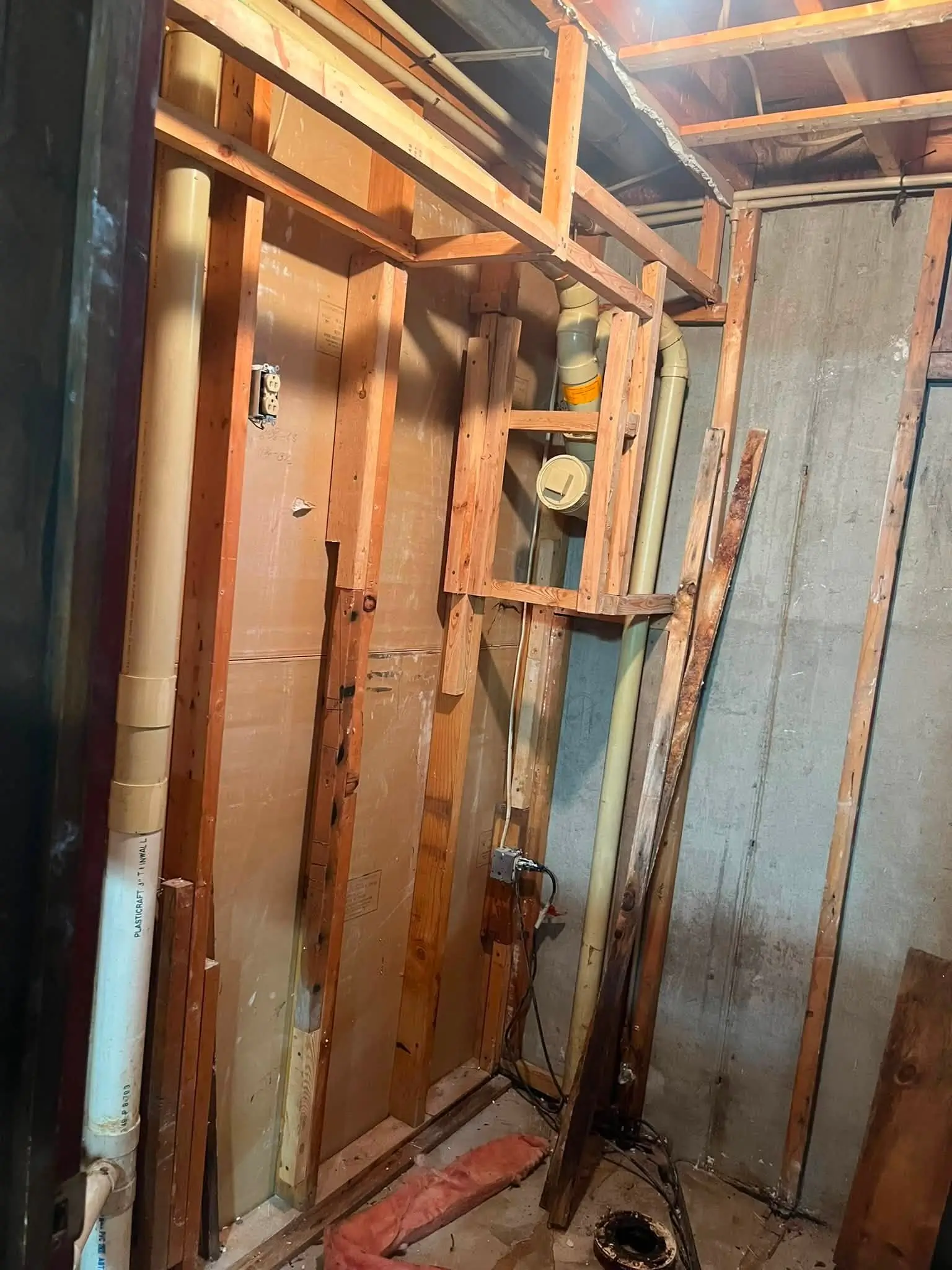
The inspection follows the pipe route and checks connected insulation, framing, drywall, plaster, flooring, cabinets, and lower levels.
5
Remove Unsalvageable Material
Wet insulation, deteriorated drywall, damaged padding, or swollen composite material may require selective removal when it cannot be cleaned and dried in place.
6
Dry Retained Materials
The drying plan is based on the material and moisture load. Plaster, wood, masonry, concrete, and multilayer assemblies can hold water longer than open, porous finishes.
7
Verify Drying
Readings are compared with established dry reference conditions before equipment is removed or cavities are closed.
8
Document Repair Needs
The final handoff identifies damaged drywall, plaster, flooring, trim, cabinets, paint, or other finishes requiring repair.
MATERIAL-SPECIFIC DECISIONS
Materials Commonly Affected
Drywall
Frozen-pipe concern: Softening and concealed cavity moisture
Possible decision: Dry, selectively open or replace
Plaster
Frozen-pipe concern: Deep moisture and separation from lath
Possible decision: Monitor, dry or repair unstable areas
Insulation
Frozen-pipe concern: Saturation inside exterior walls
Possible decision: Remove when wet or inaccessible
Wood framing
Frozen-pipe concern: Moisture trapped inside closed cavities
Possible decision: Expose where required and dry
Hardwood
Frozen-pipe concern: Cupping and subfloor moisture
Possible decision: Extract, monitor, dry or replace
Laminate
Frozen-pipe concern: Swollen joints and damaged core
Possible decision: Replace affected sections
Carpet and padding
Frozen-pipe concern: Water retained beneath the surface
Possible decision: Extract and assess padding separately
Cabinets
Frozen-pipe concern: Wet toe kicks and composite panels
Possible decision: Dry accessible wood or replace damaged sections
Electrical components
Frozen-pipe concern: Exposure near outlets, lights or panels
Possible decision: Refer for qualified evaluation
Personal contents
Frozen-pipe concern: Moisture transfer, staining and distortion
Possible decision: Protect, clean, relocate or document
Final decisions depend on the water category, exposure time, physical condition, accessibility, and response to drying.
A Brooklyn Frozen Pipe Cleanup Project
A verified project for this page should show a direct seasonal-cause chain:
Cold exposure → frozen pipe → thawed rupture point → water migration → affected materials → extraction and drying → repair outcome.
A relevant Brooklyn scenario could involve a pipe freezing inside an exterior wall of an underheated upper-floor apartment. When temperatures rise or heat returns, the split line begins releasing water into the insulation and wall cavity. Water then reaches the flooring, ceiling below, and an adjoining room.
The restoration scope would document:
- The exterior-wall pipe location
- The confirmed rupture
- The plumbing repair
- Source and lower-floor moisture readings
- Insulation or drywall removed
- Retained framing dried
- Final dry-condition readings
- Required finish repairs
Brooklyn had an estimated 1,141,824 housing units in 2025, while only 29.5% of occupied housing units were owner-occupied during 2020–2024. A frozen-pipe project may therefore require approval and access coordination among tenants, landlords, supers, managers, co-op boards, or neighboring occupants.
This is a project model, not a fabricated customer case study. Add a property, readings, photographs, timeline, or outcome only when Water Damage Restoration NYC has verified evidence.
Insurance Documentation for This Cause
Frozen-pipe documentation should establish both the seasonal cause and the resulting moisture path.
The project record can include:
- Date and weather context
- Reported heat or occupancy conditions
- Suspected freeze location
- Confirmed rupture point
- Water-shutoff status
- Plumber’s source-repair status
- Initial photographs
- Rooms and units affected
- Moisture-reading locations
- Materials removed or retained
- Drying progress
- Final repair requirements
Water Damage Restoration NYC documents the observed condition and restoration work. The insurance carrier determines coverage, exclusions, deductibles, authorization, and payment.
SCOPE BOUNDARIES
What the Service Includes and Does Not Include
Frozen-Pipe Cleanup Can Include
- Emergency water-damage assessment
- Source-to-damage moisture tracing
- Standing-water extraction
- Exterior-wall cavity inspection
- Inspection of lower and adjacent rooms
- Selective wet-material removal
- Structural drying and monitoring
- Photographs and moisture records
- Repair-scope handoff
Not Automatically Included
- Pipe thawing or permanent plumbing repair
- Water-service or street excavation
- Plumbing pressure testing
- Electrical safety certification
- Lead or asbestos testing
- Mold remediation under a separate scope
- Major reconstruction
- Finished repairs before drying is verified
- Insurance coverage or claim approval
Final inclusions depend on the rupture location, water category, affected materials, building access, number of rooms or units, and inspection findings.
EVIDENCE-LED RESPONSE
Why Choose Water Damage Restoration NYC?
01
We Investigate the Seasonal Cause
The scope records the freeze location, thawed rupture point, source repair, and resulting water path.
02
We Inspect Exterior-Wall Cavities
Visible flooring or ceiling damage is connected to concealed insulation, framing, plaster, and lower-level assemblies.
03
Plumbing and Restoration Stay Separate
The plumber repairs the line. We address the released water, damaged materials, drying, documentation, and repair handoff.
04
We Plan for Brooklyn Properties
Water Damage Restoration NYC serves properties throughout NYC, while this service is focused on frozen-pipe losses in Brooklyn homes, apartments, brownstones, multifamily buildings, and commercial spaces.
Our estimated arrival is 1–2 hours, subject to traffic, weather, parking, building access, and current emergency demand.
FROZEN-PIPE WATER DAMAGE QUESTIONS
Frequently Asked Questions
Close the house control valve when it is safe, keep away from electrical hazards, and call a licensed plumber and Water Damage Restoration NYC.
Do not thaw a suspected pipe with an open flame.
A licensed plumber must thaw, inspect, and permanently repair the damaged pipe or connection.
Water Damage Restoration NYC handles the water extraction, moisture inspection, structural drying, and resulting restoration scope.
We follow the pipe route using visual evidence, material moisture readings, adjacent-room checks, and targeted access where necessary.
The inspection may extend to insulation, framing, floors, ceilings, and the level below.
Wet insulation, deteriorated drywall, damaged carpet padding, and swollen composite materials may require removal.
Plaster, framing, hardwood, masonry, or other retained assemblies may be dried when their condition and readings support restoration.
Yes. Documentation can connect the weather-related cause, frozen line, rupture point, migration route, affected materials, drying work, and repair requirements.
The insurance provider makes the final coverage and payment decision.
REQUEST EMERGENCY RESPONSE
Stop Thawing Water From Spreading Through the Property
Frozen-pipe damage can remain hidden until temperatures rise, heat returns, or water pressure is restored.
Call Water Damage Restoration NYC at [PHONE] for frozen pipe water damage cleanup in Brooklyn. We will confirm the estimated 1–2 hour arrival, trace the rupture-to-damage path, extract released water, and establish the drying and repair plan.
Emergency Service Form
Enter the property and callback details needed for first-call triage.
Connect and test this Elementor Pro form before publishing.