WATER DAMAGE RESTORATION NYC
Water Damage Demolition and Debris Removal in Brooklyn
Water Damage Restoration NYC provides controlled water damage demolition in Brooklyn for wet drywall, insulation, flooring, and other unsalvageable materials. We document the removal boundary, contain dust and debris, and prepare exposed assemblies for drying or repair, with an estimated 1–2 hour arrival.
Service Commitments
1–2 Hour Estimated Arrival
Brooklyn-Focused Service
Pre-Disposal Documentation
Defined Repair Handoff
REMOVAL DECISION
When Wet Materials Must Be Removed
Water damage does not automatically require demolition. Removal is appropriate when keeping a material in place would prevent cleaning, drying, inspection, or safe restoration.
Water Damage Restoration NYC evaluates the water source, contamination category, exposure time, material construction, physical condition, moisture depth, and access to the assembly before defining the removal scope.
Common removal candidates include damaged drywall, gypsum board, fiberboard, carpet padding, insulation, ceiling tiles, laminate flooring, composite cabinetry, and deteriorated trim. Dense or durable materials such as plaster, solid wood, masonry, and concrete may remain suitable for drying when their condition, contamination level, and moisture response support retention.
EPA guidance recommends removing wet materials that cannot be thoroughly cleaned and dried. Extensive flood exposure may require removal of wall, ceiling, insulation, and flooring materials so the underlying structure can be cleaned and dried.
The decision is documented by material and location. We do not use demolition as a substitute for moisture inspection, and we do not retain damaged material merely to reduce the visible size of the job.
Material May Need to Be Removed When It:
- Has lost strength, shape, or adhesion
- Has swollen, crumbled, warped, or delaminated
- Was saturated by sewage or outdoor floodwater
- Cannot be cleaned through its full affected depth
- Prevents access to wet insulation or a concealed cavity
- Continues holding moisture despite drying adjustments
- Blocks inspection of framing, subflooring, or utilities
- Contains residue or odor that cannot be addressed in place
- Must be opened to identify the full moisture boundary
- Cannot provide a stable base for the later repair
SELECTIVE REMOVAL
Controlled Demolition and Flood Cuts
Controlled demolition removes only the material required to expose, clean, and dry the affected assembly.
It is different from uncontrolled tear-out. The removal boundary follows evidence from moisture readings, visible deterioration, contamination, framing access, and the expected repair method.
Wet Drywall Removal
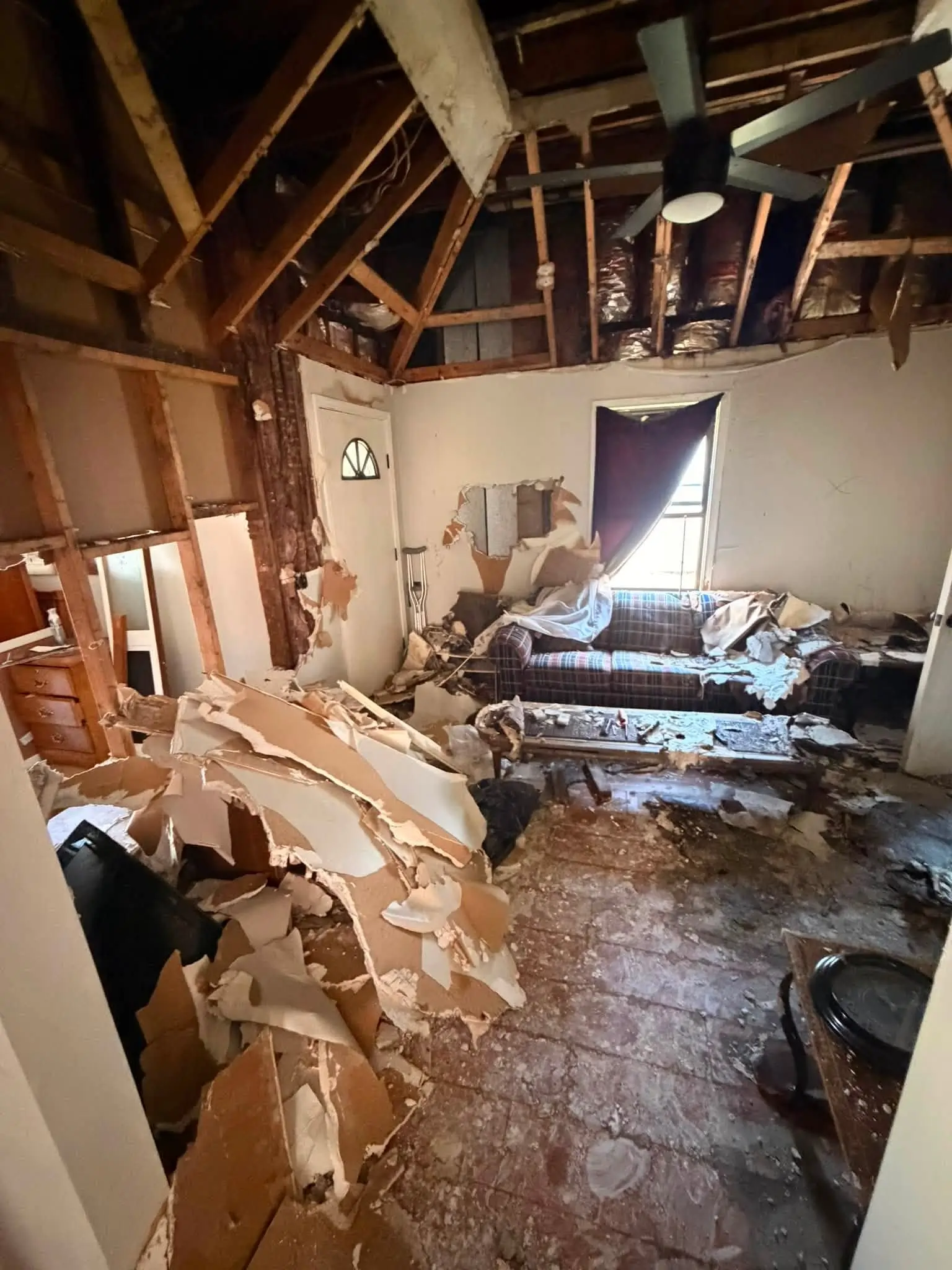
For wet drywall removal in Brooklyn, we first identify how far moisture extends horizontally, vertically, and into connected walls.
Removal may involve:
- Opening a limited section around a pipe or fixture
- Removing deteriorated drywall to stable material
- Extending an opening to framing support
- Exposing wet insulation
- Opening the wall-floor connection
- Removing ceiling material beneath an upper-level leak
- Creating access for cavity cleaning or drying
An irregular damaged edge may need to be extended to a stud or another suitable support point. This produces a more stable opening for inspection and later repair.
Flood Cuts
A flood cut is a horizontal wall opening used to remove damaged lower drywall, expose wall cavities, access insulation, and create a defined restoration boundary.
The cut height should not be chosen automatically. It depends on:
- The highest confirmed moisture or contamination point
- Water depth and time of exposure
- Whether insulation extends above the visible waterline
- Capillary movement through drywall or plaster
- Framing and utility locations
- The water category
- The planned repair boundary
A clean-water loss affecting a limited wall section may require a smaller opening. Sewage or outdoor floodwater may justify a wider removal boundary because contamination can extend beyond the visible line.
Flooring and Subfloor Access
Finished flooring may need selective removal when water is trapped beneath it or the product has swollen, separated, or lost adhesion.
The scope considers:
- Flooring type
- Underlayment or padding
- Subfloor condition
- Adhesive systems
- Doorways and natural transitions
- Cabinet and appliance locations
- Access to the wet assembly
- Whether replacement material can be matched
We do not assume that every wet floor requires complete replacement. The removal boundary is connected to material condition, drying access, and the practical repair transition.
Cabinets, Trim, and Built-In Components
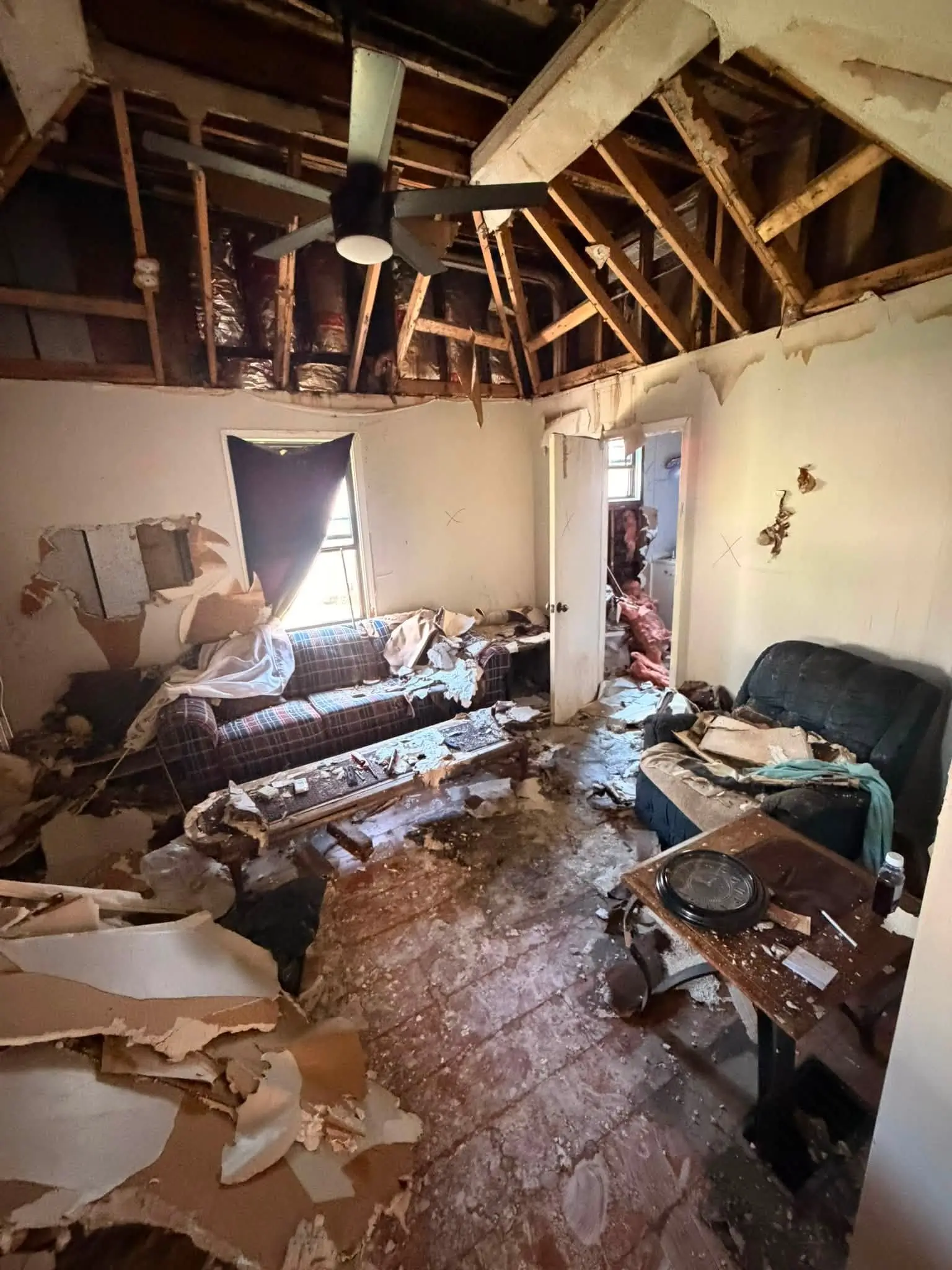
Baseboards, toe kicks, cabinet panels, shelving, and built-ins may block access to wet walls or flooring.
Some components can be detached, documented, and retained for reinstallation. Others—especially swollen particleboard or fiberboard—may no longer provide adequate support or accept a stable finish.
Countertops, plumbing connections, appliances, electrical components, and custom millwork are identified separately when removal requires another trade or additional authorization.
PRE-REMOVAL RECORD
Containment and Documentation Before Disposal
Materials should not be removed from the property before the affected area and disposal decision are documented.
Before demolition begins, our project record can identify:
- The room and affected assembly
- The apparent water source
- The water category where it affects removal
- Moisture or visible-damage boundaries
- Material type and approximate dimensions
- Existing openings or prior demolition
- Items approved for removal
- Materials intended for retention
- Contents or finishes requiring protection
- Work requiring another trade
- Owner or responsible-party authorization
Photographs are taken before removal where site conditions allow. Additional photographs can document concealed conditions revealed after the assembly is opened.
This creates a traceable record of why material was removed and what condition remained behind it. It also reduces disputes about whether drywall, flooring, insulation, or other components were damaged before disposal.
Containment During Removal
Containment is planned around the work, not added after debris begins moving through the property.
Depending on the scope, controls may include:
- Temporary barriers
- Protected floors and doorways
- Restricted work zones
- Dust-control measures
- Covered or sealed debris containers
- A designated removal route
- Separation of clean tools from debris-handling equipment
- Protection of occupied rooms and shared hallways
If the water source involved sewage or contaminated floodwater, the containment and disposal method must account for contamination as well as dust.
Potential lead, asbestos, structural, electrical, or other regulated hazards require separate consideration. New York City demolition and abatement work can involve requirements administered by the Department of Buildings, Department of Environmental Protection, and Fire Department. Work must pause when the proposed removal could disturb a material requiring testing, abatement, permitting, or specialist control.
CONTROLLED DEBRIS ROUTE
Debris Removal and Site Preparation
Debris handling begins inside the work area and ends only when the material has been removed through an approved route.
Water-damaged debris may include:
- Drywall and plaster fragments
- Wet insulation
- Carpet and padding
- Damaged flooring
- Composite wood products
- Baseboards and trim
- Ceiling materials
- Cabinet components
- Fasteners and sharp fragments
- Contaminated disposable protection
- Silt or flood residue
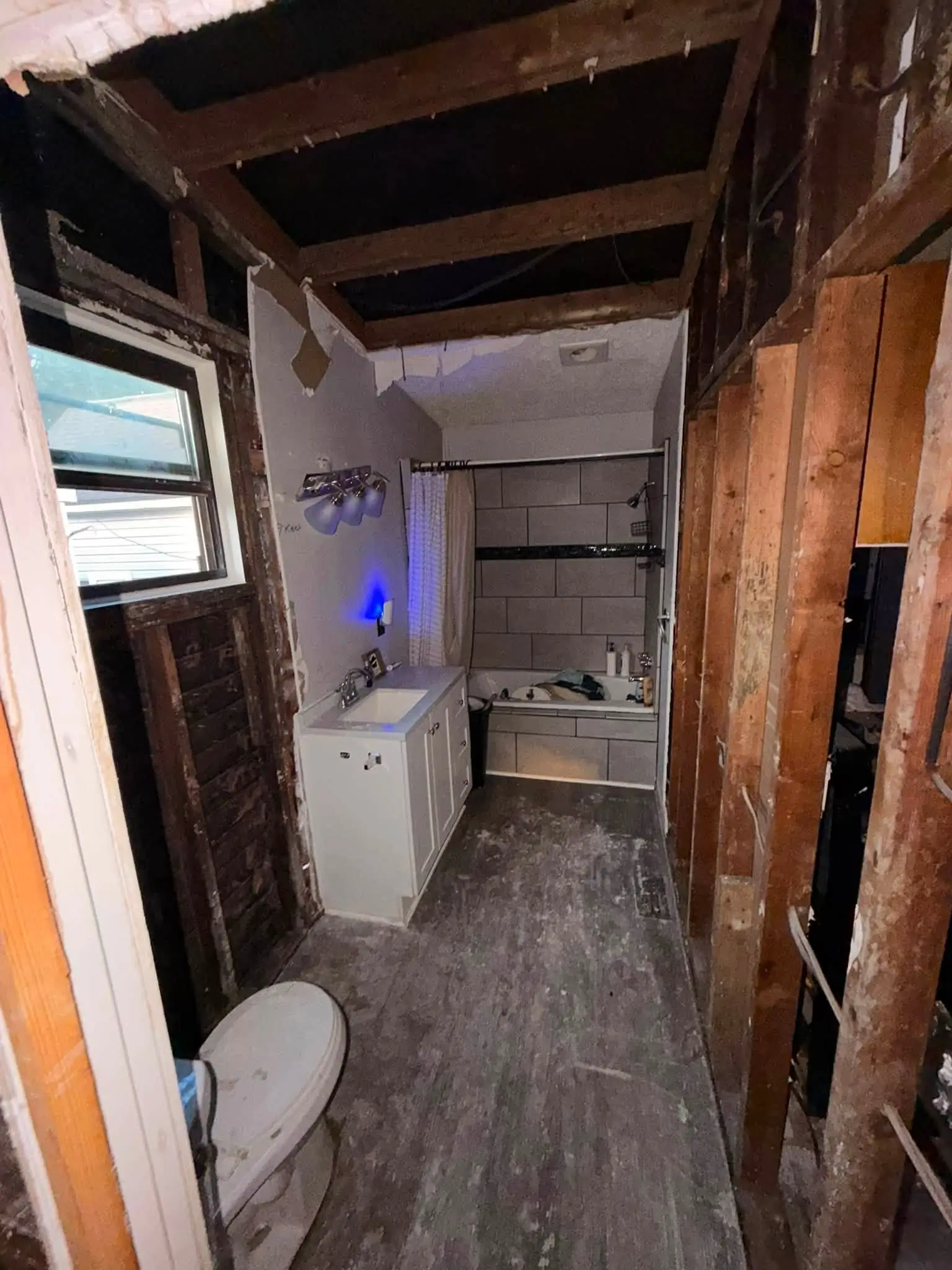
Debris is grouped according to condition and disposal requirements. Materials intended for retention are separated before removal starts so reusable trim, doors, hardware, or undamaged components are not discarded with wet waste.
The route from the work area may require protection for stairs, elevators, corridors, lobbies, sidewalks, or shared entrances. Nails and sharp edges are controlled before bags, bins, or wrapped materials are moved.
Professional construction and demolition waste cannot be placed out as ordinary residential garbage in New York City. Contractors must arrange proper debris removal, and registered private haulers may be required. A street or sidewalk dumpster also requires the appropriate permit and must be arranged by a qualified carting company or contractor.
Preparing the Exposed Work Area
Once debris is removed, the exposed work area is prepared for the next restoration stage. Preparation can include:
- Removing loose fragments and fasteners
- Cleaning accessible framing or substrates
- Identifying remaining residue
- Checking newly exposed moisture
- Confirming wet insulation has been removed
- Recording framing, subfloor, or utility concerns
- Maintaining access for drying equipment
- Protecting the opening until repair begins
The purpose is not to leave an empty room. It is to leave an exposed, documented assembly that can be inspected, dried, and rebuilt correctly.
DEFINED NEXT STAGE
Handoff to Repair or Reconstruction
Demolition is complete when the required material has been removed and the remaining assembly is ready for the next defined action.
It is not complete simply because debris has left the building.
The project handoff identifies:
- What was removed
- What was retained
- The final demolition boundary
- Newly exposed moisture conditions
- Materials still requiring drying
- Framing or subfloor damage
- Plumbing, electrical, or structural concerns
- Environmental-testing requirements
- Temporary protection in place
- The expected repair or reconstruction scope
Handoff to Structural Drying
If framing, subflooring, plaster, masonry, or another retained assembly remains wet, the area moves into a dedicated structural drying scope.
Open cavities are kept accessible until moisture readings support closure.
Handoff to Water Damage Repair
Localized replacement of drywall, trim, flooring, or finishes may move to water damage repair once drying is verified.
Handoff to Reconstruction
A larger build-back may be required when demolition exposes damaged framing, connected assemblies, several rooms, or work involving multiple trades, permits, or inspections.
Water Damage Restoration NYC separates these stages so property owners understand what the demolition service completed and what must be authorized next.
BROOKLYN PROJECT STANDARD
Brooklyn Controlled-Demolition Project
A Brooklyn demolition scope must account for the building as well as the damaged material.
Brooklyn recorded 1,101,441 housing units in 2022, and the owner-occupied housing rate for Kings County was 29.5% during 2020–2024. In practical terms, many projects require coordination among tenants, landlords, superintendents, management companies, cooperative boards, or neighboring occupants before walls, ceilings, or flooring can be opened.
Brooklyn properties may contain modern drywall, traditional plaster, wood lath, masonry party walls, hardwood flooring, layered subfloors, and shared plumbing or electrical systems. These assemblies require different cutting, containment, and repair decisions.
Our controlled-demolition standard follows six checkpoints:
1
1. Removal Need Confirmed
Moisture, contamination, deterioration, or access requirements support removal.
2
2. Boundary Documented
The approved area is photographed, measured, and connected to a room and material.
3
3. Adjacent Areas Protected
Contents, retained finishes, shared access routes, and occupied rooms are separated from the work zone.
4
4. Material Removed Selectively
Cuts follow the approved boundary, framing support, and repair requirements.
5
5. Concealed Conditions Recorded
Wet insulation, damaged framing, utilities, subfloor conditions, or additional contamination are documented when exposed.
6
6. Rebuild Readiness Defined
The handoff states whether the assembly requires cleaning, drying, repair, reconstruction, environmental testing, or another trade.
SCOPE BOUNDARIES
What the Service Includes and Does Not Include
Water Damage Demolition Can Include
- Inspection of proposed removal areas
- Moisture-based demolition boundaries
- Selective wet drywall removal
- Flood cuts where supported by findings
- Removal of wet insulation and padding
- Selective flooring and trim removal
- Protection of retained finishes
- Temporary containment and dust control
- Pre-removal photographs and measurements
- Approved flood debris removal
- Documentation of concealed conditions
- Drying and rebuild-readiness handoff
Not Automatically Included
- Water-source plumbing or roof repair
- Standing-water extraction
- Full structural drying
- Sewage cleaning beyond the approved scope
- Mold assessment or remediation
- Asbestos or lead testing and abatement
- Structural engineering
- Electrical, HVAC, or plumbing work
- Full building demolition
- Repair or reconstruction
- Permit, carting, or dumpster fees unless listed
- Insurance coverage or claim approval
Final inclusions depend on the water source, category, affected material, demolition boundary, environmental conditions, building access, and responsible-party authorization.
DOCUMENTED RESTORATION DECISIONS
Why Choose Water Damage Restoration NYC?
Removal Is Based on Findings
We remove material because its condition, contamination, or location prevents effective restoration—not because every water loss receives the same demolition package.
Documentation Comes Before Disposal
The affected material, dimensions, room, condition, and approved boundary are recorded before debris leaves the property whenever conditions permit.
Brooklyn Access Is Planned
Water Damage Restoration NYC serves properties throughout NYC, while this service is organized specifically for Brooklyn houses, apartments, rowhouses, multifamily buildings, basements, and commercial properties.
Shared corridors, walk-up stairs, elevators, occupied units, building hours, and management authorization are considered before demolition begins.
The Handoff Defines What Happens Next
The final record identifies what is ready for drying, repair, reconstruction, specialist evaluation, or another trade. Our estimated Brooklyn arrival is 1–2 hours, subject to traffic, weather, parking, and property access.
WATER DAMAGE DEMOLITION QUESTIONS
Frequently Asked Questions
You need controlled demolition when wet or contaminated materials cannot be cleaned and dried in place, have physically deteriorated, or prevent access to moisture inside a wall, floor, or ceiling.
An inspection should establish the removal boundary before demolition expands.
The service can include moisture-based removal planning, flood cuts, wet drywall removal, insulation or flooring removal, containment, documentation, debris handling, and preparation for drying or repair.
Exact inclusions depend on the affected material, water category, property access, and approved scope.
Our estimated arrival in Brooklyn is 1–2 hours.
Traffic, weather, parking, elevator access, building authorization, and current service demand can affect the estimate. The current arrival window is confirmed when you call.
Cost depends on the material type, removal area, contamination, wall or floor construction, access, containment, labor, debris volume, disposal requirements, and whether regulated materials require separate handling.
Removing one section of wet drywall has a different scope from opening several rooms, flooring layers, ceilings, or shared building assemblies.
Yes. Documentation can include pre-removal photographs, room location, material type, dimensions, apparent damage, removal reason, concealed conditions, debris handling, and the final repair boundary.
Water Damage Restoration NYC documents the observed condition and approved work. The insurance carrier determines coverage, authorization, deductibles, and payment.
CONTROLLED REMOVAL AND CLEAR HANDOFF
Remove Unsalvageable Materials Without Expanding the Damage
Wet drywall, insulation, flooring, and contaminated debris should be removed to a documented boundary—not torn out without a repair plan.
Call Water Damage Restoration NYC at +19172034372 for water damage demolition and debris removal in Brooklyn. We will confirm the estimated 1–2 hour arrival, inspect the affected materials, and explain what should be removed, retained, dried, or prepared for rebuilding.
Ready for the Next Restoration Stage
Replace the blank image placeholders, add the phone number and connect both CTA buttons before publishing.
- Removal boundary documented
- Retained materials identified
- Debris route controlled
- Drying or rebuild handoff defined