
WATER DAMAGE RESTORATION NYC
Bathroom Water Damage Restoration in Brooklyn
Water Damage Restoration NYC provides bathroom water damage restoration in Brooklyn for leaking fixtures, overflows, wet tile assemblies and hidden moisture. We inspect beneath and around the visible damage, determine what can be saved, and verify drying before repair, with an estimated 1–2 hour arrival.
Bathroom Water Damage Response
1–2 Hour Estimated Arrival
Bathroom Moisture-Footprint Inspection
Salvage Decisions Before Removal
Drying Verified Before Repair
EARLY WARNING SIGNS
Warning Signs in Bathrooms
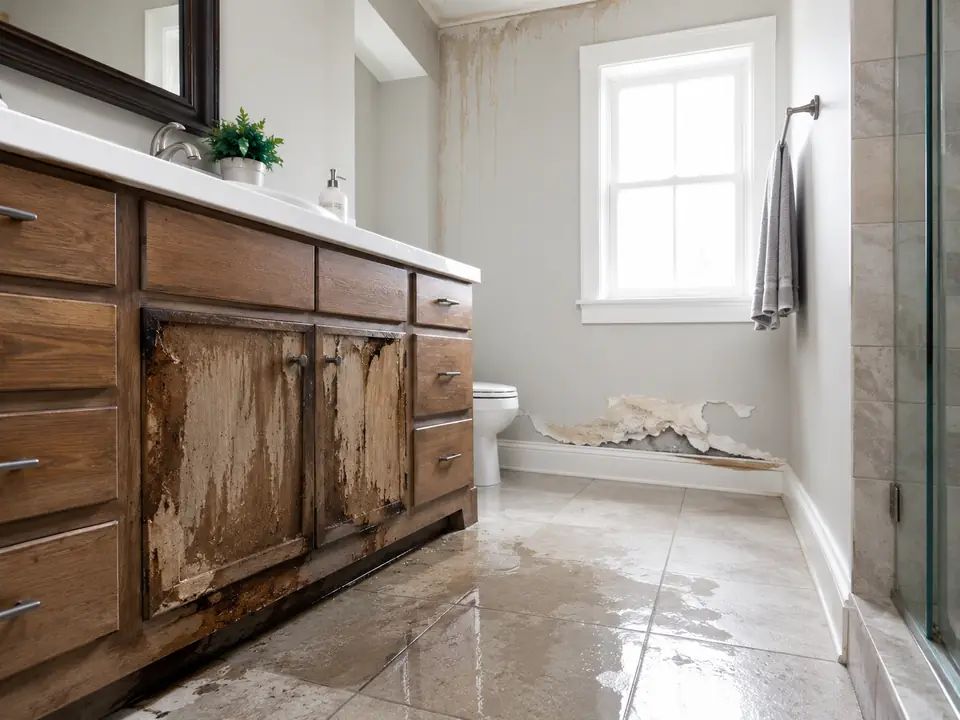
Bathroom water damage often starts around a fixture but does not stay there. Water can pass beneath tile, enter wall cavities, move under a vanity or penetrate the floor assembly before the full damage becomes visible.
Request an inspection when you notice:
- Water collecting around a toilet, tub, shower or vanity
- Loose or lifting floor tile
- Soft flooring near a fixture
- Swollen vanity panels or toe-kicks
- Peeling paint or damp drywall
- Staining around the toilet base
- Cracked or deteriorated material around a shower
- Water appearing at a bathroom threshold
- Dampness returning after the surface was wiped dry
- A persistent musty or damp odor
- Water marks on the ceiling below
- Staining in an adjoining wall or room
Avoid electrical fixtures, outlets or equipment exposed to water. If the bathroom contains contaminated overflow water, limit contact with the affected area until the water condition is understood.
MOISTURE MAPPING
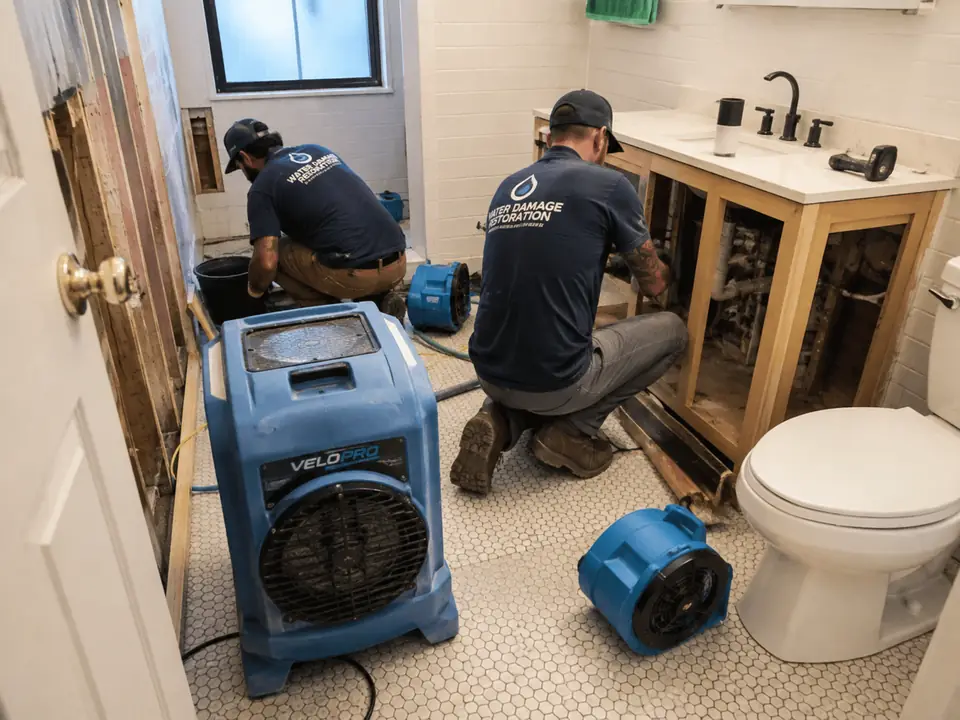
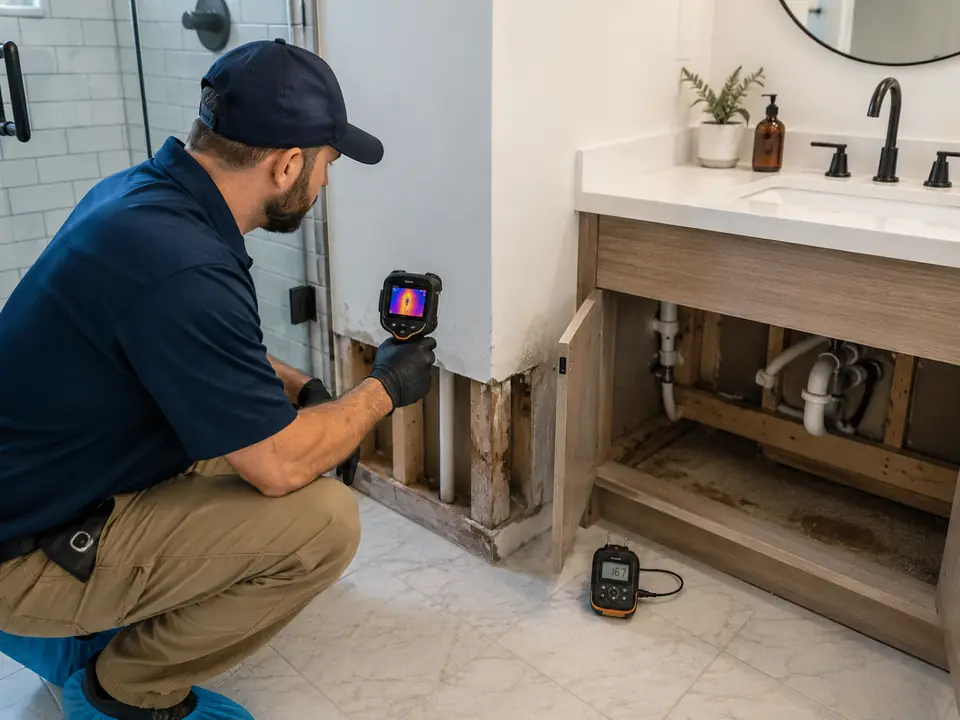
How We Inspect the Full Moisture Footprint
A bathroom inspection starts with where the water originated, what it contacted and which building layers sit beneath or beside the source.
Water Damage Restoration NYC can evaluate accessible areas around:
- Toilets and toilet bases
- Tubs and showers
- Sink and vanity plumbing
- Vanity bases and toe-kicks
- Tile and grout transitions
- Wall-floor joints
- Drywall and wall cavities
- Floor underlayment
- Subflooring
- Baseboards and thresholds
- Adjacent rooms
- The ceiling below where water could have traveled downward
The visible puddle does not always define the wet boundary.
Water from a shower or fixture can pass through joints and penetrations into the floor assembly. A supply-line leak behind a vanity may enter drywall before appearing at the floor. In a stacked property, water can also pass through plumbing penetrations and reach the ceiling below.
Moisture readings help establish the affected boundary before removal or repair begins. EPA guidance recommends verifying that water-damaged materials are thoroughly dry before enclosing, refinishing or replacing them.
SALVAGE DECISION
Can the Bathrooms Be Saved?
Often, yes. Bathroom restoration should be decided component by component, not by assuming every wet bathroom needs to be stripped out.
Dry-in-Place Conditions
Materials may be considered for retention when:
- The water source has been controlled
- The water condition permits salvage
- Tile remains firmly bonded
- The supporting assembly remains stable
- Vanity components have not swollen or delaminated
- Drywall or plaster remains suitable for drying
- The subfloor retains its structural integrity
- Moisture can escape from the assembly
- Drying measurements continue to improve
Ceramic and other hard surfaces may remain even when the supporting layers need additional drying.
The key distinction is whether moisture is only on the exposed surface or has entered the layers underneath it.
Removal Conditions
Selective removal becomes more likely when:
- Floor tile has lost bond because the supporting material failed
- Underlayment traps inaccessible moisture
- Subflooring has deteriorated
- Drywall is swollen or physically damaged
- Wet insulation prevents wall-cavity drying
- Vanity panels have swollen or delaminated
- Moisture remains trapped beneath fixed finishes
- The plumbing repair requires access
- The material cannot be adequately cleaned
- Contamination makes porous material unsuitable for retention
Removal does not automatically mean demolishing the entire bathroom.
A wet vanity toe-kick, lower drywall section or localized floor assembly may require access while undamaged fixtures and finishes remain.
Contamination Conditions
The source of bathroom water can change the entire salvage decision.
A leaking clean-water supply connection is different from an overflowing toilet containing wastewater. Water damage is commonly classified by contamination level, with supply-line water at the lower-contamination end and sewage or grossly contaminated surface water at the highest. Water condition can also deteriorate depending on time and environmental circumstances.
That distinction matters most for porous materials such as drywall, insulation, certain underlayments and composite cabinetry.
RESTORATION METHOD
Drying and Restoration Method for Bathrooms
01
Control the Source
The first requirement is stopping the continuing water release.
The appropriate plumber or other source-repair professional handles the leaking fixture, supply connection, drain, toilet, shower or pipe.
Water Damage Restoration NYC handles the resulting water-damaged bathroom materials.
02
Remove Accessible Water
Standing water is removed from the accessible bathroom floor and affected surfaces.
This reduces further migration but does not establish that water beneath tile, fixtures or cabinetry is gone.
03
Follow the Fixture-to-Structure Path
The inspection connects the source with likely hidden routes.
A toilet-related loss may require attention around the fixture base and floor penetration. A vanity leak may move through the cabinet base and wall. Shower-related water can involve the wall or floor assembly surrounding the enclosure.
04
Inspect Flooring and the Subfloor
A hard tile surface can remain intact while moisture affects material beneath it.
We assess whether the supporting layers can dry without removing the finish. If trapped moisture or physical deterioration prevents effective drying, selective access may be needed.
05
Check the Vanity and Wall Cavities
Lower cabinetry, toe-kicks, drywall and insulation are evaluated separately.
A stable vanity does not necessarily require replacement because water reached the bathroom. Conversely, swollen composite panels may not return to their original shape even after drying.
06
Inspect the Ceiling Below Where Needed
In apartments, multifamily properties or multi-story homes, water may pass through the bathroom floor assembly into the ceiling below.
Inspection can therefore continue below the bathroom when the source volume, location and moisture pattern support downward migration.
07
Dry Retained Materials
Drying is focused on the materials that absorbed water, not simply the room air.
Wood, concrete, plaster and multilayer assemblies can retain deeply held moisture and may dry differently from exposed, low-absorption surfaces.
08
Verify Before Repair
New drywall, tile, flooring or vanity components should not cover an assembly that remains wet.
Repair begins after retained materials reach the drying condition established for the affected area.
REPAIR DECISIONS
When Repair or Replacement Is Required
Ceramic/porcelain tile
More likely to be saved when: Firmly bonded and supporting layers remain sound
Repair or replacement becomes more likely when: Bond or substrate has failed
Grout
More likely to be saved when: Stable after the underlying assembly dries
Repair or replacement becomes more likely when: Sections deteriorate or require access
Plywood subfloor
More likely to be saved when: Structurally sound and drying progresses
Repair or replacement becomes more likely when: Delamination or deterioration develops
OSB subfloor
More likely to be saved when: Limited swelling and structural integrity remains
Repair or replacement becomes more likely when: Severe swelling or loss of strength develops
Drywall
More likely to be saved when: Firm, stable and suitable for drying
Repair or replacement becomes more likely when: Swollen, contaminated or deteriorated
Plaster
More likely to be saved when: Firmly bonded and drying progresses
Repair or replacement becomes more likely when: Loose or damaged sections develop
Solid-wood vanity components
More likely to be saved when: Stable and capable of drying
Repair or replacement becomes more likely when: Significant warping or deterioration remains
MDF/particleboard vanity parts
More likely to be saved when: Very limited water exposure
Repair or replacement becomes more likely when: Swelling or loss of shape occurs
Baseboards/trim
More likely to be saved when: Stable and accessible for drying
Repair or replacement becomes more likely when: Swollen or removal is needed for cavity access
Ceiling below
More likely to be saved when: Stable with manageable moisture
Repair or replacement becomes more likely when: Sagging, deterioration or trapped cavity moisture requires access
Bathroom repair may then involve selected drywall, flooring, underlayment, subfloor, trim or vanity components.
The plumbing source repair remains separate from the water-damage restoration scope.
FIRST-HAND PROJECT LOGIC
A Brooklyn Bathrooms Project
A Brooklyn bathroom water-damage project typically begins at the fixture and follows the water outward, downward and into connected assemblies.
Consider water released around a shower or bathtub.
The exposed floor may show only a narrow wet area, while moisture has moved toward the vanity, through a threshold or into the floor assembly. Inspection therefore extends beyond the fixture perimeter.
If tile remains firmly bonded and the substrate can be dried, the tile may remain. If water has damaged the underlayment or subfloor, selective access may be needed before the area can reach a verified dry condition.
The same logic applies to the vanity. Stable materials can remain, while swollen lower composite components may need targeted replacement.
For bathrooms above another room or apartment, the ceiling below becomes part of the moisture-path decision.
Brooklyn/Kings County had 1,141,824 housing units in 2025, with a 29.5% owner-occupied housing-unit rate during 2020–2024. In a rented or managed Brooklyn property, bathroom restoration can therefore require access coordination with a tenant, owner, landlord, superintendent or property manager when water reaches shared assemblies or another unit.
Water Damage Restoration NYC moves the bathroom to repair only after the affected materials are identified and retained assemblies have reached the required drying condition.
COMMON WATER SOURCES
Causes That Commonly Damage This Area
Shower and bathtub leaks
can wet wall assemblies, fixture perimeters and supporting floor layers.
Toilet overflows
can affect flooring and lower walls, with the salvage decision changing according to what was in the overflow water.
Toilet supply-line or connection leaks
can release lower-contamination water around the fixture and into the subfloor.
Sink and vanity leaks
can remain hidden inside a cabinet before reaching flooring or drywall.
Sink or bathtub overflows
can cross thresholds and spread into neighboring rooms.
Broken or leaking pipes
can wet the bathroom from inside a wall or floor cavity.
Water from the unit above
can enter a bathroom ceiling and continue through walls or fixtures.
This page focuses on restoring the bathroom and determining which affected materials can remain. Each specific water source is covered separately where a dedicated cause page exists.
SCOPE BOUNDARIES
What the Service Includes and Does Not Include
Bathroom Water Damage Restoration Can Include
- Bathroom moisture inspection
- Water-path assessment
- Accessible water removal
- Tile-assembly assessment
- Vanity and toe-kick inspection
- Subfloor evaluation where accessible
- Wall-cavity inspection where required
- Salvage-versus-removal decisions
- Selective wet-material removal
- Structural drying and monitoring
- Repair-scope handoff
Not Automatically Included
- Plumbing-source repair
- Toilet, shower or fixture repair
- Electrical repair or clearance
- Full bathroom remodeling
- New fixture installation
- Waterproofing-system replacement
- Lead or asbestos testing
- Unrelated mold remediation
- Insurance coverage decisions
- Work outside the confirmed affected area
- Unrelated cosmetic upgrades
The final scope depends on the source, water condition, bathroom construction, tile assembly, subfloor, cabinetry, wall materials and hidden moisture.
EVIDENCE-LED RESPONSE
Why Choose Water Damage Restoration NYC?
We Inspect the Bathroom as an Assembly
Tile, subfloor, vanity bases, drywall and the ceiling below can all react differently to the same leak. We evaluate those layers separately.
We Make the Salvage Decision Before Removal
A wet bathroom does not automatically require complete demolition. Material condition and drying feasibility determine what stays.
We Separate Contamination From Simple Wetting
A clean supply leak and a toilet wastewater overflow do not receive the same salvage decision.
Drying Is Verified Before Repair
Water Damage Restoration NYC provides water damage services across NYC, while this service is specifically focused on bathroom water damage restoration in Brooklyn apartments, homes, multifamily buildings and commercial properties.
Our estimated Brooklyn arrival is 1–2 hours, subject to traffic, weather, parking, building access and current service demand.
BATHROOM WATER DAMAGE QUESTIONS
Frequently Asked Questions
Yes, much of a water-damaged bathroom can often remain when the fixtures and materials are stable, the water condition permits salvage and hidden layers can be effectively dried. Tile, vanity components, drywall and subflooring are evaluated separately.
We follow the water from the fixture into likely concealed areas such as vanity bases, wall cavities, tile assemblies, underlayment, subflooring and the ceiling below. Moisture readings help define the affected boundary.
Removal becomes more likely when material is contaminated, physically deteriorated, swollen or preventing the structure underneath from drying. Selective access is used where practical rather than assuming the entire bathroom must be removed.
There is no fixed drying period for every bathroom. Tile assemblies, concrete, plywood, drywall, insulation, cabinetry, water volume and hidden moisture all influence the time required.
Repairs may include selected drywall, underlayment, flooring, subfloor, trim or vanity components after retained materials are dry. Plumbing, fixture and unrelated remodeling work remain separate when required.
REQUEST BATHROOM WATER DAMAGE SERVICE
Call for Bathroom Water Damage Restoration in Brooklyn
A bathroom can look dry while water remains beneath tile, inside a vanity base, behind drywall or in the subfloor.
Our estimated arrival is 1–2 hours. We will identify the complete moisture footprint, determine what can remain, remove material only where needed and establish the drying and bathroom-repair scope.
Bathroom Water Damage Inspection Form
Enter the property and callback details needed for first-call triage.