WATER DAMAGE RESTORATION NYC
Water Damage Inspection and Moisture Detection in Brooklyn
Water Damage Restoration NYC provides water damage inspection in Brooklyn to locate visible and hidden moisture, map affected materials, and define the next restoration step. Our estimated arrival is 1–2 hours, subject to traffic, weather, and building access.
Inspection Service Commitments
1–2 Hour Estimated Arrival
Meter-Verified Moisture Mapping
Thermal Scan With Direct Verification
Written Next-Step Scope
What a Water Damage Inspection Must Determine
A useful inspection must answer more than whether a wall or floor is wet.
Water Damage Restoration NYC investigates the source, contamination level, moisture path, affected materials, and immediate service requirement. The objective is to establish the complete moisture footprint before removal or drying work expands.
Water damage can result from supply-line failures, appliance leaks, fixture overflows, clogged toilets, roof and window failures, groundwater, and flooding. Water is also commonly classified by contamination level, while the amount and type of wet material affect the drying load. These relationships determine whether a property needs focused drying, contaminated-water cleanup, or a wider restoration response.
We separate the likely water source from the resulting property damage. The inspection can identify the apparent moisture path, but permanent plumbing, roofing, drainage, façade, or mechanical repairs may require the relevant trade.
The inspection must determine:
- Where the water appears to have originated
- Whether the source is still active
- Whether source repair requires a plumber, roofer, appliance technician, or building professional
- Which rooms and building assemblies are affected
- Whether water has moved into an adjacent room, lower level, or neighboring unit
- What materials have absorbed moisture
- Whether the water appears sanitary, contaminated, or grossly unsanitary
- Whether standing water, cleanup, drying, or repair is required
- What can be confirmed without opening the structure
- Where authorized access or limited removal may be necessary
MOISTURE DETECTION TOOLS
Moisture Detection Tools and Their Limits
No single tool can establish the complete condition of every wall, floor, or ceiling.
We combine visual evidence, moisture readings, thermal patterns, material knowledge, and the history of the loss. Findings are compared across the affected area instead of treating one reading or one thermal image as a complete diagnosis.
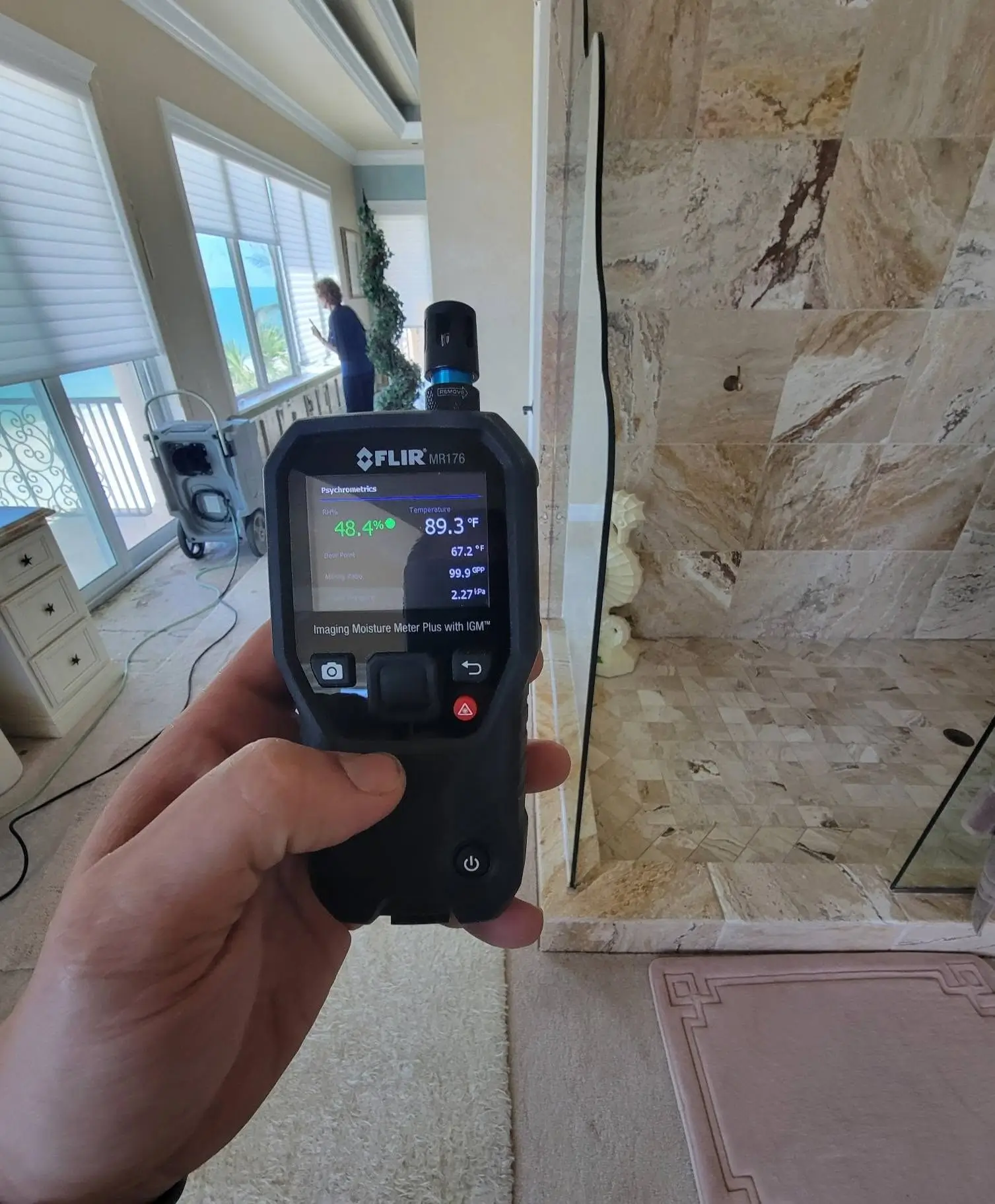
Moisture Meter
A moisture meter measures or compares moisture conditions in building materials. Depending on the instrument and material, readings may be taken at the surface, below the surface, or through probes inserted into the material.
Meters may be used on:
- Drywall and gypsum board
- Wood framing
- Hardwood and subflooring
- Carpet and padding
- Brick and masonry
- Concrete
- Plaster
- Cabinet materials
Readings from the suspected wet area are compared with unaffected reference material where a reasonable comparison is available. This helps distinguish a general material characteristic from an elevated condition caused by the water event.
The EPA identifies moisture meters as useful tools for finding wet areas and monitoring the drying of materials such as wallboard, wood, brick, concrete, and carpet. A meter can also help locate hidden areas that warrant further investigation.
A meter reading still requires interpretation. Different materials produce different responses, and metal fasteners, dense finishes, salts, adhesives, or layered assemblies can affect certain readings. We record the material and location rather than presenting an isolated number without context.
Thermal Imaging
Thermal imaging helps scan a larger area for surface-temperature patterns that may indicate evaporative cooling, missing insulation, air leakage, or moisture movement.
It can help prioritize inspection around:
- Ceiling stains
- Wall-floor connections
- Plumbing chases
- Cabinet bases
- Bathroom and kitchen walls
- Areas below an upper-floor leak
- Floor edges and transitions
- Sections adjoining a visibly wet room
A thermal camera does not see water through a wall. It detects temperature differences at the surface. Sun exposure, HVAC airflow, insulation gaps, cold pipes, electrical components, and changing indoor conditions can create similar patterns.
For that reason, a thermal anomaly is treated as an area requiring verification—not proof of moisture. FLIR’s technical guidance similarly explains that thermal imaging identifies possible moisture-related temperature differences, while a moisture meter is needed to confirm the finding.
Visual Inspection
Visual inspection establishes the physical context around the readings.
We look for:
- Water staining and tide lines
- Peeling or blistered paint
- Swollen baseboards or trim
- Open drywall seams
- Sagging ceilings
- Flooring movement or joint swelling
- Delaminated cabinet panels
- Damaged caulk or sealant
- Musty or damp odors
- Water below fixtures and appliances
- Previous patches or repeated damage
- Openings through which water may have traveled
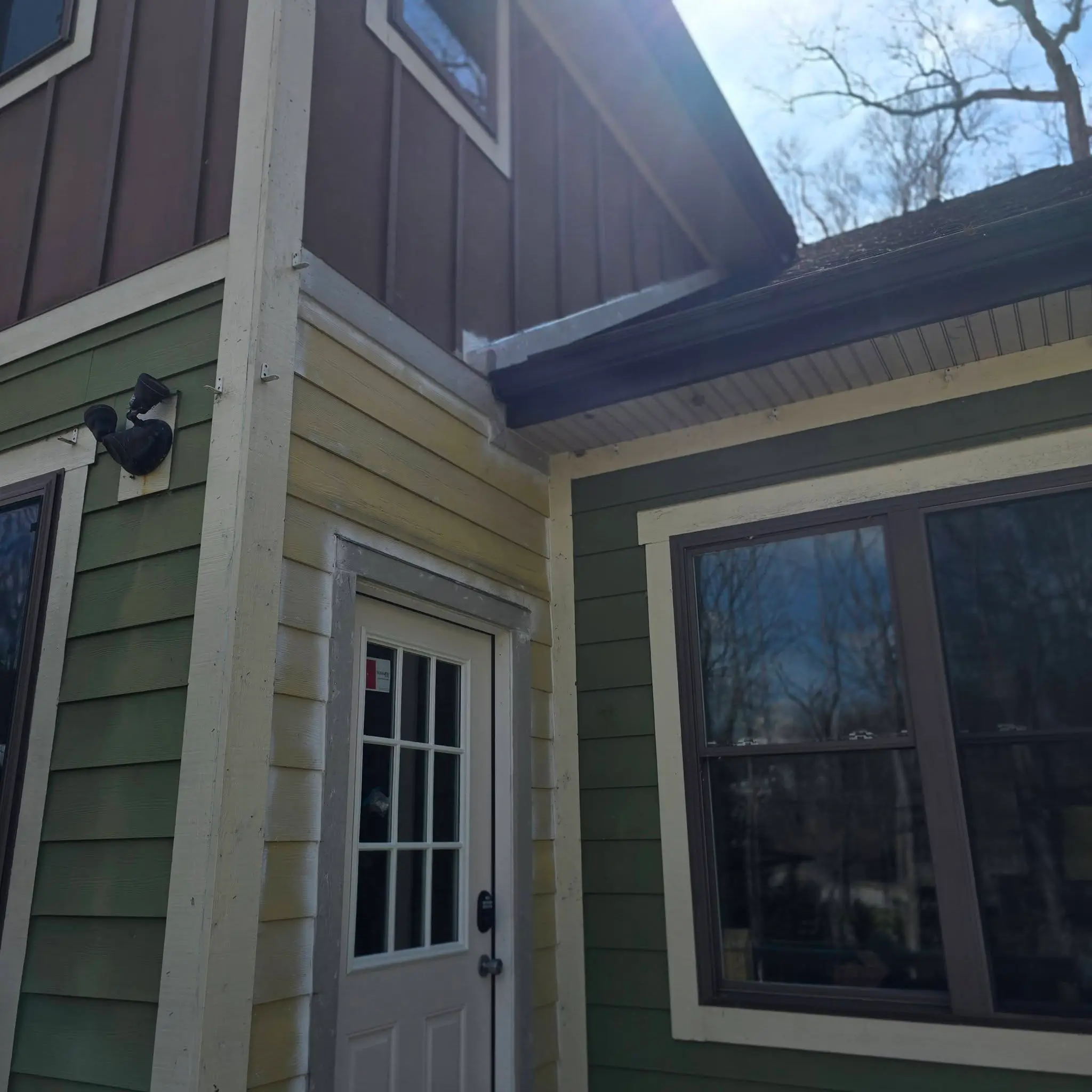
The absence of a visible stain does not establish that an assembly is dry. Water can move behind paint, beneath flooring, through insulation, or along framing before appearing on a finished surface.
Material Testing and Targeted Verification
When surface inspection cannot resolve the moisture boundary, targeted verification may be recommended.
Depending on authorization and property conditions, this may involve:
- Pin-probe readings
- Readings below a baseboard
- Checking beneath an accessible flooring edge
- Inspecting a cabinet toe kick
- Using an existing access opening
- Borescope inspection through a small authorized opening
- Limited removal of deteriorated material
- Direct inspection from the source side and damage side
This is not the same as laboratory mold testing, asbestos testing, lead testing, structural engineering, or invasive leak detection. Those services require a separate scope when the condition calls for them.
MOISTURE FOOTPRINT
Mapping the Affected Area
Moisture mapping connects each reading to a room, material, and physical location.
The visible stain may represent only the point where water became noticeable. The map follows likely movement through gravity, capillary action, absorbent materials, seams, penetrations, and connected assemblies.
For example, water from an upstairs bathroom may affect:
- Flooring around the fixture
- The subfloor beneath it
- Insulation or framing inside the floor cavity
- The ceiling below
- The upper section of an adjoining wall
- Baseboards or flooring where water finally collects
Our affected-material map can identify:
- Confirmed wet materials
- Suspected areas requiring further access
- Unaffected reference locations
- Visible damage boundaries
- Adjacent rooms checked
- Concealed cavities of concern
- Materials suitable for drying
- Materials requiring removal evaluation
- Areas assigned to another trade
The inspection reaches a useful endpoint when the known moisture boundary, unresolved limitations, and recommended next action are documented. It does not end simply because the original stain has been photographed.
What You Receive After the Inspection
The inspection findings are organized so a homeowner, tenant, landlord, building manager, or insurance representative can understand what was found and what should happen next.
The next-step recommendation should be specific. “Monitor the area,” “begin extraction,” “open the wall,” and “start structural drying” are different decisions with different costs and consequences.
Water Damage Restoration NYC explains why the recommended step follows from the observed source, material, contamination, and moisture findings.
Depending on the scope, the inspection record can include:
- Apparent water source
- Whether the source remains active
- Visible damage photographs
- Thermal images where used
- Moisture-reading locations
- Materials found to be affected
- Apparent water category
- Affected-room and material map
- Immediate protection recommendations
- Areas requiring authorized access
- Recommended restoration stage
- Work assigned to another trade
- Inspection limitations
- Proposed scope and exclusions
INSPECTION-LED NEXT STEP
Inspection-to-Restoration Decision
The inspection determines which service—if any—should follow.
1
Emergency Response
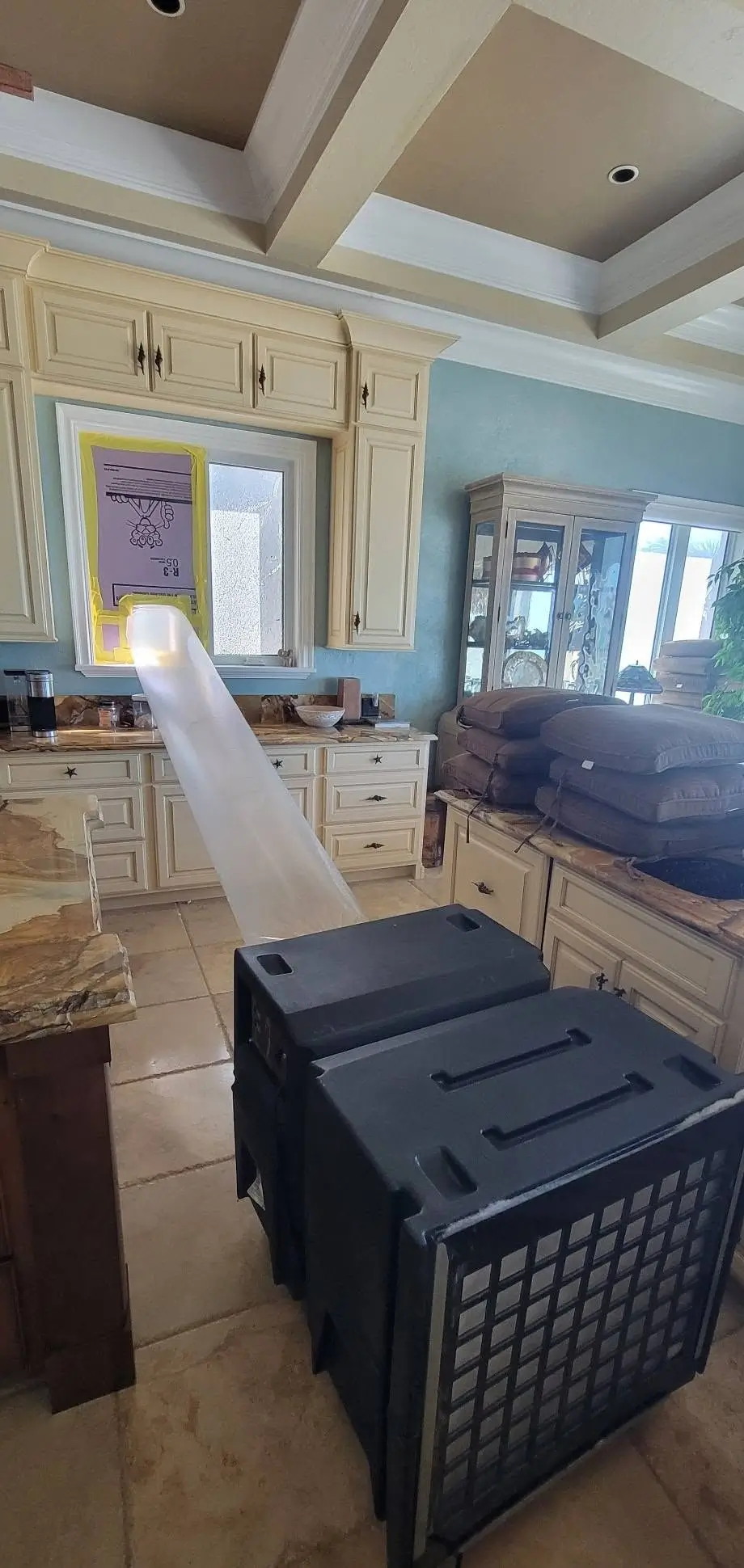
An immediate response may be required when water is actively spreading, standing water is present, a ceiling is unstable, contaminated water is involved, or moisture is moving into another unit.
2
Water Removal and Mitigation
Extraction or mitigation may be recommended when bulk water remains or the property must be stabilized before detailed drying can begin.
3
Structural Drying
A drying scope is appropriate when visible water has been removed but moisture remains inside salvageable walls, floors, ceilings, framing, plaster, concrete, or masonry.
4
Cleanup and Sanitization
Cleaning and contamination control may be required when the loss involves sewage, appliance discharge, outdoor floodwater, residue, or other contaminated conditions.
5
Water Damage Repair
Repair begins when affected materials are dry and damaged walls, ceilings, flooring, trim, paint, or cabinets require restoration.
An inspection may also conclude that no restoration work is currently supported by the findings. In that situation, we identify any source-repair, monitoring, or access recommendation instead of automatically expanding the project.
BROOKLYN INSPECTION EXAMPLE
Brooklyn Inspection Example
Consider a ceiling stain inside a Brooklyn apartment beneath an upstairs bathroom.
The inspection begins by confirming when the stain appeared, whether the upstairs fixture is still being used, and whether the mark changes after showers, toilet use, or rainfall. Where access is authorized, both the affected ceiling and the likely source side are examined.
A thermal scan may identify a cooler pattern extending beyond the visible stain. That area is then checked with a moisture meter. Readings are compared with dry ceiling material farther from the loss.
The result may show one of several conditions:
1
A limited wet ceiling area
The source is corrected, focused structural drying is recommended, and repair waits for final readings.
2
Moisture extending into the wall
The affected-material map is expanded and wall-cavity access may be recommended.
3
Wet flooring around the upstairs fixture
A plumber or building professional must correct the source before restoration proceeds.
4
No elevated reading
The stain may represent a previous event, but the source history and inspection limitations are still documented.
5
Water affecting another unit
The tenant, owner, superintendent, or property manager may need to coordinate access and authorization.
Brooklyn had approximately 1.1 million housing units in 2022, with an average housing density of 15,876 units per square mile. In this housing environment, stacked apartments, shared walls, plumbing chases, common access, and multiple decision-makers can directly affect how the moisture footprint is investigated.
This example describes the inspection decision path. It is not presented as a fabricated customer project.
SCOPE BOUNDARIES
What the Service Includes and Does Not Include
Water-damage inspection can include
- Water-source history and visual assessment
- Inspection of accessible affected areas
- Moisture-meter readings
- Thermal scanning where useful
- Comparison with dry reference materials
- Apparent water-category assessment
- Affected-material moisture map
- Photographs and thermal images
- Identification of areas needing access
- Recommended restoration scope
- Documentation of inspection limitations
- Immediate next-step recommendation
Not automatically included
- Permanent plumbing or leak repair
- Roof, window, façade, or drainage repair
- Standing-water extraction
- Structural drying equipment
- Sewage cleanup or disinfection
- Mold remediation
- Laboratory mold sampling
- Lead or asbestos testing
- Engineering or structural certification
- Destructive opening without authorization
- Insurance coverage or claim approval
- Repair or reconstruction work
Final inclusions depend on access, material type, safety, property authorization, and the condition found during the inspection.
Why Choose Water Damage Restoration NYC?
Findings Are Verified, Not Assumed
Thermal patterns and visible stains are checked against direct readings before they are treated as confirmed moisture.
We Follow the Moisture Path
The inspection covers connected walls, ceilings, flooring, cavities, and adjacent rooms where the loss history indicates water may have traveled.
You Receive a Defined Next Step
We separate inspection, source repair, extraction, drying, cleanup, and finished-material repair. The recommendation states what belongs to the immediate scope and what does not.
The Inspection Is Planned for Brooklyn Properties
Water Damage Restoration NYC provides services throughout NYC, while this inspection service is focused specifically on Brooklyn homes, apartments, brownstones, multifamily buildings, basements, and commercial properties.
Shared access, upper and lower units, building-management requirements, and authorization from the responsible decision-maker are considered before the inspection expands.
Frequently Asked Questions
When do I need a water damage inspection?
You need an inspection when staining, dampness, odor, material swelling, a leak, or a recent overflow suggests that water may have moved beyond the visible area.
An inspection is also appropriate before closing a wall, replacing flooring, or repairing a ceiling after a water event.
What does your Brooklyn inspection include?
The inspection can include source-history review, visual assessment, moisture readings, thermal scanning, affected-material mapping, photographs, and a written next-step recommendation.
The exact scope depends on access, material type, safety, and whether limited opening is authorized.
How quickly can you arrive?
Our estimated arrival in Brooklyn is 1–2 hours, subject to traffic, weather, parking, emergency demand, elevator scheduling, and building access.
The current estimate is confirmed when you call.
What affects the inspection cost?
Cost depends on the number of rooms, property size, material types, access, inspection complexity, thermal-imaging requirements, documentation needs, and whether targeted verification is authorized.
An accessible ceiling stain has a different scope from moisture affecting several apartments or concealed multilayer flooring.
Can you document the findings for insurance?
Yes. Documentation can include photographs, moisture readings, thermal images, affected materials, the apparent source, inspection limitations, and the recommended restoration scope.
Water Damage Restoration NYC documents the observed property condition. The insurance carrier determines coverage, deductibles, claim approval, and payment.
Find the Full Moisture Footprint Before Work Begins
A visible stain does not show how far water traveled, which materials absorbed it, or which restoration stage is actually required.
Call Water Damage Restoration NYC at +19172034372 for water damage inspection and moisture detection in Brooklyn. We will confirm the estimated 1–2 hour arrival, investigate the affected area, and give you a clear next-step scope.