Need Help? ☎ +1 (917) 203-4372
WATER DAMAGE RESTORATION NYC
Water Damage Restoration NYC provides storm water damage restoration in Brooklyn after heavy rain, stormwater flooding, and wind-driven intrusion. We identify where water entered, remove affected water, trace hidden spread, and begin verified drying, with an estimated 1–2 hour arrival.
1–2 Hour Estimated Arrival
Weather-to-Damage Moisture Mapping
Water Condition Assessed Before Cleanup
Documented Drying and Repair Handoff
Call when rainwater is entering a basement or ground floor, water is moving beneath flooring, an exterior wall becomes wet during a storm, or stormwater has crossed a doorway, window well, foundation opening, drain, or other building boundary.
The priority is to stop storm and rain damage before it spreads farther into the building.
We first ask where water appeared, whether it is still entering, which floors or rooms are affected, whether standing water is present, and whether anyone is in a basement or below-grade space. We then define the immediate inspection priorities and confirm the current estimated Brooklyn arrival window.
Prioritize safety before trying to save finishes or belongings. NYC Emergency Management warns that flash flooding can develop quickly when heavy rain overwhelms drainage systems, with basements, cellars, and other below-grade spaces facing particular risk.
If stormwater is entering now:
Stormwater that has crossed streets, yards, soil, drains, or other exterior surfaces should not be treated as clean simply because it originated as rain. NYC guidance notes that floodwater can carry sewage, bacteria, and other contaminants.
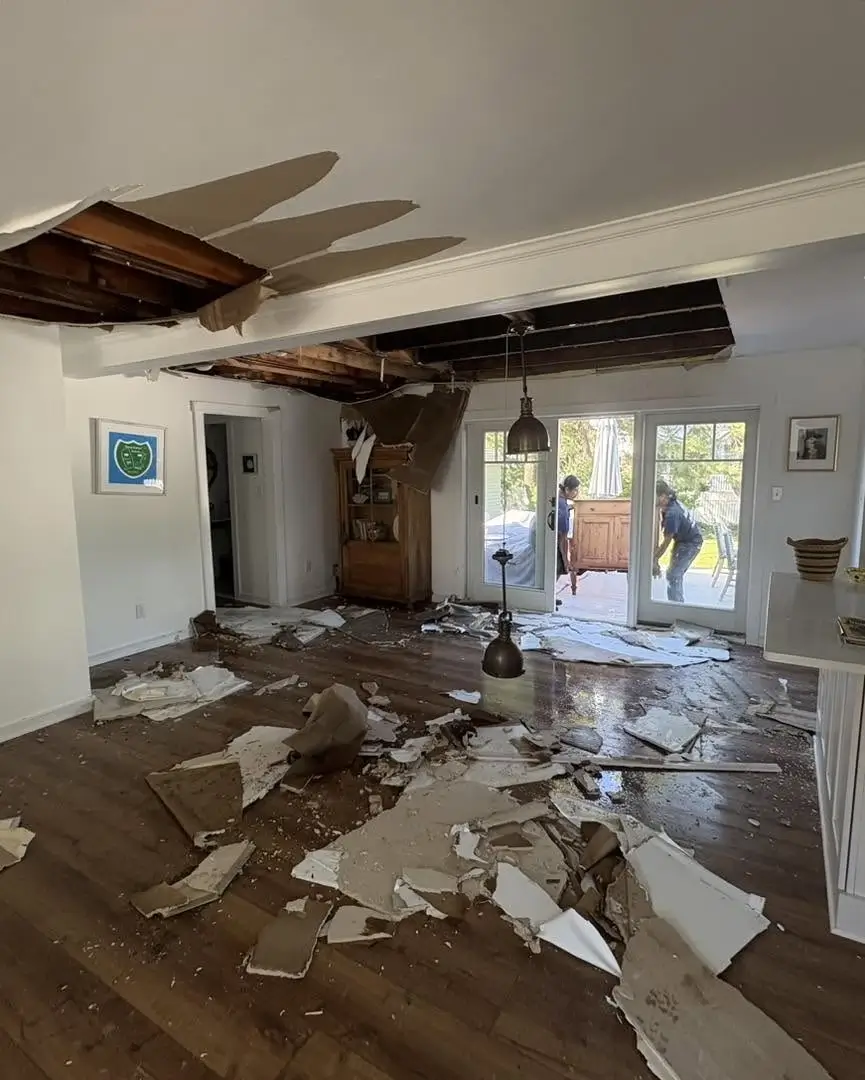
Heavy rain becomes an interior water-loss problem when rainfall reaches the building faster than the property or surrounding drainage can safely move it away.
NYC DEP describes a cloudburst as a sudden heavy downpour that can overwhelm drainage capacity and flood streets and properties. Brooklyn already has Cloudburst planning or projects in areas including East New York, Brownsville South, and Homecrest, which demonstrates that intense-rain flooding is not limited to waterfront properties.
Storm-driven water can enter through:
The source condition matters because stormwater intrusion is not the same loss as a broken interior supply pipe. Wikipedia’s water-damage framework distinguishes floodwater, groundwater seepage, and building-envelope failures from plumbing sources and also connects surface and standing external water with higher contamination risk.
That difference changes cleanup, material retention, drying, and documentation decisions.
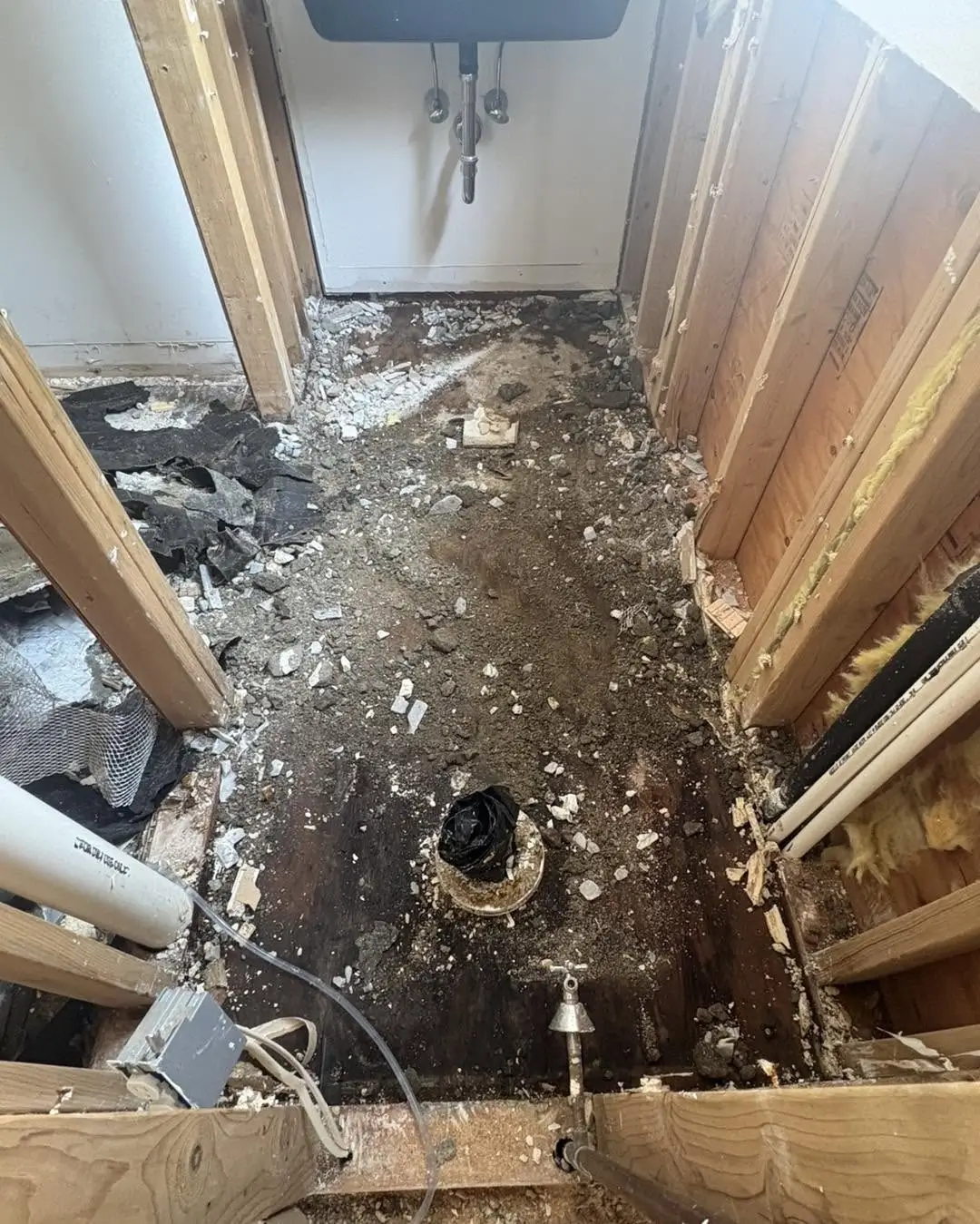
Stormwater rarely stops at the edge of the first visible puddle.
The first affected area may be a basement floor, ground-floor room, rear entrance, storefront, top-floor exterior wall, or space beside a below-grade opening.
We document:
This establishes where the loss started inside the building.
Water can move behind baseboards, drywall, plaster, insulation, cabinets, and wall finishes. It can also enter flooring layers or masonry interfaces without producing an immediate surface stain.
Moisture inspection therefore extends beyond the visible waterline.
Low-evaporation materials and assemblies such as plaster, wood, concrete, masonry, and multilayer floors can retain water more deeply than open porous finishes and may require a different drying strategy.
Wind-driven water entering an upper wall, terrace, roof transition, or exterior opening can travel downward through framing, chases, ceiling cavities, and utility penetrations.
A lower floor may show staining or moisture several feet away from the original entry point.
Heavy-rain water can cross beneath door thresholds, move below continuous flooring, follow wall plates, or enter closets and neighboring rooms.
The restoration boundary is based on confirmed migration, not the visible perimeter of the original puddle.
The appropriate exterior, drainage, or building trade corrects the entry source. Water Damage Restoration NYC restores the resulting interior damage.
Depending on what caused the intrusion, source work may belong to:
Water Damage Restoration NYC focuses on the interior loss:
Rain cannot be shut off like a broken supply line. The practical requirement is to stop, divert, or sufficiently control continued entry before final drying and repairs can remain successful.
1. Establish the Entry Path
We connect current or recent weather conditions to the interior evidence. The inspection starts at the first reported wet area and expands according to flooring, wall construction, lower levels, and likely exterior pathways.
2. Assess Water Condition
The source history and surfaces contacted determine whether normal extraction and drying are enough or whether additional cleaning and material removal are required.
Water that has traveled across exterior ground, street surfaces, drainage systems, or contaminated areas requires more caution than rain that entered directly through an isolated building-envelope opening.
3. Remove Accessible Water
Standing water is extracted from affected floors and accessible low points.
Where safe and appropriate, unaffected spaces and contents are protected before work expands.
4. Inspect Materials Beyond the Waterline
We check the materials that can continue holding water after extraction, including:
5. Remove or Dry According to Condition
Materials that cannot be adequately cleaned, structurally retained, or dried may require removal.
Retained components move into a controlled structural-drying scope. Drying resources are based on the amount and type of wet material rather than a generic equipment count. Wikipedia’s restoration framework connects evaporation load with the amount of drying equipment needed and identifies moisture mapping, extraction, air movement, dehumidification, monitoring, and repair as connected restoration stages.
6. Verify the Handoff Condition
Storm-damage restoration reaches a defined handoff when:
Visible dryness alone is not the completion standard.
| Material | Storm-water concern | Restoration decision |
|---|---|---|
| Drywall | Water absorption above floor level | Dry, selectively open, or replace |
| Plaster | Deep moisture and possible delamination | Monitor, dry, or repair unstable sections |
| Insulation | Contamination and concealed saturation | Remove when required |
| Carpet and padding | Holds water and contaminants | Extract; assess padding separately |
| Hardwood | Cupping and wet subfloor | Dry, monitor, or replace |
| Laminate | Swelling and damaged fiber core | Replace affected sections |
| Wood framing | Moisture inside closed assemblies | Expose where needed and dry |
| Concrete | Moisture retained after surface water disappears | Controlled drying and monitoring |
| Masonry | Deep absorption at exterior or foundation walls | Assess and dry according to condition |
| Contents | Direct stormwater contact | Protect, clean, relocate, or document |
A credible project for this page must prove the complete weather-to-damage relationship, not simply show drying equipment inside a wet room.
A relevant Brooklyn scenario is heavy rainfall collecting at a below-grade entrance, crossing the threshold, spreading through a lower-level room, and then moving beneath a partition into an adjoining space.
A verified Water Damage Restoration NYC project should show:
Brooklyn had an estimated 1,141,824 housing units in 2025, while only 29.5% of occupied housing units were owner-occupied during 2020–2024. That makes landlord, tenant, superintendent, board, property-manager, and neighboring-unit coordination operationally relevant when stormwater affects multifamily buildings.
NYC is also investing specifically in Brooklyn stormwater capacity. A 2026 Homecrest Cloudburst project was funded at $95 million and designed to manage an estimated 30 million gallons of stormwater annually, illustrating the scale of intense-rain management now required in inland Brooklyn neighborhoods.
Stormwater documentation should establish where the water came from and how it entered, because a rain-driven loss can involve a different cause classification from an internal plumbing release.
Water Damage Restoration NYC can document:
We document the observed conditions and work performed. The insurance carrier determines cause classification, policy coverage, exclusions, deductibles, authorization, and payment.
Final scope depends on the water entry route, contamination, affected materials, water depth, building layout, access, and inspection findings.
Water Damage Restoration NYC traces the loss from the reported exterior entry area through floors, walls, cavities, adjoining rooms, and lower levels.
Stormwater is assessed according to its actual route and exposure instead of automatically treating every rain loss as clean water.
The work does not end because standing water is gone. Retained building materials are monitored before the project moves into finished repairs.
Water Damage Restoration NYC provides services throughout NYC, while this page and response scope are specifically structured for storm and heavy-rain water damage in Brooklyn homes, apartments, brownstones, multifamily properties, storefronts, and commercial buildings.
Our estimated Brooklyn arrival is 1–2 hours, subject to storm severity, flooded roads, traffic, weather, parking, building access, and current emergency demand.
Move away from flooded below-grade areas and electrical hazards, protect dry belongings only when safe, and call Water Damage Restoration NYC at +1 (917) 203-4372.
If rising water is trapping anyone or creating an immediate danger, contact emergency services first.
The source trade depends on where the water entered.
Roofing, façade, foundation, waterproofing, private drainage, and building-management responsibilities are handled separately from our interior water extraction and drying work.
We trace the entry route using visual evidence, material moisture readings, building layout, thermal patterns, and targeted inspection where necessary.
The inspection can extend into flooring layers, wall bases, insulation, adjacent rooms, and lower levels.
Materials that are contaminated, physically damaged, or cannot be effectively cleaned and dried may require removal.
Wet insulation, carpet padding, deteriorated drywall, and swollen composite products are common examples. Stable wood, plaster, concrete, and masonry may remain suitable for controlled drying depending on condition and readings.
Yes. We can document the apparent entry route, affected rooms, photographs, moisture readings, material decisions, extraction, drying progress, and required repairs.
Coverage and claim decisions remain with the insurance carrier.
Heavy rain can move from one exterior entry point into flooring, wall cavities, adjoining rooms, and lower levels before the full damage becomes visible.
Call Water Damage Restoration NYC at +1 (917) 203-4372 or email info@waterdamagerestorationservicesnyc.com for storm and heavy-rain water damage restoration in Brooklyn.
We will confirm the current estimated 1–2 hour arrival, identify the immediate loss-control priorities, and define the extraction, cleaning, drying, and repair handoff.
Call for Emergency Service: +1 (917) 203-4372
Request Immediate Help: info@waterdamagerestorationservicesnyc.com
Enter the property and callback details needed for first-call triage.
Form submissions are sent to info@waterdamagerestorationservicesnyc.com.